
What Does TPMS Mean on a Car?
Last updated: September 14, 2026 · Reading time: 7 min
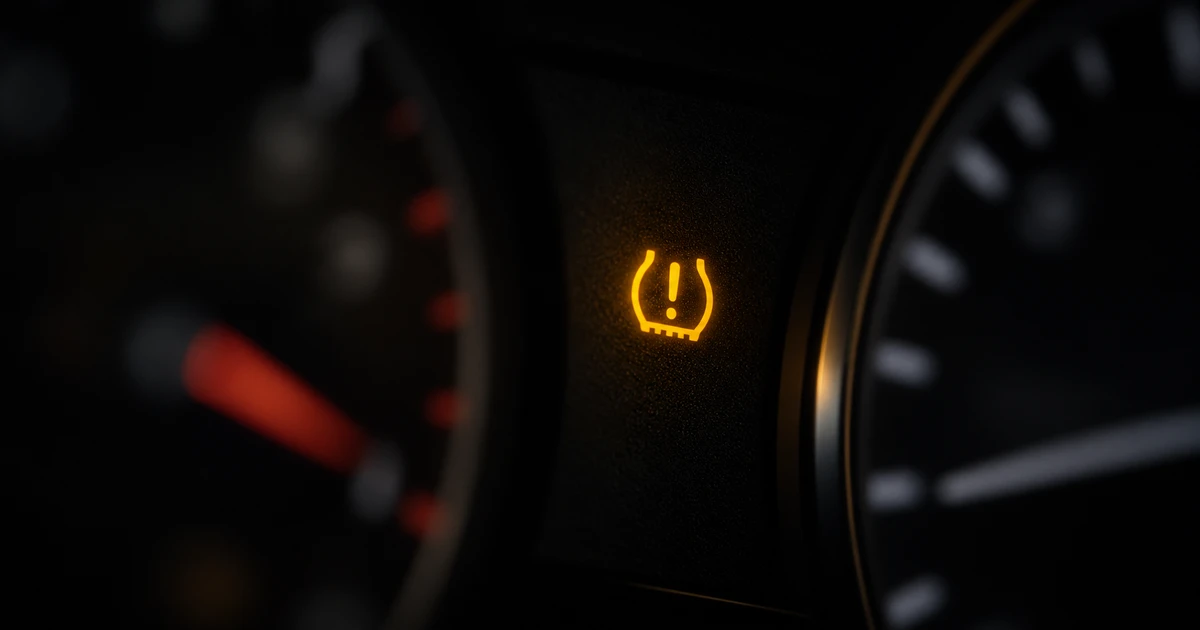
TPMS stands for Tire Pressure Monitoring System — the safety system that watches your tire pressures and lights the amber dashboard warning (the horseshoe-shaped icon with an exclamation mark) when a tire runs roughly 25% or more below spec. It's been required on every US passenger car and light truck since 2008.
What TPMS Stands For
TPMS = Tire Pressure Monitoring System. It's not a part you can point to — it's a system: sensors (or wheel-speed data), a receiver, software, and the amber dashboard light as its voice. When your owner's manual or a mechanic says “TPMS,” they mean the whole chain, not just the light or just the sensor.
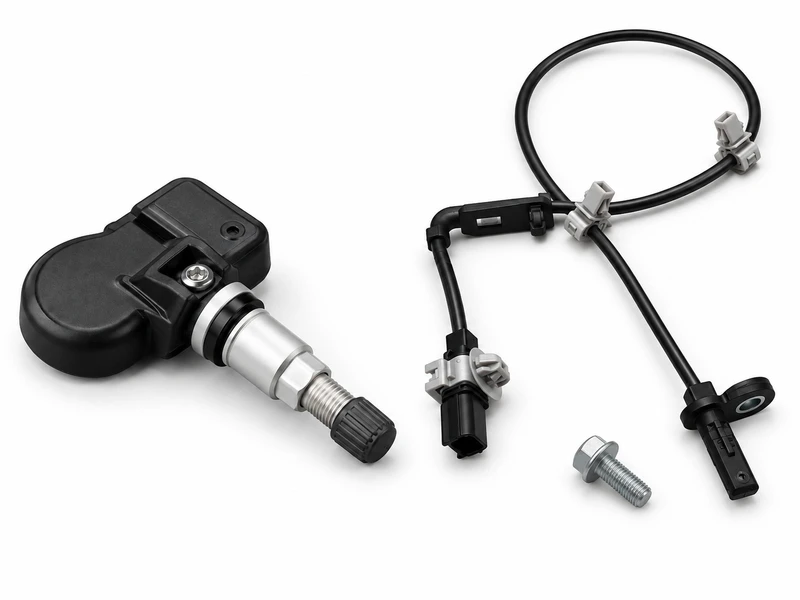
The vocabulary trip-up: the TPMS sensor (the hardware inside each wheel, on direct systems) is one component of the TPMS (the system). People conflate them — which is how a $5-problem conversation becomes a $150-part conversation. Hardware details live in the TPMS sensor guide; this article is the system-level view.
What the System Actually Does
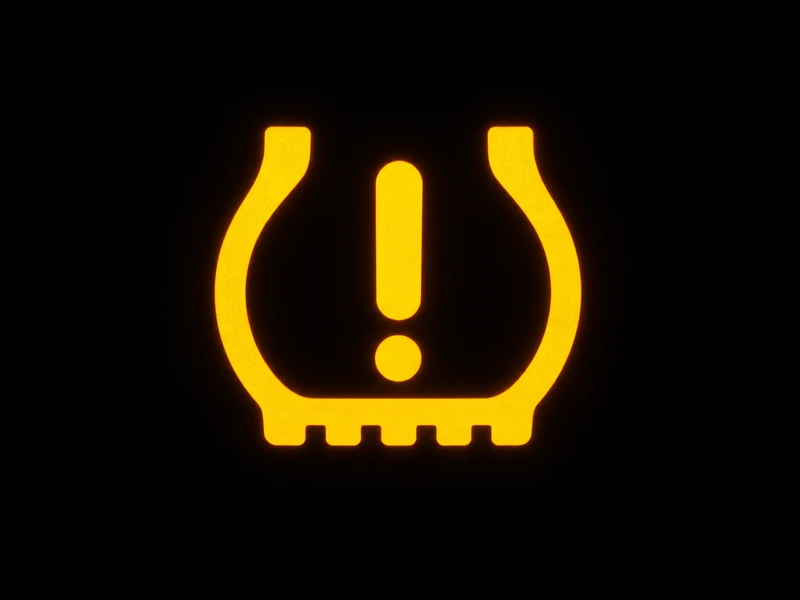
Every time you drive, the TPMS monitors all four (sometimes five, including the spare) tires and compares them against the placard pressure. Its one job is to catch a tire that's 25% or more below spec — the federal threshold — and light the warning. Two light behaviors, two different messages:
- Steady light — a tire is genuinely low. Fix the air, then the light clears (details: tire pressure warning light).
- Flashing for 60–90 seconds at startup, then steady — the system itself has a fault, usually a dead sensor (details: TPMS light flashing).
Why TPMS Exists: The 2008 Mandate
TPMS became standard because underinflated tires kill. In the late 1990s, a wave of tire failures and rollover crashes — most famously involving Firestone tires on Ford Explorers — pushed Congress to pass the TREAD Act in 2000. One of its requirements: every new passenger vehicle must warn the driver when a tire is significantly underinflated. NHTSA wrote that into the safety standard (FMVSS 138), and from the 2008 model year every car and light truck sold in the US has carried TPMS.
The safety logic is simple: most drivers never check tire pressure voluntarily, and a tire 25% low runs hot, handles badly, and can fail at highway speed. TPMS doesn't maintain your tires — it catches the dangerous case you didn't notice.
The Two Types: Direct vs Indirect
The mandate says cars must warn — it doesn't say how. Two engineering answers emerged, and they behave differently enough that it pays to know which you own:
| Direct TPMS | Indirect TPMS | |
|---|---|---|
| How it measures | A pressure sensor inside each wheel reads actual PSI | ABS wheel-speed sensors infer a low tire from spin rate |
| What the dash can show | Often real per-tire PSI numbers | Warning light only — no numbers exist |
| Consumable part | Sealed sensor battery, dies in 5–10 years | None — reuses existing ABS hardware |
| After tire work | May need sensor IDs relearned | Must be recalibrated to a fresh baseline |
| Typical on | Most Toyota, Ford, GM, Hyundai, Tesla | Most Honda, VW, Audi |
Which One Does Your Car Have?
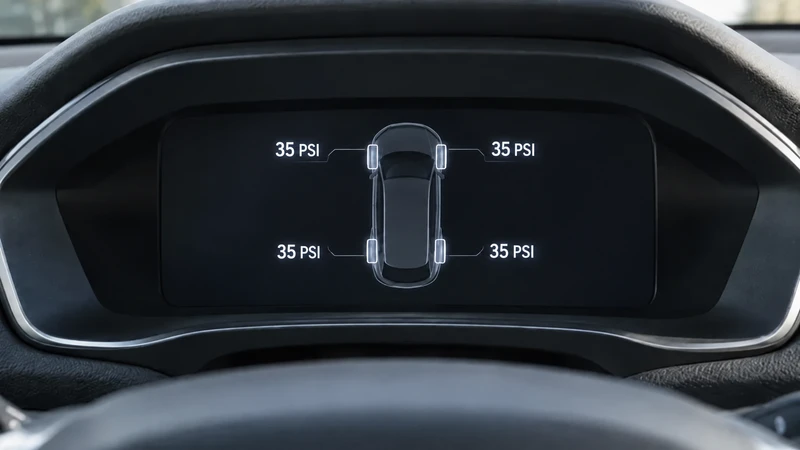
The 30-second test: dig through your dashboard or infotainment for a tire-pressure screen. If the car can show you actual PSI per wheel, it's direct — those numbers come from real sensors. If the only thing the car offers is the warning light, it's almost certainly indirect. Your owner's manual confirms it in one line.
Why it matters day-to-day: indirect cars (most Hondas and VWs) need a manual recalibration after every pressure change or tire rotation, or they'll throw false warnings against a stale baseline. Direct cars mostly take care of themselves. Honda owners: the specifics are in TPMS light on a Honda.
When the Light Comes On: The 3-Step Response
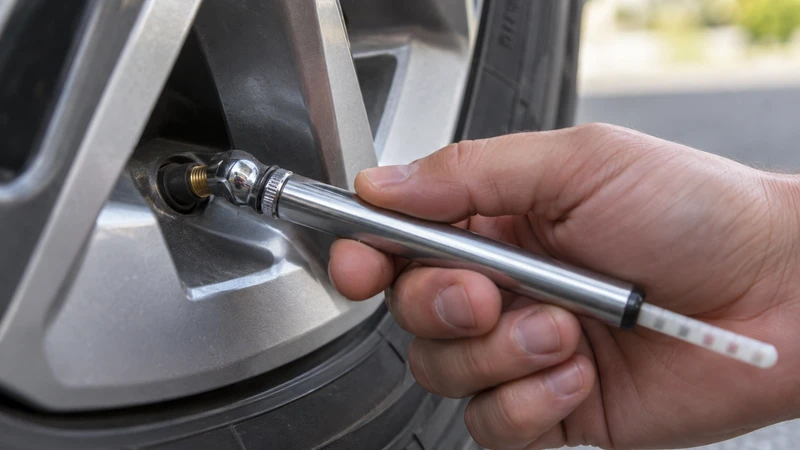
1. Check all four with a gauge, cold
Don't trust your eyes — a tire 25% low often looks fine. Two minutes with a gauge against the door jamb sticker: how to check tire pressure.
2. Inflate to the door jamb number
Not the sidewall maximum — the sticker on the driver's door jamb is your car's spec. Cold mornings drop every tire a few PSI; that's physics, not a leak (why pressure drops in cold weather).
3. Reset if needed
Direct systems usually clear themselves after a short drive; indirect systems need a calibration. Brand-by-brand steps: how to reset the tire pressure light.
Living With TPMS: What It Doesn't Do
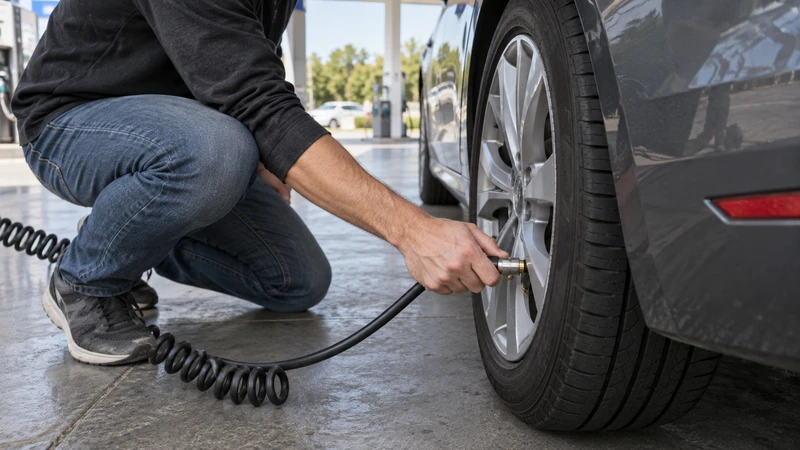
The most expensive misunderstanding about TPMS is treating it as a maintenance replacement. It isn't. The legal trigger is 25% below spec — a tire that's 10% low (wearing faster, handling worse, burning extra fuel) stays perfectly silent. The industry's own guidance is unchanged by TPMS: manual gauge checks once a month and before long trips, because the light is the smoke alarm, not the fire marshal.
The other upkeep item is the sensors themselves on direct systems: sealed batteries die after 5–10 years, and replacement is a normal mid-life car expense (typical costs in TPMS sensor replacement cost). A flashing light at startup is how the system tells you one has died — annoying, but far cheaper than the blowout it used to warn you about.
Key takeaways
- ✓TPMS = Tire Pressure Monitoring System — the whole warning system, not just the light and not just the sensor.
- ✓Its one job: light the amber tire-cross-section icon when a tire drops ~25% or more below the door jamb spec. Required on every US car since 2008 (TREAD Act → FMVSS 138).
- ✓Two types: direct (real sensors, can show per-tire PSI) vs indirect (ABS wheel-speed inference, light only, needs recalibration after tire work).
- ✓Light on = gauge-check all four cold, inflate to the door jamb number, then reset if your car needs it.
- ✓TPMS is a smoke alarm, not maintenance: it stays silent at 10% low. Monthly manual gauge checks remain the baseline habit.
Frequently Asked Questions
What does the TPMS light look like?
An amber icon shaped like a tire's cross-section — a horseshoe or flattened U with tread bumps along the bottom and an exclamation mark in the middle. It's one of the most misread symbols on the dashboard (people guess 'low oil' or 'engine problem'), but once you know it, you can't unsee the tire shape.
Is TPMS the same thing as the tire pressure light?
Yes — the light is the system's mouthpiece. TPMS (the monitoring hardware and software) watches your tires continuously; the dashboard light is how it reports. When people say 'my tire pressure light came on', the system talking to them is the TPMS.
Do all cars have TPMS?
Every passenger car and light truck sold new in the US since the 2008 model year has TPMS by federal law. Older vehicles may have nothing at all — one reason a gauge check matters more on a 2005 car than a 2020 one. Trailers, motorcycles, and heavy trucks are not covered by the mandate.
Can I drive with the TPMS light on?
Steady light: yes, briefly and gently — drive to the nearest place with an air pump, not across the state. A tire 25%+ low overheats at highway speed and can fail. Flashing light: the monitoring system itself has a fault; the car drives normally, but you've lost the early-warning net, so check pressures manually until it's fixed.
Does TPMS tell me my exact tire pressure?
Only if your car has direct TPMS with a per-tire display — many newer vehicles show each wheel's PSI in the cluster or infotainment. Cars with indirect TPMS (most Hondas, VWs) have no pressure sensors at all, so there are no numbers to show: just the one warning light.
Does TPMS replace checking my tires with a gauge?
No — and this is the most important misunderstanding. TPMS is legally required to warn only when a tire is 25% or more below spec, which is already well into the danger zone. A tire 10% low wears faster, handles worse, and burns more fuel while the light stays silent. Monthly gauge checks remain the baseline habit even on TPMS-equipped cars.