
How Much Does TPMS Sensor Replacement Cost?
Last updated: September 11, 2026 · Reading time: 8 min
Replacing a TPMS sensor costs $240–$299 per wheel on average as a standalone job (RepairPal), or $314–$368 by KBB's estimate — but just $60–$150 per wheel when bundled with a tire change. The sensor itself runs $20–$80 aftermarket or $40–$180 OEM, plus labor and sometimes a relearn fee.
First: Make Sure You Actually Need a New Sensor
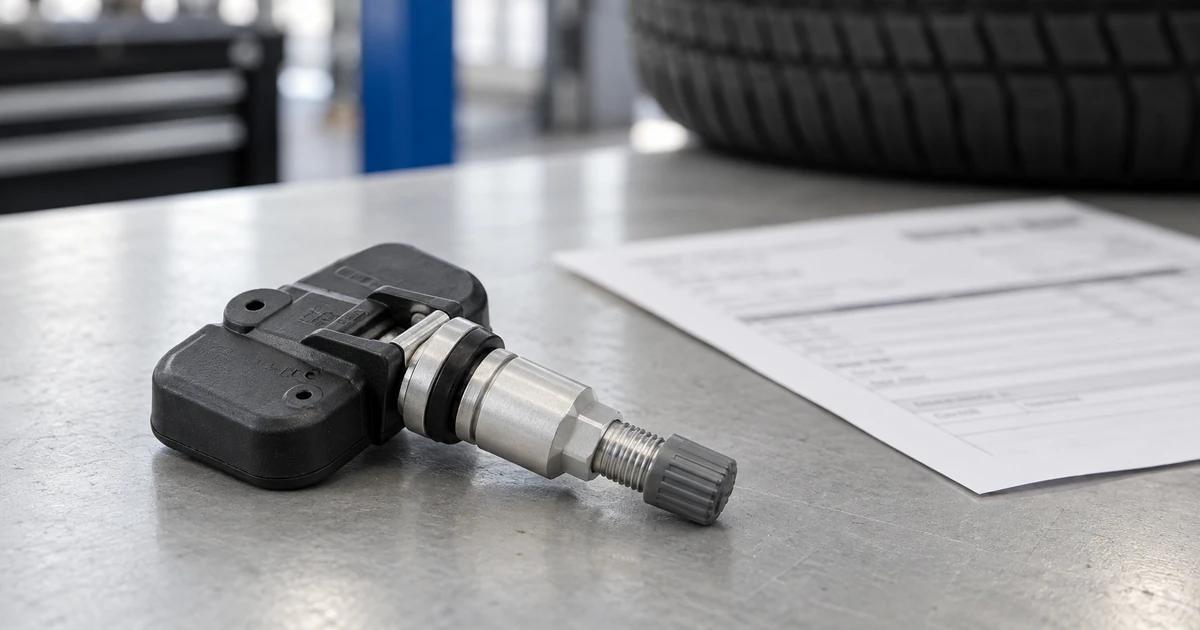
Before any price talk, one check can save you the entire bill: a TPMS light does not automatically mean a dead sensor. A steady light means a tire is genuinely low — a $0 fix at the air pump. A flashing light means the system has a fault, and even then the cause is sometimes a missing relearn after a tire rotation — a $0–$50 procedure, not hardware. The full diagnostic split is in our flashing TPMS light guide.
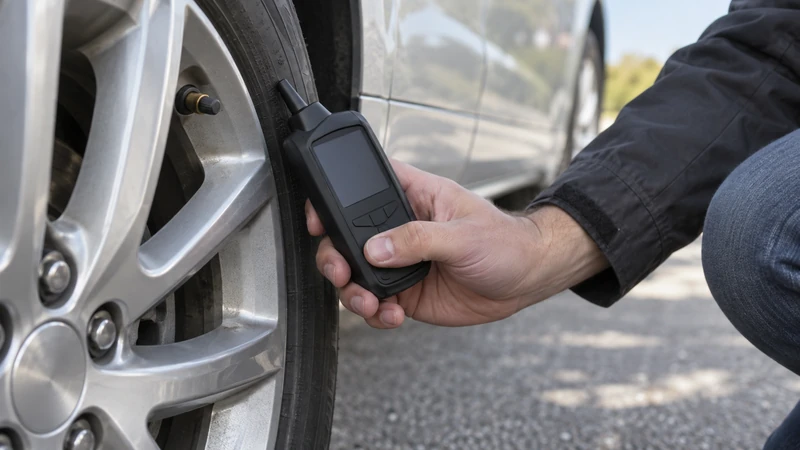
The cheapest diagnostic step: most tire shops will scan each wheel with a TPMS tool for free. The scan tells you which sensor is dead, whether the others are near end of life, and whether the car simply can't find a sensor ID. Get that scan before authorizing anything — it converts a guessing game into a line-item quote.
The Average Cost, Broken Down
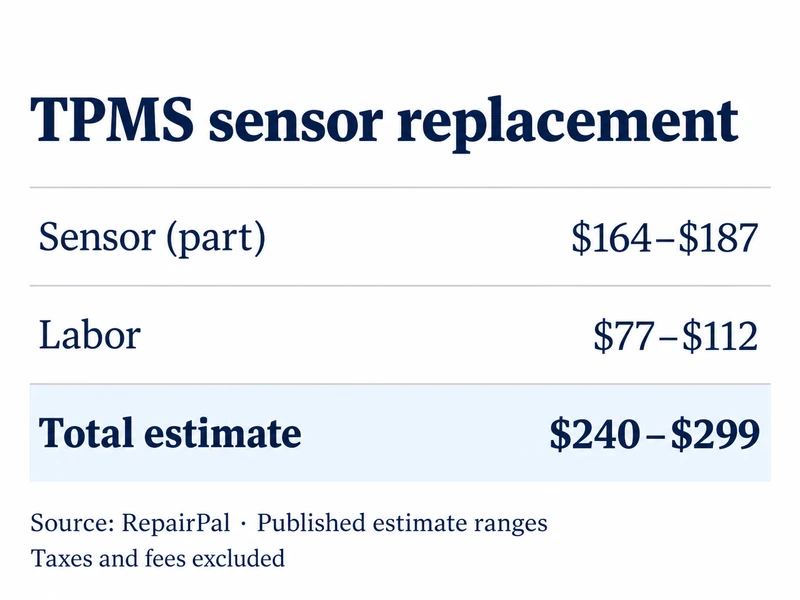
Two national estimators publish numbers for this job. RepairPal puts the average at $240–$299 per sensor; Kelley Blue Book puts it at $314–$368. Both describe the same scenario: a standalone visit, one sensor, nothing else being serviced.
| Line item | Range | Note |
|---|---|---|
| Sensor (part) | $164–$187 | RepairPal's parts estimate — reflects OEM-heavy pricing |
| Labor | $77–$112 | Dismount tire, swap sensor, remount, rebalance |
| Total per wheel | $240–$299 | RepairPal average; excludes taxes, fees, location differences |
| KBB estimate | $314–$368 | Kelley Blue Book's national average for the same job |
These averages overstate what most drivers should pay, because they're dominated by standalone visits at full labor rates. In the most common real-world scenario — sensors replaced while new tires are being mounted anyway — the same job typically lands at $60–$150 per wheel all-in. Keep both numbers in mind: the estimator figure is your ceiling, the tire-change figure is your target.
Cost by Vehicle Type
What you drive moves the price as much as where you go. Sensors for high-volume sedans are commodity parts; sensors for some European models are dealer-only items at dealer-only prices.
| Vehicle class | Per wheel, all-in | Why |
|---|---|---|
| Mainstream sedan (Camry, Accord, Malibu) | $75–$150 | Cheap, common sensors; every shop stocks compatible aftermarket units |
| Pickup / SUV (F-150, Silverado, Explorer) | $90–$180 | Slightly pricier sensors; truck labor rates at some shops |
| Luxury / European (BMW, Mercedes, Audi) | $150–$250 | OEM-only pricing on some models; fewer aftermarket options |
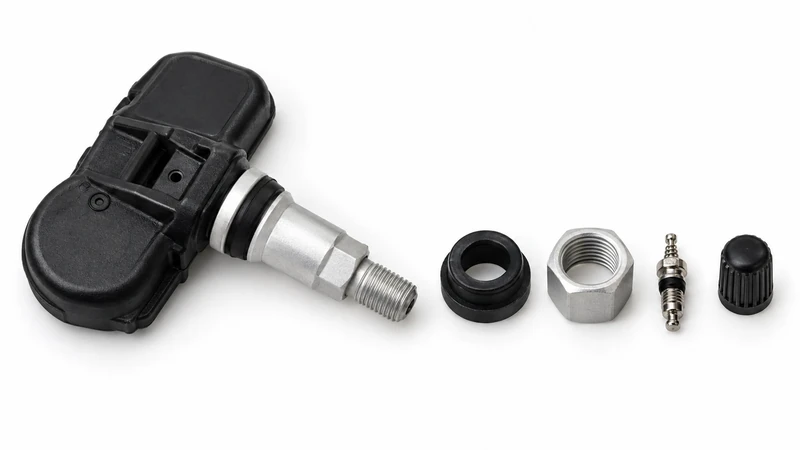
A note on trucks: heavy-duty pickups with dual rear wheels or high-pressure sensors can sit above this table. And on any vehicle, corroded metal valve stems can add small parts charges (a new service kit — seals, nut, cap — is a few dollars per wheel and should be replaced with the sensor anyway). More on stem types in our valve stem guide.
OEM vs Aftermarket Sensors
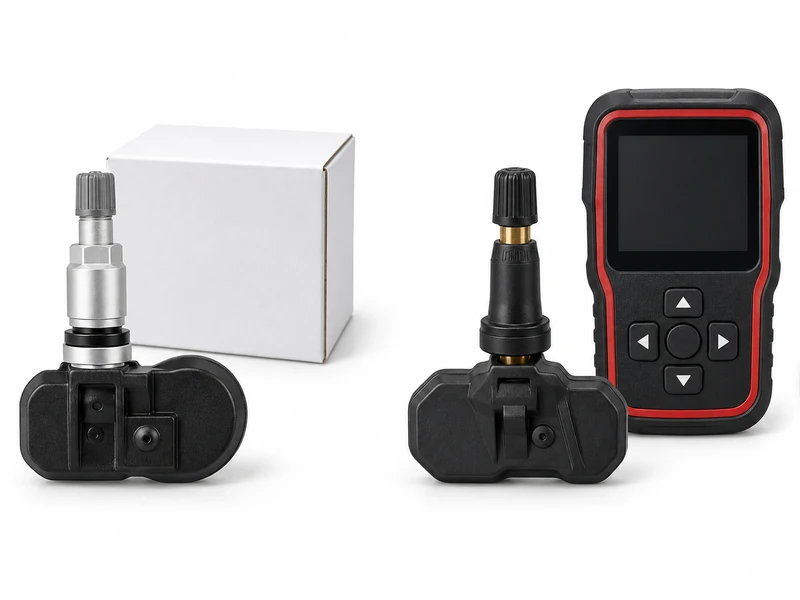
The single biggest price lever is which sensor goes in. OEM sensors (the exact part the car shipped with) run $40–$180, and past $250 for some luxury brands. Programmable aftermarket sensors — blank units the shop programs for your car — run $20–$80 and cover the vast majority of vehicles on the road.
Aftermarket quality is no longer the gamble it was in 2010. Major brands build to the same RF specs, and many units can be cloned to your old sensor's ID — the car then can't tell the difference, sometimes skipping the relearn step entirely. Where OEM still makes sense: some European vehicles with picky receivers, and cars under warranty where a dealer might quibble over non-OEM parts.
One compatibility check matters regardless of brand: sensors broadcast on either 315 or 433 MHz, and your car only listens on one. A reputable shop verifies this before quoting; if you're buying the part yourself, match it to your exact year/make/model. Sensor types, battery life, and failure modes are covered in depth in the TPMS sensor guide.
Where You Go Changes the Price by 2–3x
The same sensor swap, three different bills:
- Dealership — highest: OEM part at list price plus dealer labor rates, often $150–$300+ per wheel. Worth it mainly for warranty work or genuinely dealer-only sensors.
- Independent repair shop — middle: typically 30–50% less than the dealer for the identical job.
- Tire shop, during a tire change — lowest: the tires are already dismounted, so the sensor swap adds minutes, not a labor hour. This is where the $60–$150 per-wheel figure comes from.
The bundling effect is the whole game. Dismounting and rebalancing a tire is most of the labor in this job — when it's already happening for new tires, the sensor is nearly an add-on. If your sensors are aging and your tires are due within a year, waiting to do both together is usually the cheapest legitimate move.
The Relearn Fee (and When It's Free)
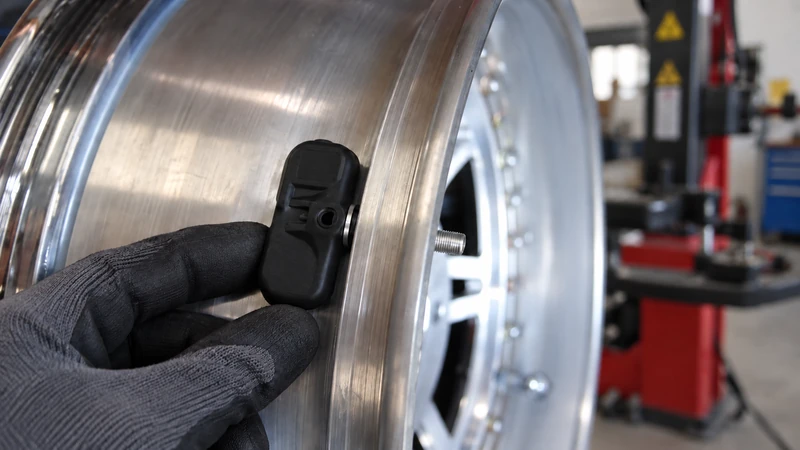
A new sensor isn't done when it's bolted in — the car has to learn its ID. Depending on the vehicle, that relearn is one of three things: automatic (drive 10–20 minutes, the car finds the new sensor itself), manual (a button sequence or key-cycle procedure in the owner's manual), or tool-based (a shop triggers each sensor with a TPMS tool and registers the IDs through the OBD port).
Shops charge $0–$100 for this, and it's the most negotiable line on the invoice — many tire shops include it free with sensor or tire purchases. Ask before the work starts: “Is the relearn included?” If your new sensor was cloned to the old ID, the answer may be “not needed at all.” Step-by-step reset and calibration procedures for every brand are in the tire pressure light reset guide.
One Sensor or All Four?
Sensors are all the same age — they were installed together at the factory and their sealed batteries have been draining in parallel for 5–10 years. When the first one dies, the others are statistically months to a couple of years behind it. Replacing one is correct if a sensor died young from damage (pothole, careless tire mounting). Replacing the set is worth pricing when the first one dies of old age.
The math favors bundling: a full set runs roughly $300–$1,000 depending on vehicle and sensor choice, but per-wheel cost drops sharply when all four corners are done in one visit — one labor event instead of four separate ones spread over two years. Ask for both quotes: “one sensor today” and “all four, with my next tires.” If the four-sensor bundle is less than 2.5x the single, it usually wins.
How to Pay Less: The Checklist
1. Scan before you spend
A free TPMS scan at a tire shop identifies exactly which sensor is dead and whether the issue is hardware at all — or just a missing relearn. Never approve parts before this step.
2. Time it with new tires
If tires are due within the year, wait and bundle. The labor overlap is worth $50–$150 per wheel by itself.
3. Quote aftermarket, not just OEM
Ask for the programmable aftermarket price alongside OEM. On a mainstream car the difference is often $60–$100 per wheel for identical daily function.
4. Ask about the relearn upfront
“Is the relearn included?” turns a $50–$100 surprise into a negotiated line — often waived at tire shops when you buy the sensor there.
5. Compare two shops, not two websites
Estimator sites give national averages; your actual market is two phone calls away. Quote the dealer against one independent tire shop — the spread routinely exceeds $100 per wheel.
What not to do: drive around it for a year. TPMS has been required on every US passenger vehicle since 2008 precisely because underinflated tires are a leading blowout cause — a dead sensor means you've lost the early warning. Manual monthly gauge checks (here's the two-minute routine) are a fine stopgap, but they're a habit you have to keep — the sensor is the habit you don't.
Key takeaways
- ✓Standalone replacement averages $240–$299 per wheel (RepairPal) or $314–$368 (KBB) — but $60–$150 when bundled with a tire change.
- ✓The sensor itself: $20–$80 aftermarket vs $40–$180+ OEM. Programmable aftermarket units work in most vehicles and can clone your old ID.
- ✓A steady TPMS light is low pressure, not a dead sensor — and a flashing light is sometimes just a missing relearn. Get the free scan before approving any parts.
- ✓Sensors die in waves (same age, same sealed batteries). When the first dies of old age, price the full set — per-wheel cost drops sharply in one visit.
- ✓Always ask: 'Is the relearn included?' It's the most negotiable line on the invoice, worth $0–$100.
Frequently Asked Questions
Can I replace a TPMS sensor myself?
Realistically, no — not because the sensor is complicated, but because it sits inside the wheel. The tire must be fully dismounted from the rim to reach it, which requires a tire machine and balancing equipment most home garages don't have. The practical DIY version: buy the correct sensor online yourself ($20–$80 aftermarket), then pay a tire shop a mount-and-relearn fee to install it. That hybrid approach can cut the bill roughly in half.
How long does TPMS sensor replacement take?
About 30–45 minutes per wheel as a standalone visit, including dismounting the tire, swapping the sensor, remounting, rebalancing, and the relearn procedure. Bundled with a tire change it adds only a few minutes per wheel, since the tires are already off — which is exactly why the labor charge drops so much in that scenario.
Will an aftermarket TPMS sensor work with my car?
In most cases, yes. Quality programmable aftermarket sensors cover the vast majority of vehicles and can be cloned to your old sensor's ID, which sometimes skips the relearn entirely. Two things must match: the radio frequency (315 or 433 MHz) and the protocol your car expects. Some European models are pickier — for those, OEM is the safer bet. A reputable tire shop will confirm compatibility before quoting.
Can I just replace the battery in a TPMS sensor instead of the whole sensor?
No. The battery is sealed inside the sensor housing and potted in epoxy — it is not serviceable, by design, because a battery compartment couldn't survive years of heat, cold, moisture, and 800+ g of centrifugal force inside a wheel. A dead battery means replacing the entire sensor. This is why sensor lifespan (5–10 years) is really battery lifespan.
Is it worth replacing TPMS sensors on an old car?
Usually yes. The system is federally mandated safety equipment, and without it you lose your only automatic warning for a slowly deflating tire — the kind that causes highway blowouts. Some states with safety inspections also fail vehicles with an active TPMS malfunction light. At $60–$150 per wheel bundled with tires you're buying anyway, it's cheap insurance even on a high-mileage car.
Why did the dealer quote me over $350 for one sensor?
Three usual reasons: dealer parts departments sell OEM sensors at full list price ($100–$250 for some brands), dealer labor rates run higher than independent shops, and a standalone visit pays full labor for dismounting and rebalancing one wheel. Get a second quote from an independent tire shop — the same job with a quality aftermarket sensor often lands at half the dealer number, with identical day-to-day function.