How Often to Check Tire Pressure: Monthly, Before Trips & Seasonal Guide
Last updated: August 12, 2026 · Reading time: 6 min
Check your tire pressure at least once a month — that's the universal recommendation from Goodyear, Michelin, and Bridgestone. Add extra checks before any long trip over 100 miles, during seasonal temperature swings (pressure changes ~1 PSI per 10°F), and after hitting a pothole. The whole check takes 5 minutes and prevents the gradual 1–2 PSI monthly loss from becoming a dangerous drop.
Most drivers only check tire pressure when the TPMS warning light comes on. By that point, your tires are already at least 25% below the recommended PSI — dangerously under-inflated. The light is a last-resort alarm, not a maintenance schedule. Here's exactly how often to check, backed by every major tire manufacturer, plus why tires lose pressure even when nothing is wrong and how to make checking a habit you actually keep.
The Short Answer
- At least once a month — every major tire manufacturer agrees
- Before any long trip — especially over 100 miles
- When temperatures swing 20°F+ — first cold week of fall, first hot week of summer
- After hitting a pothole or curb — impacts can cause slow leaks
- When carrying heavy loads or towing — adjust pressure to match load
Monthly Checks: The Universal Baseline
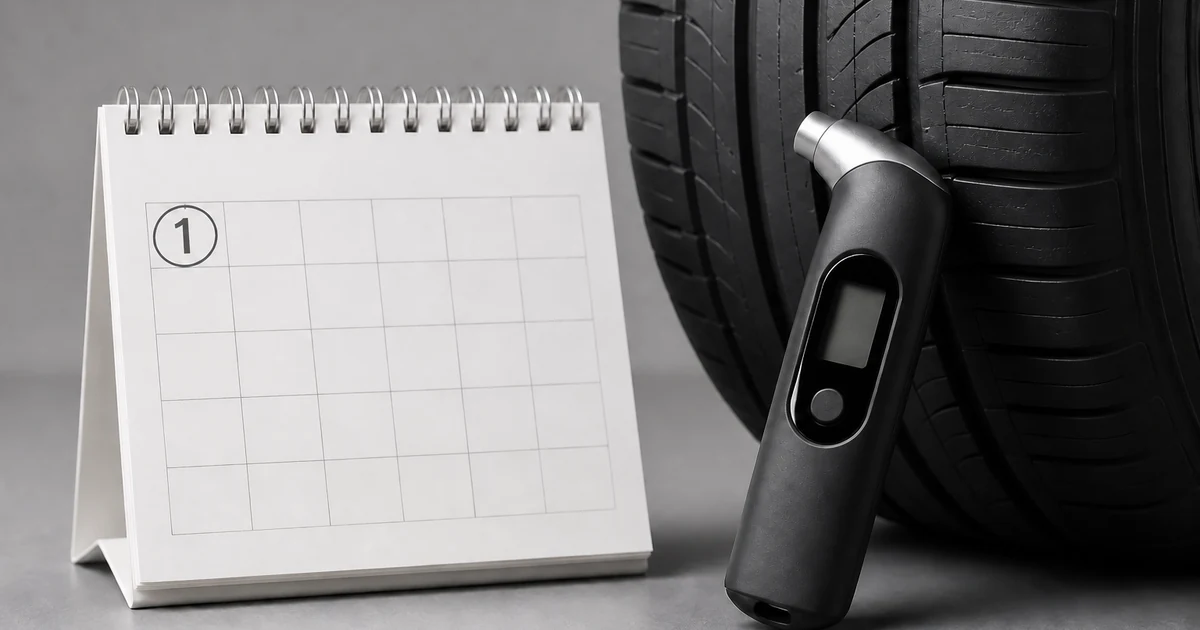
Every major tire manufacturer and safety organization recommends checking tire pressure at least once a month:
Goodyear: "Check pressure once a month, say on the first of every month."
Michelin: "Check at least once a month and before any long trip."
U.S. Tire Manufacturers Association: "Check at least once a month."
Bridgestone: "Check once every two weeks" — the most conservative recommendation among major brands.
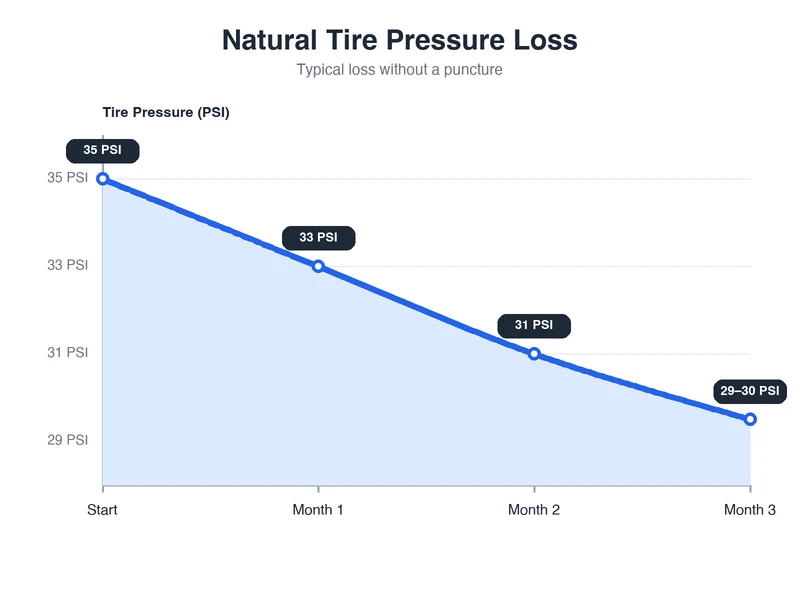
The reasoning is simple: tires naturally lose 1-2 PSI per month through permeation alone — air molecules slowly passing through the rubber. If your recommended pressure is 35 PSI, after three unchecked months you could be at 29-30 PSI without ever seeing a puncture or visible flat spot. That's enough to reduce fuel economy by 2-3% and accelerate tire wear on the outer edges.
Pro tip: Check on the first day of each month — it's easy to remember. Or pair it with another monthly task like paying a bill. Your tires don't care which day you pick — they just need it to be consistent.
Before Every Long Trip: The Non-Negotiable Check
If you're driving more than 100 miles — a weekend getaway, a road trip, or a holiday journey — check your tire pressure before you leave. Here's why long trips demand extra attention:
Heat buildup at highway speeds
Sustained high-speed driving generates significant heat in your tires. An under-inflated tire flexes more, creating even more heat — which can lead to a tread separation or blowout. This is the most common cause of highway tire failures.
Heavier loads increase stress
A car full of passengers and luggage weighs hundreds of pounds more than your daily commute load. Many vehicles have a separate, higher PSI recommendation for full-load conditions — check your door jamb sticker for both numbers. Inflate to the higher value when fully loaded.
You're far from help
A tire issue discovered in your driveway costs you 5 minutes. A tire issue discovered 200 miles from home on a Sunday night costs you hours, a tow truck, and potentially a ruined trip. Five minutes of prevention is the best insurance.
Seasonal Checks: When the Weather Changes, So Does Your Pressure
For every 10°F drop in temperature, tire pressure drops approximately 1 PSI. The reverse is true in summer — pressure rises as temperatures climb. This is pure physics (the ideal gas law) and affects every tire, regardless of brand or age.
Fall / Early Winter
The first cold snap of the season is when TPMS lights illuminate nationwide. A 30°F overnight drop can take 3 PSI out of every tire. Check at the first cold front, and consider checking every two weeks if you live where winter temperatures swing 20°F+ in a single day.
Spring / Early Summer
Tires inflated during cold winter months may become over-inflated when summer arrives. A tire set to 35 PSI at 20°F could read 40+ PSI at 90°F. Over-inflated tires wear faster in the center, reduce traction, and ride harsher. Re-check and release air to the recommended PSI when seasons change.
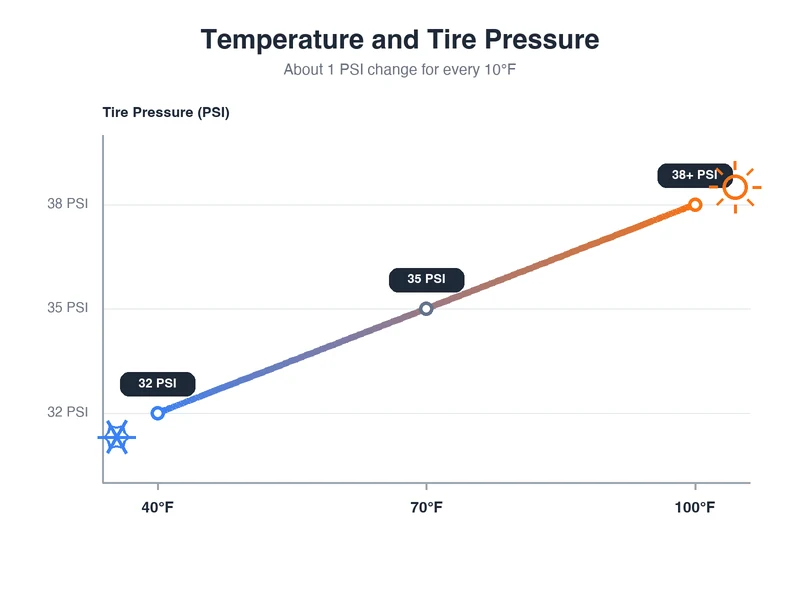
Rule of thumb: Check your tire pressure on the first cold morning of fall, the first hot day of summer, and any time the temperature swings more than 20°F within 24 hours.
After These Events, Check Immediately
Beyond the scheduled checks, certain events demand an immediate pressure check:
Hitting a pothole or curb
A hard impact can damage the tire internally — cracking belts or breaking the bead seal against the rim — without leaving visible external damage. A slow leak that develops after a pothole impact won't fix itself. Check pressure the next morning. If that tire is low, have it inspected.
After tire service
If you've had a tire repaired, rotated, or replaced, verify the pressure yourself. Shops sometimes set all tires to a generic 32-35 PSI regardless of your vehicle's specification. Check against your door jamb sticker and adjust if needed.
Carrying heavy loads or towing
Your door jamb sticker may list separate PSI values for normal and full-load conditions. Heavier loads require higher pressure to prevent excessive tire flex and heat buildup. Inflate to the loaded specification before you load up, and return to normal PSI after.
Why Tires Lose Pressure — Even Without a Leak
If you've ever wondered why your tires need constant attention even when they look fine, here are the three reasons:
| Cause | Rate of Loss | What to Do |
|---|---|---|
| Natural permeation | 1-2 PSI / month | Normal and unavoidable — top up monthly |
| Temperature change | ~1 PSI / 10°F drop | Check after major temperature swings |
| Slow leak | 2-5 PSI / week | Have tire inspected — nail, valve, or bead leak |
Don't Rely on TPMS Alone
The Tire Pressure Monitoring System (TPMS) in your vehicle is a safety net, not a maintenance tool. Here's the critical number most drivers don't know:
25%
The TPMS warning light typically activates only when tire pressure drops 25% below the recommended level. At 35 PSI recommended, that means the light comes on at about 26 PSI — a tire that is already dangerously under-inflated.
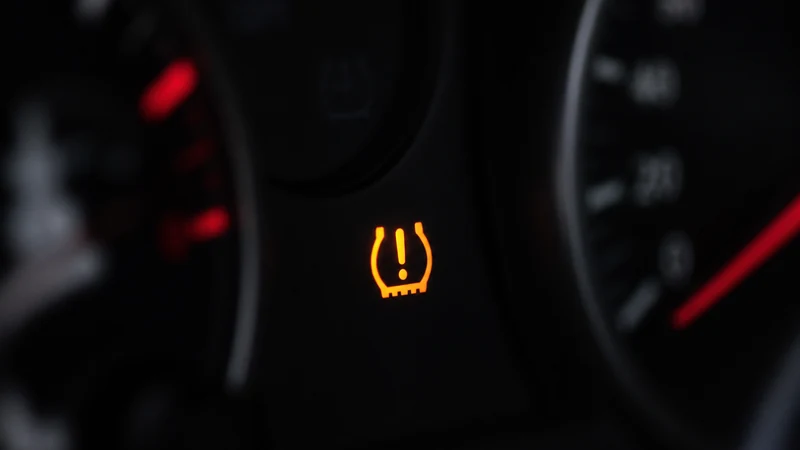
By the time your TPMS light illuminates, you've already been driving on under-inflated tires — potentially for weeks. You've been getting worse fuel economy, wearing your tires unevenly, and operating at higher risk of a blowout. The light means "fix this now," not "check this next week."
Some vehicles are better: Cars with direct TPMS display individual tire pressures on the dashboard (typically to 1 PSI resolution). If your car has this, you can use it for quick checks between manual measurements. But always verify with a gauge periodically — TPMS sensors can drift over time and typically last 5-10 years before the battery dies.
How to Make Tire Checks a Habit You Actually Keep
Knowing you should check monthly and actually doing it are two different things. Here's how to make it stick:
Tie it to an existing routine
First day of the month. Every gas fill-up. When you pay your car insurance. Attach the new habit to something you already do without thinking. The cue triggers the action.
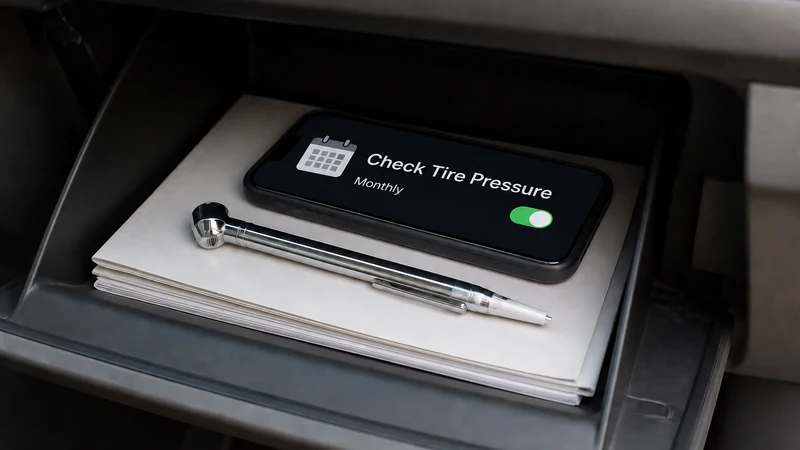
Set a recurring phone reminder
Monthly, on the 1st, at a time when you're likely to be home — Saturday morning works for most people. A 30-second task you can do in your driveway.
Keep a gauge in your glove box
If you have to go find the gauge in the garage, it won't happen. A pencil gauge costs $6 and fits in any glove box. A digital gauge costs $12-30. Keep it in the car — it's always there when you remember to check.
Make it a 2-minute routine
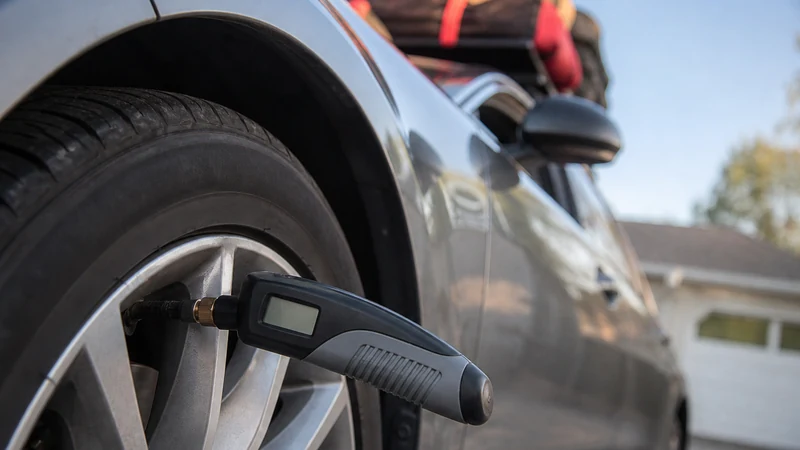
Unscrew caps → press gauge on each valve → read → replace caps. Check the spare too. That's it. Don't add air unless needed — just know your numbers. If you only check without inflating, it's fast enough to actually do.
Frequently Asked Questions
How often should I really check my tire pressure?
At least once a month. This is the universal recommendation from Goodyear, Michelin, Bridgestone, and the U.S. Tire Manufacturers Association. Check before long trips (100+ miles), and more frequently during seasonal temperature changes when pressure fluctuates significantly. Bridgestone goes further and recommends every two weeks — the safest possible cadence.
Why do my tires lose air when there's no visible puncture?
Tires lose 1-2 PSI per month through natural permeation — air molecules slowly escape through the rubber compound itself. Temperature drops reduce pressure an additional 1 PSI per 10°F. Minor leaks from aging valve stems, bead corrosion where the tire meets the rim, or microscopic punctures can accelerate the loss. This is normal and is exactly why monthly checks are necessary.
Can I just wait for the TPMS light to come on?
No. The TPMS warning light typically activates only when pressure drops 25% below recommended — about 26 PSI on a tire that should be at 35 PSI. At that level, your tires are already dangerously under-inflated, with reduced handling, longer braking distances, and increased blowout risk. The light is a last-resort alarm. Monthly manual checks catch low pressure before it reaches dangerous levels.
Do I need to check tire pressure more often in winter?
Yes. Cold weather causes significant pressure drops — about 1 PSI per 10°F decrease. A 30°F overnight temperature swing can pull 3 PSI from every tire. Check at the first major cold front of the season, and consider every two weeks through winter if your area has large temperature swings. Tires inflated on a cold morning will read correctly; tires inflated in a heated garage will be under-inflated when you drive outside.
Should I check the spare tire pressure too?
Yes, absolutely. Compact spares require about 60 PSI — far higher than regular tires — and lose pressure faster because of their small air volume. Full-size spares should match your regular tire pressure. A flat spare when you need it most is worse than useless — it gives false confidence. Check it every time you check your main tires.
How do I remember to check tire pressure every month?
Tie it to an existing routine — first of the month, every gas fill-up, or when you pay a recurring bill. Set a monthly phone reminder for a time when you're usually home. Keep a gauge in your glove box so you never have to go looking for one. After two or three months, it becomes automatic — like checking your oil or putting on a seatbelt.