
Tire Pressure Warning Light: What It Means & What to Do
Last updated: July 22, 2026 · Reading time: 7 min
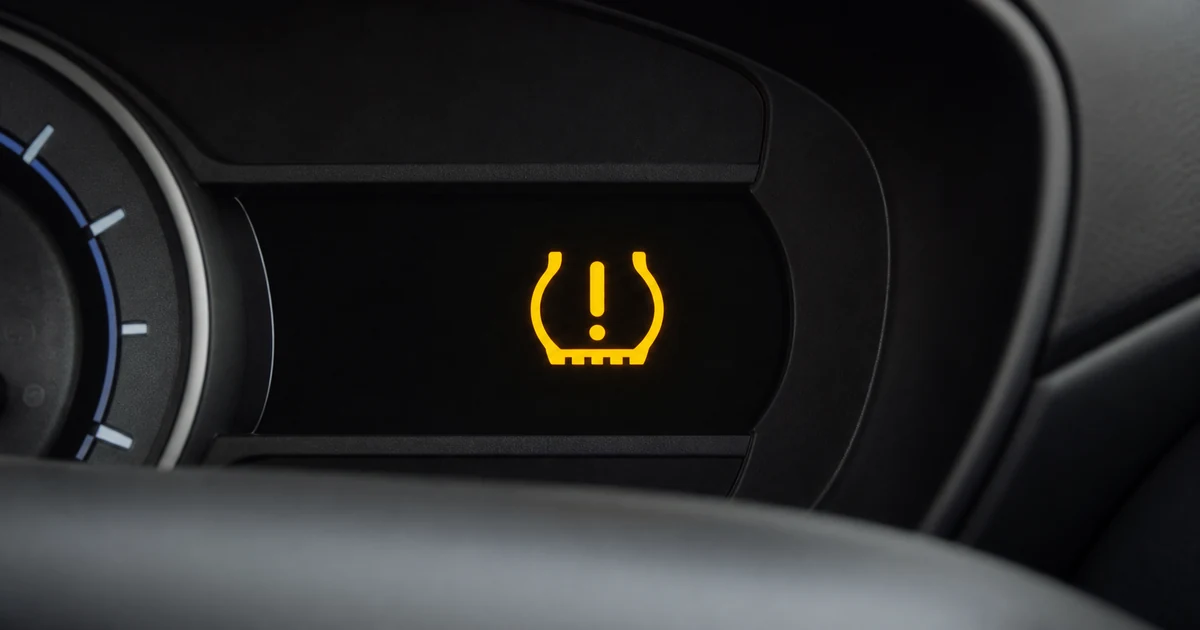
You are driving and a yellow horseshoe-shaped light with an exclamation mark appears on your dashboard. That is your TPMS (Tire Pressure Monitoring System) warning — and it means at least one tire is dangerously low on air.
Here is exactly what it means, how urgent it is, what to do right now, and how to reset the light once you have fixed it.
Quick Take: What To Do Right Now
- Pull over safely and visually check all four tires — look for obvious flats or bulges
- If tires look fine, drive to the nearest gas station or tire shop with an air pump
- Use a gauge to check all four tires — do not trust the TPMS to tell you which tire is low
- Inflate whichever tire is below the recommended PSI on your door jamb sticker
- Drive a few miles — the light should turn off automatically
What Is TPMS and What Triggers the Light?
TPMS has been mandatory on all new cars sold in the United States since September 2007. Its job is to alert you when tire pressure drops to a level that compromises safety — specifically 25% below the manufacturer's recommended PSI.
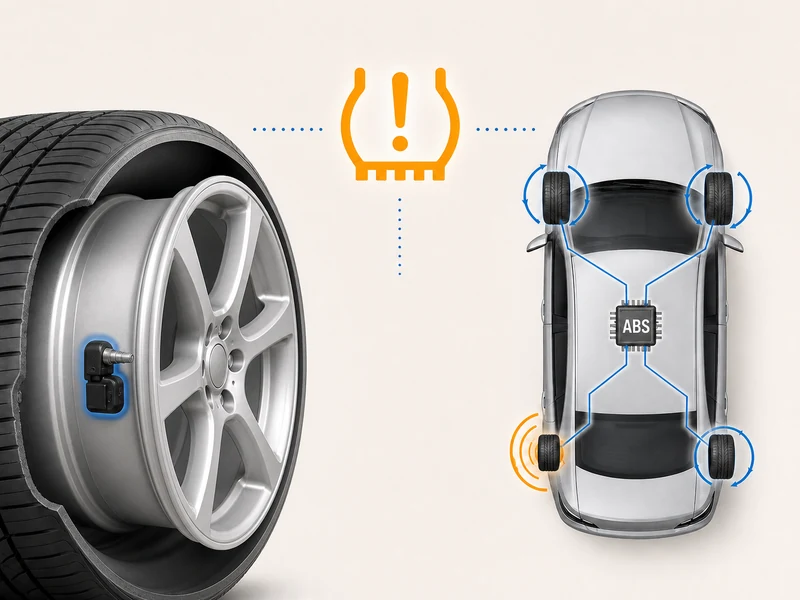
There are two types of TPMS, and they behave differently:
Direct TPMS
Each wheel has a physical pressure sensor inside it, usually attached to the valve stem. The sensor measures actual PSI and transmits a radio signal to the car's computer. Direct TPMS shows real, precise readings — and some newer cars display individual tire pressures on the dashboard.
Most common on: vehicles made after 2010, all luxury brands, most newer mainstream cars
Indirect TPMS
No physical sensors in the wheels. Instead, the car uses the ABS wheel speed sensors to detect when one tire rotates faster than the others — a sign that it has a smaller circumference due to low pressure. Indirect systems are less precise and cannot tell you the actual PSI, only that one tire is different.
Most common on: older vehicles (pre-2010), some budget models, Honda vehicles (2007–2013 era)
Solid Light vs. Flashing Light: Two Different Problems
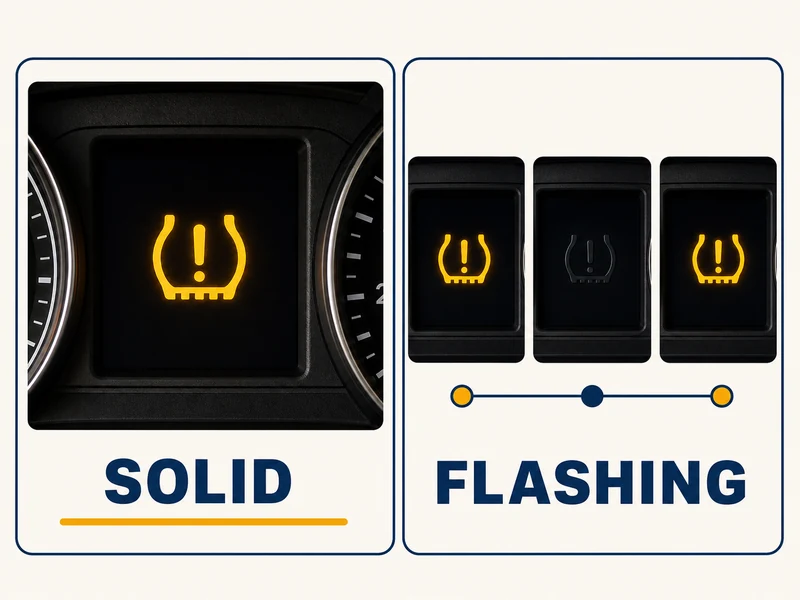
The way the light behaves tells you what kind of problem you have. Most drivers don't know there's a difference — but it matters.
Solid light
Pressure problem. One or more tires is at least 25% below the recommended PSI. This is the most common type.
- Low pressure from temperature drop
- Slow leak or puncture
- Haven't checked pressure in months
Flashing (60–90s) then solid
System malfunction. The TPMS itself has a problem — not necessarily your tire pressure.
- Dead sensor battery (sensors last 5–10 years)
- Faulty or damaged sensor
- Lost communication with vehicle computer
- Sensor damaged during tire change or rotation
Can You Drive With the TPMS Light On?
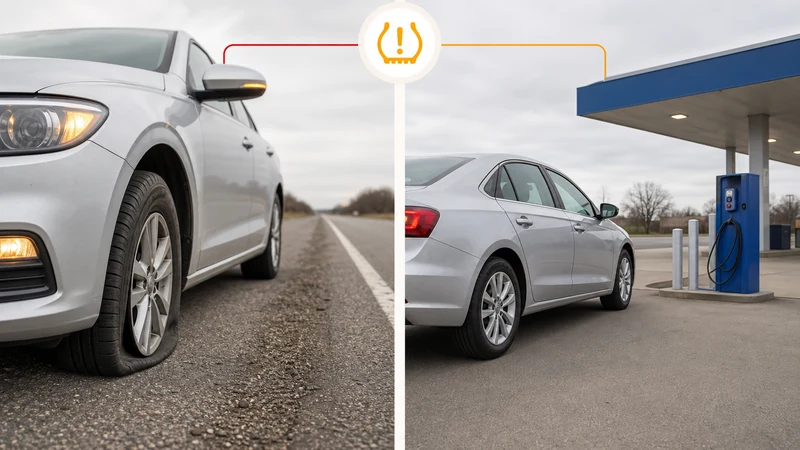
It depends on the situation. Here is how to judge:
Stop immediately — do not drive
- Tire is visibly flat or severely low
- Steering wheel pulls hard to one side
- You feel vibration, wobbling, or a thumping sound
- You hit a large pothole or curb right before the light came on
Drive cautiously to the nearest air pump
- Tires look normal — not obviously flat
- Light just came on and driving feels normal
- You are within a few miles of a gas station or tire shop
- Keep speed under 50 mph — under-inflated tires generate more heat at higher speeds
How to Reset the TPMS Light
Once you have inflated your tires to the correct PSI, the light should turn off. Here is how, depending on your vehicle:
Just drive
On most newer vehicles (2015+), the TPMS light turns off automatically after driving a few miles at 15+ mph. The sensors need motion to transmit updated readings. This is the most common method — no button required.
Press the TPMS reset button
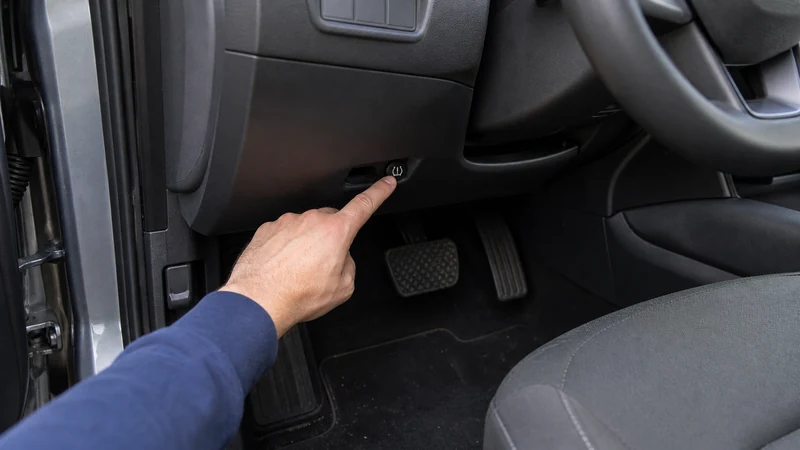
Many vehicles have a physical reset button under the steering wheel, inside the glovebox, or near the hood release. With the ignition on (engine off), press and hold the button until the TPMS light blinks three times. Start the engine and the light should go off after 20–30 seconds of driving.
Use the dashboard menu
On newer cars with digital dashboards (Tesla, newer Toyotas, etc.), you can reset TPMS through the vehicle settings menu on the infotainment screen. Look for 'Tire Pressure', 'TPMS Calibration', or 'Vehicle Settings'.
TPMS relearn tool
Some vehicles (especially older GM and Ford models) require a TPMS relearn tool — a small electronic device that activates each sensor in sequence. Tire shops have these and will use them for free or a small fee. You can also buy one for $15–$25.
For brand-by-brand procedures (Toyota button, Honda menu calibration, Ford/GM relearn, and what to do when the light won't turn off), see the full tire pressure light reset guide.
Why Does the Light Keep Coming Back After Inflating?
If you inflate your tires to the correct PSI and the TPMS light turns off — but comes back a few days later — you have one of three problems:
1. There is a slow leak
A nail, damaged valve, or corroded bead is letting air escape slowly enough that the tire looks normal for days. The TPMS detects the pressure drop before you do. One tire consistently reads lower than the others — that tire has a leak. See our guide on why tire pressure keeps dropping for diagnosis steps.
2. A TPMS sensor battery is dying
Sensor batteries last 5–10 years and cannot be replaced — you replace the entire sensor. When a battery is near the end, it may give intermittent false low readings. If all four tires hold steady pressure on a gauge but the light still activates, suspect a dying sensor.
3. Cold weather is playing tricks on you
You inflated on a warm afternoon, and the light came back on the next cold morning. The pressure dropped 3–4 PSI overnight due to temperature alone. Re-inflate to the door jamb PSI on a cold morning for the most accurate fill.
TPMS Sensor Replacement: What to Expect
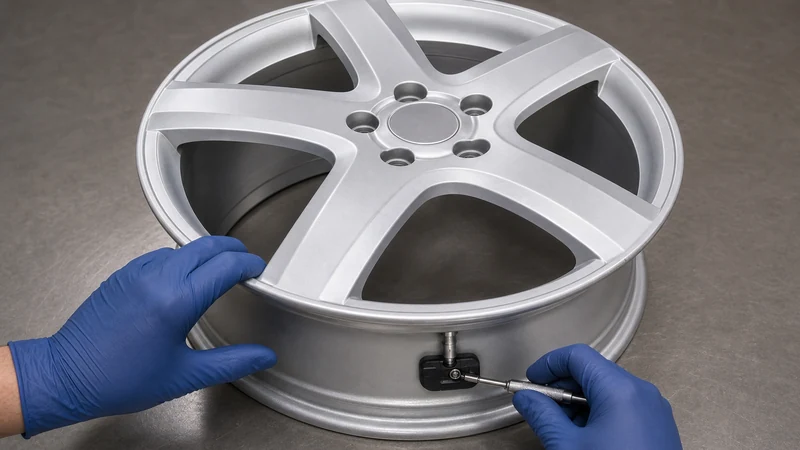
If the flashing light points to a dead sensor, here is what the repair involves:
| Item | Estimated cost |
|---|---|
| Sensor (each) | $30 – $80 |
| Labor to demount, replace, remount, balance | $15 – $30 per wheel |
| Total per sensor | $50 – $110 |
| Replace all four (recommended if same age) | $200 – $350 |
Tip: If one sensor fails and the other three are close in age (within 1–2 years), replace all four at once. Each sensor requires removing the tire from the wheel — paying four separate labor charges over the next year or two costs more than doing it in one visit. Most tire shops recommend this and may offer a discount for all four.
Frequently Asked Questions
Can I drive with the TPMS light on?
If the light is solid, drive a short distance to an air pump and inflate immediately. If the light flashes for 60–90 seconds then stays solid, it's a sensor fault — you can drive, but get it checked soon. In either case, if you feel vibration, pulling, or see visible tire damage, stop immediately.
How do I reset my TPMS light after inflating?
After inflating to the correct PSI, drive a few miles at 15+ mph — the light should turn off automatically on most vehicles. If it doesn't, look for a TPMS reset button under the steering wheel or in the glovebox. On newer cars, check the dashboard vehicle settings menu.
What does a flashing TPMS light mean?
A flashing light (or a light that flashes for 60–90 seconds and then stays on) indicates a TPMS system malfunction — typically a dead sensor battery, faulty sensor, or lost communication. A solid light means low pressure — a different problem with a different fix.
Why does my TPMS light come on when it's cold?
Cold air is denser and takes up less volume — for every 10°F temperature drop, tire pressure drops approximately 1 PSI. A 35°F overnight swing can drop pressure by 3–4 PSI and trigger the TPMS. Re-inflate to the recommended PSI on cold tires — do not over-inflate to compensate.
Does the TPMS light tell me which tire is low?
On newer cars with individual tire pressure displays — yes, exact PSI for each wheel. On older cars with a generic warning light only — no, you need a gauge to check all four. If your car only has a warning light and the light comes on, check all four tires, not just one.
How much does it cost to replace a TPMS sensor?
A sensor costs $30–$80 for the part plus $15–$30 labor per wheel — $50–$110 total per sensor. If one sensor fails and the others are similar age, consider replacing all four ($200–$350) to avoid returning for the same repair.