
Why Does My Tire Pressure Keep Dropping?
Last updated: July 27, 2026 · Reading time: 7 min
If you keep inflating the same tire and it keeps going low, something is wrong — but the cause isn't always a nail. Tire pressure drops for six distinct reasons, and the fix is completely different depending on which one you have.
This guide walks through every cause, how to diagnose which one is yours, what a "normal" rate of pressure loss looks like, and exactly how to fix each problem.
The 6 Reasons Tire Pressure Drops
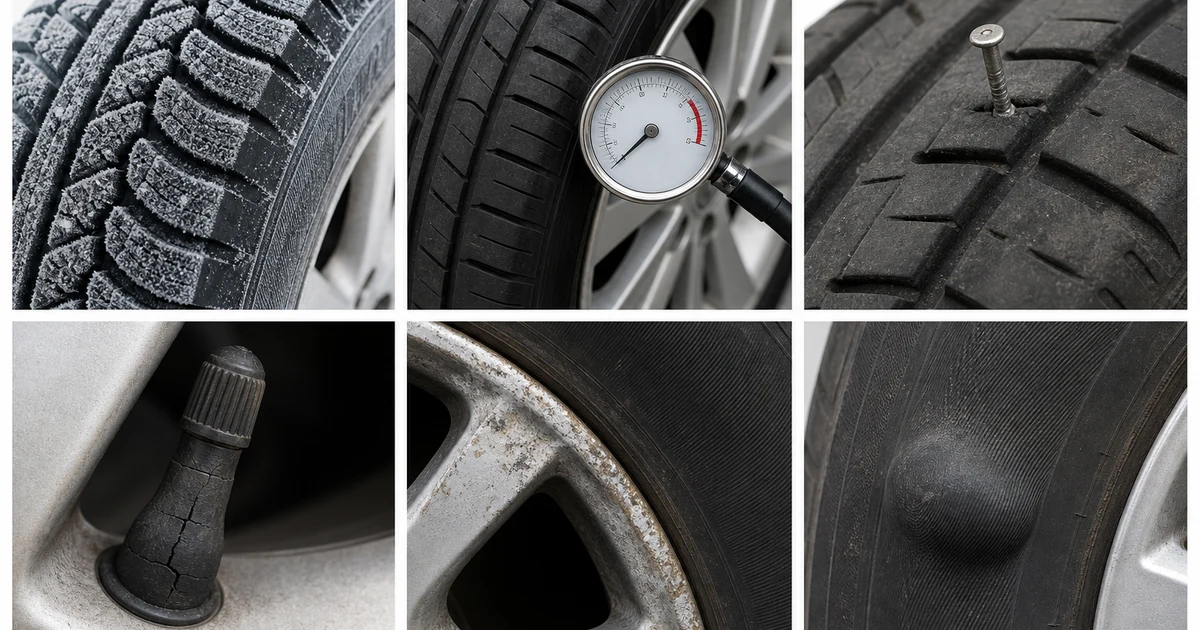
- Temperature drop — 1 PSI lost per 10°F, affects all tires equally
- Normal permeation — 1–3 PSI per month through the rubber itself
- Slow puncture — nail or screw, one tire drops faster than the others
- Leaking valve stem — cracked rubber or loose valve core
- Corroded wheel bead — rim leak, common on older alloy wheels
- Tire sidewall damage — from impacts or UV cracking
How Fast Is "Normal" Pressure Loss?
Before diagnosing a problem, you need a baseline. Most drivers have no idea what's normal — so they either panic over natural variation or ignore genuine slow leaks for months.
| Rate of pressure loss | What it means |
|---|---|
| 1–3 PSI per month | Normal permeation. No leak. Check and top off monthly. |
| 1–2 PSI overnight in cold weather | Normal temperature-driven drop. Inflate and monitor. |
| 3–5 PSI per week | Likely a slow leak — valve, bead, or small puncture. Investigate. |
| More than 5 PSI per week | Definite leak. Do not ignore. Get it repaired this week. |
The 6 Causes — And How to Fix Each
This is the single most common reason tires lose pressure — and it happens to every driver, everywhere, every winter.
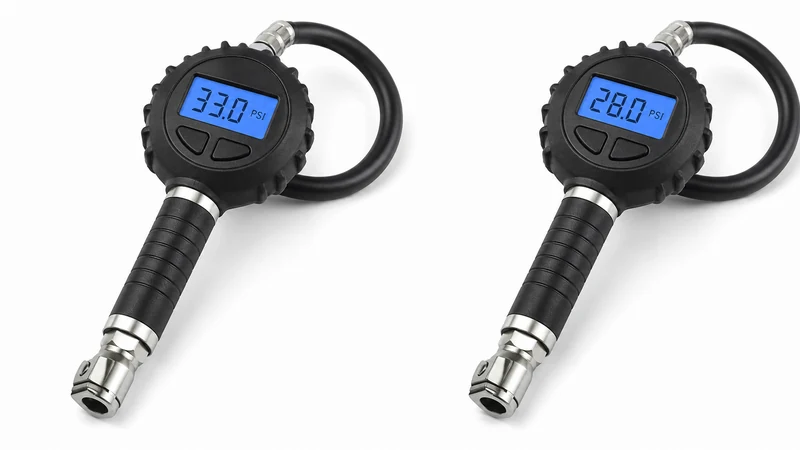
The rule: for every 10°F (5.6°C) drop in temperature, tire pressure falls approximately 1 PSI. The air inside your tires contracts as it cools.
That means a tire correctly inflated at 35 PSI on a 60°F fall day could read just 28 PSI on a 0°F winter morning. Your TPMS light activates at 25% below recommended PSI — on a 35 PSI tire, that's 26 PSI. A 35°F temperature drop can trigger it with zero leak.
Even a perfectly sealed tire with zero leaks loses air over time. Air molecules — especially oxygen — slowly migrate through the rubber itself. This is permeation, and it happens to all tires.
Normal rate: 1–3 PSI per month. This adds up: a tire left unchecked for three months could be 6–9 PSI low before you ever notice. That's well into dangerous territory for most vehicles.
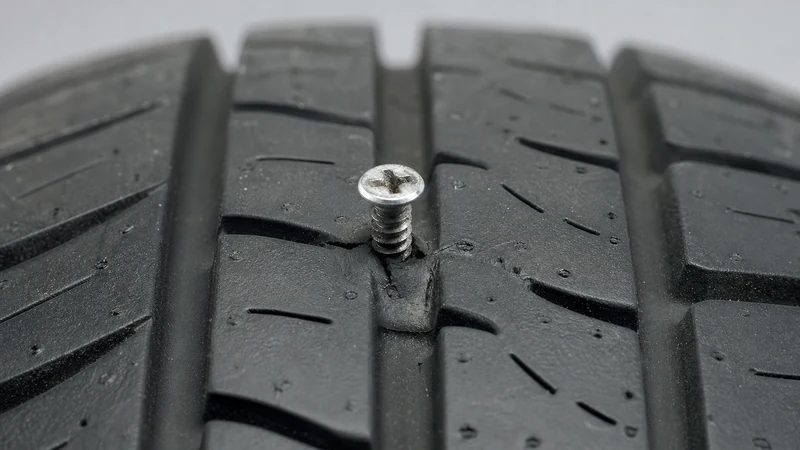
A nail, screw, or road staple embedded in the tread can seal itself partially — causing a slow leak that loses 2–5 PSI per day instead of going flat immediately. You may drive on it for days or weeks without noticing.
Diagnostic clue: One specific tire consistently reads lower than the others. If your front-left drops 8 PSI while the other three drop only 2, the front-left has a slow leak.
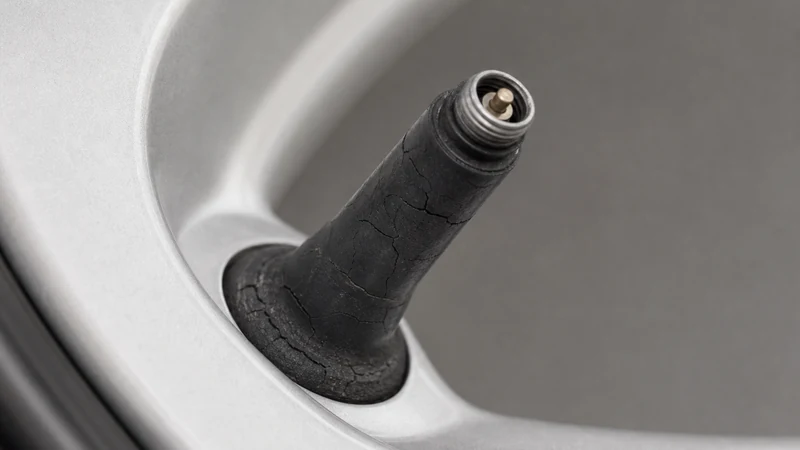
The valve stem is the small rubber or metal tube you press the gauge onto. Rubber stems crack and harden with age, especially after 5+ years or exposure to road chemicals. The valve core inside (a tiny brass screw) can also loosen or corrode.
A leaking valve stem loses pressure continuously and may be faster than a puncture. Cracked rubber stems are often visible on inspection; a loose valve core leaks from the center of the stem.
The tire bead is the edge of the tire that seals against the inner rim surface. On alloy wheels — especially older ones in road-salt states — the aluminum rim corrodes and pits, preventing a perfect seal. Air escapes slowly along the bead.
This cause is frequently missed because it doesn't show up as a puncture, and the leak is often too slow to show bubbles unless you look carefully at the bead line.
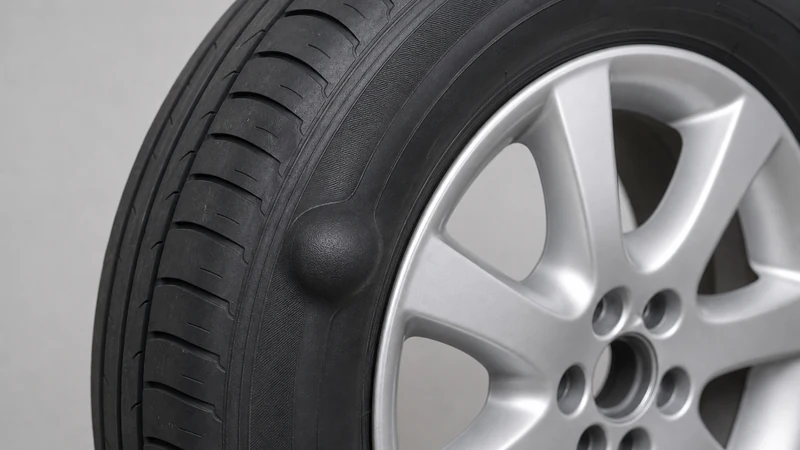
Impact damage from a pothole or curb strike can cause internal sidewall damage that isn't visible externally but creates a slow air loss — or a bulge that risks a sudden blowout. Tires with cracked sidewalls from UV aging also lose pressure faster than normal.
How to Find a Leak: The Soapy Water Test
If you suspect a slow leak but can't find it, this test finds it in minutes — and it's more reliable than a visual inspection.
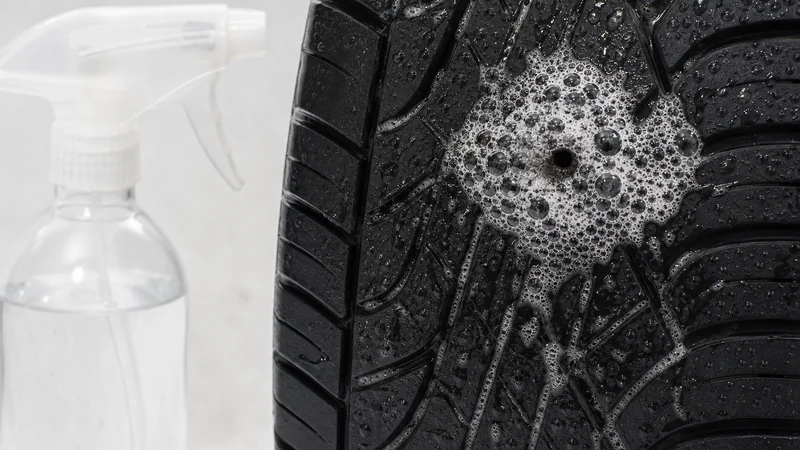
Inflate the tire to the correct PSI.
Mix a few drops of dish soap with water in a spray bottle or apply with a sponge.
Soak the entire tread surface, both sidewalls, and the valve stem thoroughly.
Examine the bead line where the tire meets the rim on both sides — run your finger along it while watching for bubbles.
Press the gauge onto the valve stem briefly to check for bubbles forming around the stem itself.
Bubbles forming anywhere = air escaping there. Mark the spot and take it to a tire shop.
No bubbles anywhere? The pressure loss is most likely temperature-related or normal permeation. Re-inflate, note the date, and check again in two weeks. If it's dropped more than 3–4 PSI without a temperature change, take it to a shop — some bead leaks only show up with the wheel submerged in water.
When to Be Concerned vs. When to Relax
Probably fine
- All 4 tires dropped after a cold snap
- 1–3 PSI low after a month without checking
- TPMS light came on first cold morning of fall
- Pressure is lower in the morning than afternoon
Needs attention soon
- One tire drops faster than the other three
- Losing more than 5 PSI per week
- TPMS light returns within days of inflating
- Visible nail, screw, or sidewall bulge
Frequently Asked Questions
Is it normal for tire pressure to drop in cold weather?
Yes — completely normal. For every 10°F temperature drop, tires lose about 1 PSI. A 35°F overnight drop costs you roughly 3–4 PSI. This is physics, not a defect. Simply re-inflate to the recommended PSI.
Why does my tire pressure drop overnight without a leak?
Two reasons: temperature drops overnight (air contracts and pressure falls), and tires naturally lose 1–3 PSI per month through the rubber itself. A 1–2 PSI drop overnight in cold weather is completely normal. If it's losing significantly more, suspect a slow leak.
How fast should a tire normally lose pressure?
1–3 PSI per month is normal through permeation alone. Losing more than 3–4 PSI per week in stable temperatures means you have a leak — nail, valve, bead, or sidewall damage. Get it checked.
Why are all 4 tires losing pressure at the same time?
Almost certainly temperature. Cold weather drops all four tires equally. Four simultaneous punctures is essentially impossible. Re-inflate all four and monitor — if one drops faster than the others afterward, investigate that specific tire.
What is the soapy water test?
Mix dish soap and water, apply generously to the tire tread, sidewalls, valve stem, and bead line. Watch for bubbles — they indicate exactly where air is escaping. This test finds slow leaks that visual inspection misses.
Can a tire lose pressure without a puncture?
Yes. Temperature drops, normal permeation, a leaking valve stem, and a corroded wheel bead can all cause pressure loss with zero puncture. In fact, most cases of gradual pressure loss in older tires are valve stems or bead leaks — not nails.