
TPMS Light Flashing: System Malfunction vs Low Pressure
Last updated: September 10, 2026 · Reading time: 7 min
A flashing TPMS light means the monitoring system itself has a fault — usually a dead sensor battery — not low tire pressure. (Low pressure is a steady light.) Verify your tires with a gauge, then have the system scanned. Most fixes are a single sensor replacement.
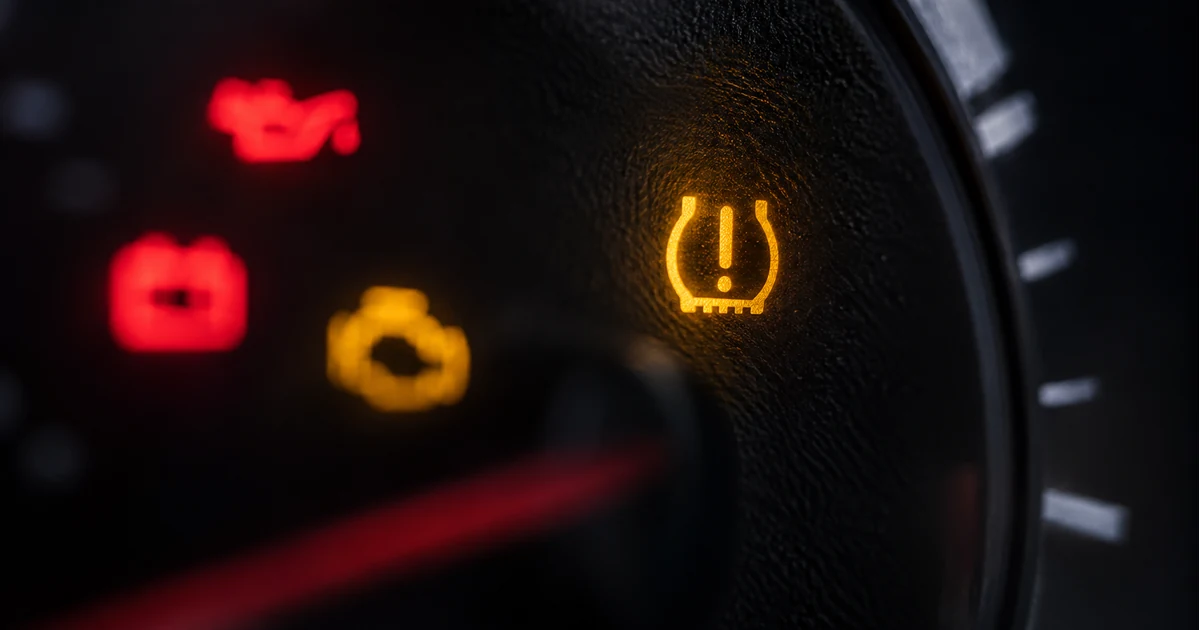
Flashing vs Steady: The Critical Difference
The TPMS light has exactly two jobs, and it uses two different behaviors for them. Confusing them leads people to pump air into healthy tires — or worse, ignore a dead warning system.
| Light behavior | Meaning | What to do |
|---|---|---|
| Steady light (comes on, stays on) | A tire is ~25% or more below spec | Check all four with a gauge, cold; inflate to the door jamb number |
| Flashing 60–90 sec at startup, then steady | TPMS system malfunction — usually a dead sensor | Verify pressure manually, then get the system scanned |
| Flashing while driving (rare) | System fault detected mid-drive, or interference | Note when it happens; verify pressure; scan if it repeats |
| Light on in cold mornings only | Borderline pressure + overnight cold — not a fault | Top up to spec cold; it will stop flickering |
The short version: steady = check your tires, flashing = check the system. Everything about the steady light — what triggers it, how cold mornings cause it, how to clear it — is in our tire pressure warning light guide. The rest of this article is about the flashing side.
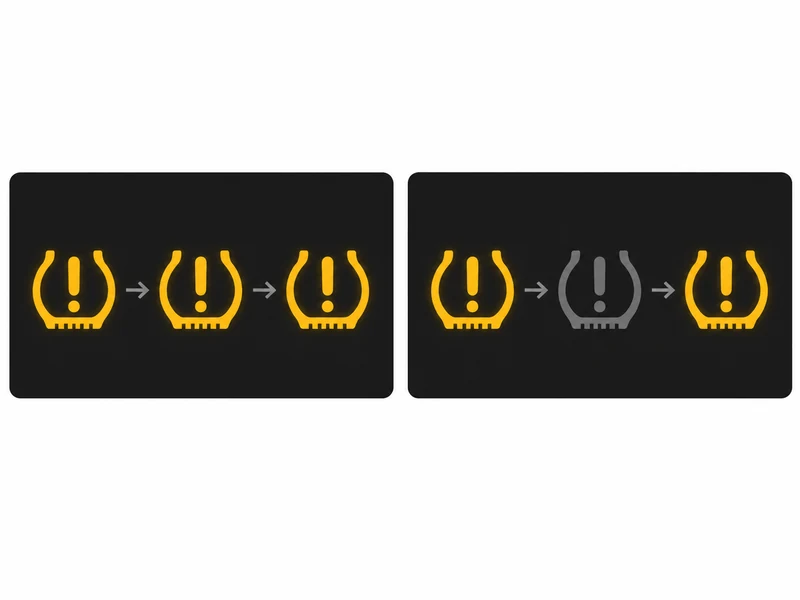
What a Flashing TPMS Light Actually Means
Your TPMS runs a self-check every time you start the car: the receiver listens for each wheel's sensor, confirms the IDs it knows, and verifies the data makes sense. When a sensor fails to answer — dead battery, physical damage, or an ID the car doesn't recognize — the system can't certify itself, so it switches the light to malfunction mode: flashing.
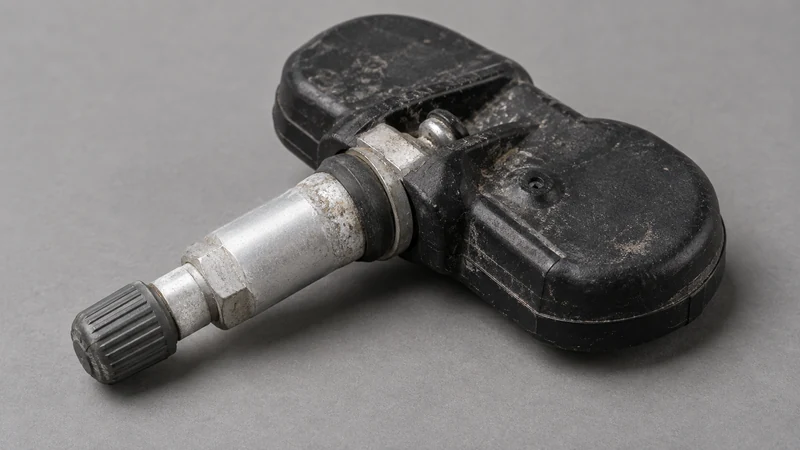
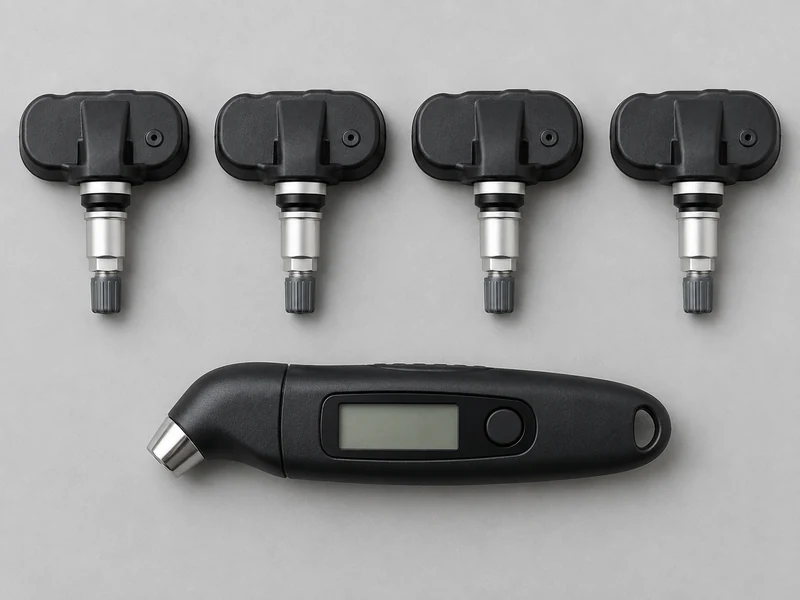
In roughly nine out of ten cases, the root cause is a single TPMS sensor whose sealed battery finally died after 5–10 years of broadcasting. The sensor is hardware inside the wheel, and the battery is not serviceable — a dead battery means a replacement sensor.
The important reframe: your tires are probably fine. It's the smoke detector that's broken, not the kitchen that's on fire. But until it's fixed, you're driving without the detector — so manual gauge checks become your safety net.
Why It Flashes for a Minute, Then Stays Solid
The most-asked version of this problem: the light flashes for 60–90 seconds every time you start the car, then settles into a steady glow. This isn't two problems — it's one deliberate sequence. Federal TPMS rules (FMVSS 138) require the malfunction signal to flash at startup and then remain on, so the driver sees both that there's a fault and that it hasn't cleared.
Timing matters for diagnosis:
- Flashes at startup, every startup — classic dead sensor battery or unregistered sensor. Book a scan.
- Flashed once after a tire or wheel change, then never again — the system likely needed a drive cycle to find the sensors. If it stays off, you're fine.
- Flashes intermittently while driving — rare; can be a failing sensor with an intermittent signal or radio interference. Note the conditions and have it scanned if it repeats.
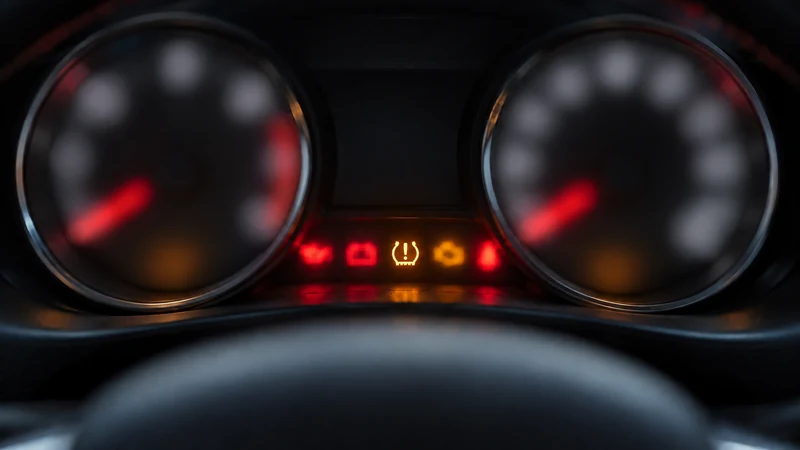
The 4 Common Causes Behind a Flashing Light
| Cause | How common | Detail |
|---|---|---|
| Dead sensor battery | Most common | Sensors last 5–10 years; the battery is sealed and not replaceable |
| Damaged sensor | Common | Broken during tire mounting, or corrosion killed a metal valve stem |
| Missing / unregistered sensor | Common | After a wheel swap or new sensors without a relearn — the car can't find a sensor ID |
| Receiver or module fault | Rare | The car's TPMS receiver or wiring — diagnosed with a scan tool |
Note the pattern in the middle row: if the flashing started right after new tires, new wheels, or a sensor replacement, the sensors were probably never relearned — the car is looking for the old sensor IDs. That's a cheap registration procedure, not a hardware bill. Tell the shop the timing; it changes the diagnosis (and often who pays).
How to Diagnose It Yourself (Before Paying Anyone)
Four steps, in order. Most people can rule out the expensive scenarios at home:
1. Rule out real low pressure first
Check all four tires with a gauge, cold, against the door jamb number — here's the two-minute procedure. If any tire is genuinely low, fix that first and drive a day or two. Sometimes the “fault” clears once pressures are correct.
2. Watch the pattern for 2–3 startups
Consistent flash-then-steady at every startup = persistent fault. A one-time flash after recent tire work = probably just a relearn completing. Write down what you see; the pattern is the first thing a technician will ask.
3. Check the per-tire display, if you have one
Cars with direct TPMS often show individual PSI. A position showing dashes or no reading while the others display normally fingers that wheel's sensor directly.
4. Get a free scan
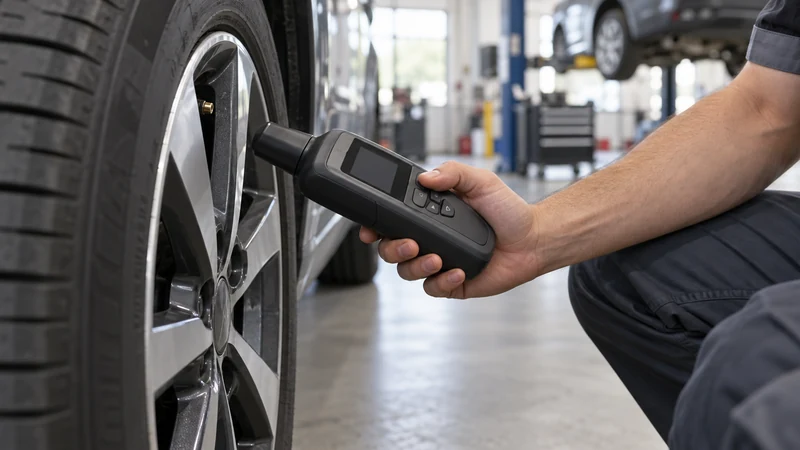
Most tire shops will wave a TPMS scan tool at each wheel at no charge — it tells them instantly which sensor is dead and whether the rest are near end of life. That's your quote baseline before anyone touches a wrench.
What the Fix Costs
The fix scales with the cause. A relearn/registration after a tire swap is often free-to-$50 at the shop that did the work. A single sensor replacement averages $240–$299 as a standalone job (RepairPal), dropping to $60–$150 per wheel during a tire change. A full set of four is worth pricing if all your sensors are the same age, since they tend to die within a year or two of each other — the complete numbers, by vehicle type and shop type, are in the TPMS sensor replacement cost guide.
Two money-saving levers: replace sensors during a tire change (the tires are already dismounted, so the labor overlaps), and consider quality programmable aftermarket sensors, which cost less than OEM and can be cloned to your existing IDs. More on sensor types and lifespan in the TPMS sensor guide.
What not to do: ignore it for a year. You'll be driving without low-pressure warnings the whole time — and in states that inspect dashboard lights, the car may fail inspection anyway. A dead sensor is a $100-class problem; a blowout from an unnoticed low tire is not.
Key takeaways
- ✓Flashing TPMS light = system fault (usually a dead sensor battery). Steady light = low tire pressure. Opposite problems.
- ✓Flash 60–90 seconds at startup then solid is the federally standardized malfunction signal — it's deliberate, not two issues.
- ✓Rule out real low pressure with a gauge first, then watch the pattern across 2–3 startups before paying for diagnosis.
- ✓Flashing that started right after tire or wheel work usually means a missing relearn — a cheap procedure, not new hardware.
- ✓Most fixes are one sensor: $240–$299 standalone (RepairPal), or $60–$150 bundled with a tire change. Sensors die in waves — price a full set if yours are the same age.
Frequently Asked Questions
Is a flashing TPMS light dangerous?
Not immediately — the car drives exactly the same, because a flashing light means the monitoring system has a fault, not that a tire is low. The danger is subtler: you've lost your early-warning system, so a real pressure problem won't be flagged. Check all four tires with a gauge right away to confirm they're at the door jamb number, then check manually every 2 weeks until the fault is fixed.
Why does my TPMS light flash for about a minute, then stay solid?
That pattern — flashing for 60–90 seconds at startup, then staying on — is the federally standardized signal for a TPMS malfunction. The system found a fault during its self-check (usually a sensor that stopped transmitting) and is required to tell you this way. It's deliberately different from the steady light for low pressure so drivers can tell 'tire problem' from 'system problem'.
Can low tire pressure cause the TPMS light to flash?
No. Low pressure triggers a steady light — that's the rule the system is built around. Flashing means the system itself can't do its job: a dead sensor battery, a damaged sensor, a missing sensor after a tire or wheel swap, or (rarely) a receiver fault. Always verify pressure with a gauge anyway, but flashing points at the hardware, not the air.
Will a flashing TPMS light go away by itself?
Almost never. The most common cause is a dead sensor battery, and dead batteries don't recover. Very occasionally an intermittent fault (a sensor struggling in extreme cold, or a relearn that didn't take after a tire rotation) clears on its own — but if the flash-then-steady pattern repeats across several drives, it's permanent until a sensor is replaced or the system is re-registered.
How much does it cost to fix a flashing TPMS light?
Diagnosis is often free — many tire shops will scan your TPMS at no charge. If it's a dead sensor, a standalone replacement averages $240–$299 per wheel (RepairPal), dropping to $60–$150 when bundled with a tire change. If all four sensors are the same age, ask about replacing the set: they tend to die within a year or two of each other. Our TPMS sensor replacement cost guide on the blog has the full breakdown.
Can I pass a state inspection with the TPMS light flashing?
It depends on your state. Some states with safety inspections will fail a vehicle with an active TPMS malfunction light; others don't check TPMS at all. If your state inspects dashboard warning lights, plan to fix the fault before your inspection date. Your mechanic or inspection station can tell you the local rule in one phone call.