
Tire Pressure Sensor Fault: Your Tires Are Probably Fine — the Sensor Isn't
Last updated: September 19, 2026 · Reading time: 8 min
A tire pressure sensor fault means the TPMS itself has failed — not that your tires are low. The usual culprit is a dead sensor battery (they last 5–10 years). Check pressures with a gauge, try a TPMS relearn, and if the fault persists, replace the sensor.
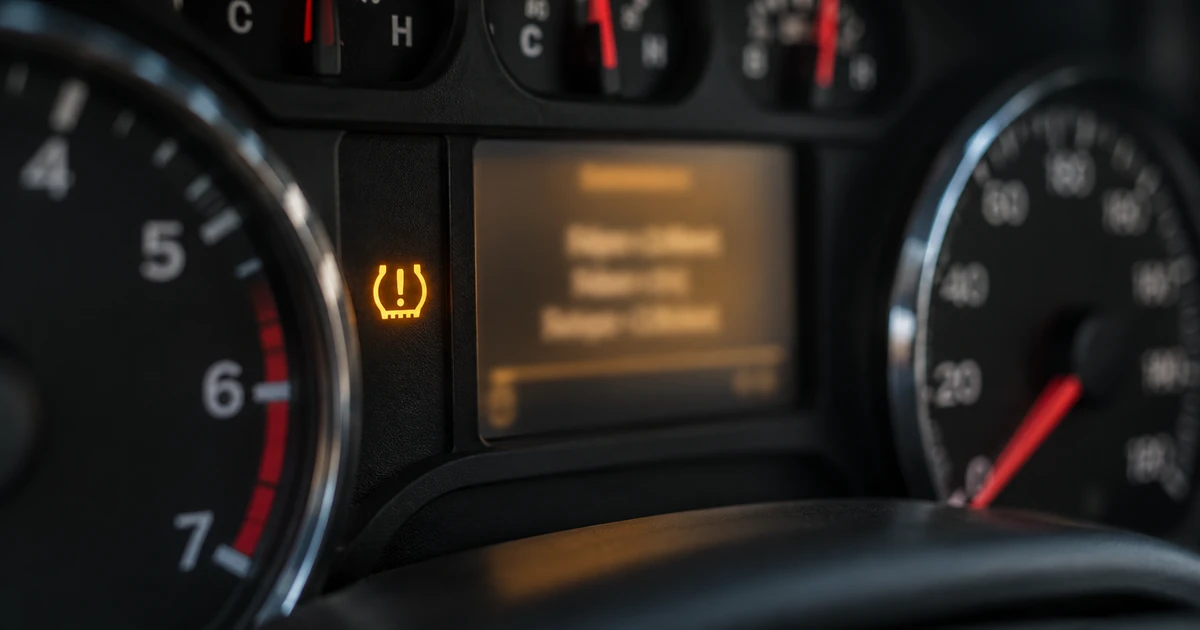
What a Sensor Fault Actually Means
Every TPMS has two jobs: warn you about low pressure, and warn you about itself. Federal rules (FMVSS 138) require a dedicated malfunction indicator for exactly this — when a sensor stops answering, sends impossible data, or the receiver loses contact, the system must say so instead of staying silent. A sensor fault is a communication breakdown between a wheel and the car's computer, not a pressure reading.
That distinction changes the whole response. Low pressure asks you to add air. A sensor fault tells you that right now, nobody is watching your tire pressure at all — your four tires could be perfect, and they'll stay perfect, but if one starts losing air tomorrow you won't get the early warning you're used to.
Sensor Fault vs Low Tire Pressure: Tell Them Apart in 10 Seconds
| Low pressure | Sensor fault | |
|---|---|---|
| What it means | A tire is genuinely underinflated | The monitoring system itself has failed |
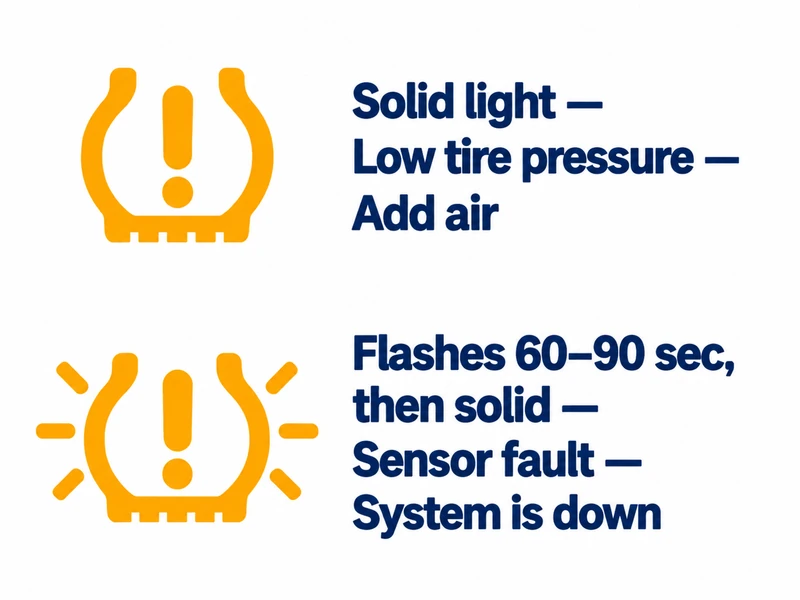
| Warning light | Solid from the moment you start | Flashes 60–90 sec at startup, then solid |
| Dashboard message | "Low tire pressure" or a PSI reading | "Tire Pressure Sensor Fault" / "TPMS Fault" |
| Per-tire display | Shows the actual (low) PSI | Dashes, zeros, or blanks |
| Gauge check | Confirms a low tire | All tires read normal |
| The real fix | Add air | Relearn, or replace a sensor |
The fastest tell is the startup behavior: a light that flashes for the first 60–90 seconds, then goes solid is the malfunction signal — the system flagging its own failure. (The full decode of flashing vs steady behavior is in TPMS light flashing; this article covers the fault condition itself.)
7 Common Causes, Ranked
| Cause | What happens | How often |
|---|---|---|
| Dead sensor battery | Sealed 5–10 yr battery dies; sensor goes silent | Most common by far |
| Tire work without relearn | Rotation or new wheels; car maps IDs to wrong corners | Very common |
| Physical damage | Pothole/curb impact, or rough handling during a tire change | Common |
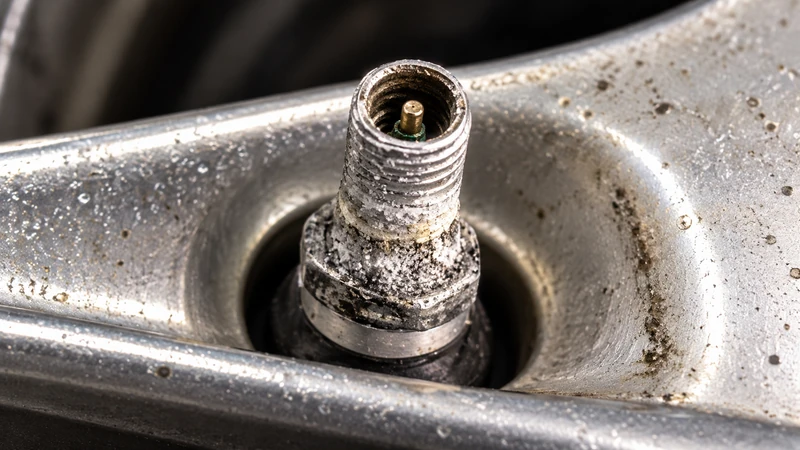
| Corrosion | Salt + moisture on the stem; metal caps seize onto stems | Common in snow states |
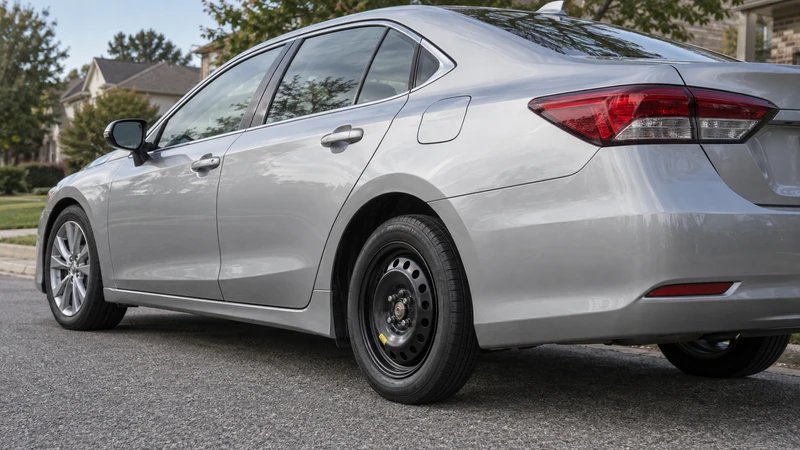
| Spare tire on the car | Most spares have no sensor; system sees a silent wheel | Situational |
| Signal interference | Aftermarket electronics, or old sensors stored in the garage | Rare |
| Module/wiring/software | Receiver or control-module fault, corroded connectors | Rare — pro diagnosis |
The battery deserves the top spot: TPMS sensor batteries are sealed and non-replaceable, rated for roughly 5–10 years. When one dies, the sensor goes permanently silent — and since all four sensors are the same age, the others are usually months behind. This is why faults cluster on 5+ year old vehicles and why one fault often becomes four within a year.
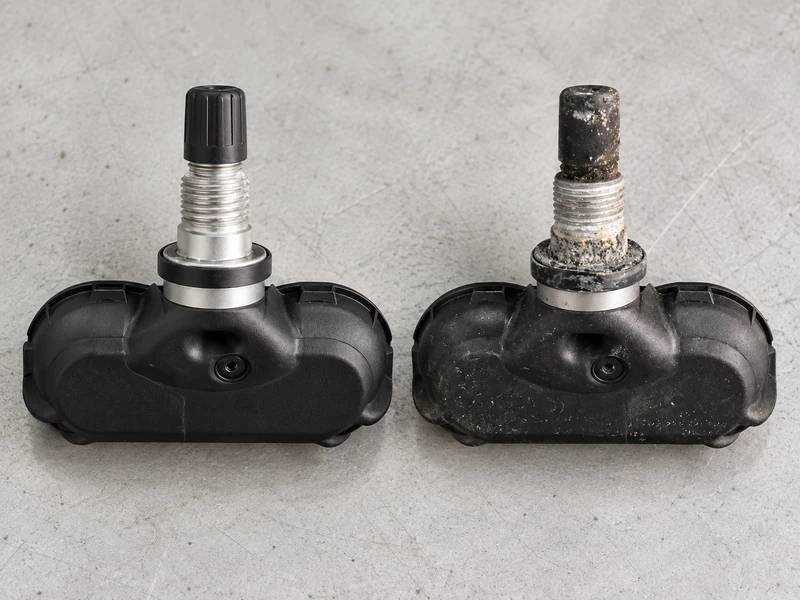
Corrosion is the sneaky one in snow-belt states: road salt attacks aluminum valve stems, and brass cores in aluminum stems set up galvanic corrosion that can snap a stem or kill the seal. Metal valve caps make it worse by seizing onto the stem. Rubber caps only.
Why Fords Show This Exact Message
"Tire Pressure Sensor Fault" is Ford and Lincoln's specific wording for a TPMS malfunction — other brands flash the light or say "TPMS malfunction," but Ford spells it out in text. That's why this search is dominated by Explorer, F-150, Focus, and Escape owners, typically on vehicles old enough that the original sensor batteries are reaching end of life.
Two Ford-specific notes: most Fords need a manual relearn with a TPMS tool after rotations or sensor work (they don't auto-learn positions like many Toyotas), so a "fault" right after a tire shop visit is often just a skipped relearn — free to fix. And if you're running the spare, most Ford spares have no sensor at all, so the system correctly reports a silent wheel. The condition itself, and the fix path, is otherwise identical to every other brand.
How to Fix It: Free Steps First
Work the ladder from free to paid — most faults that aren't a dead battery clear in the first two steps:
- Gauge-check all four tires against the door-jamb sticker and top up anything low. A genuinely low tire plus an old sensor can look like a fault; rule out pressure first.
- Drive 10–20 minutes at 50+ mph. Temporary glitches, cold-weather voltage dips on old batteries, and interference often clear after a normal drive cycle.
- Run the TPMS relearn/reset for your vehicle — especially after any recent tire work. Button, menu, or TPMS-tool procedure by brand: the reset guide.
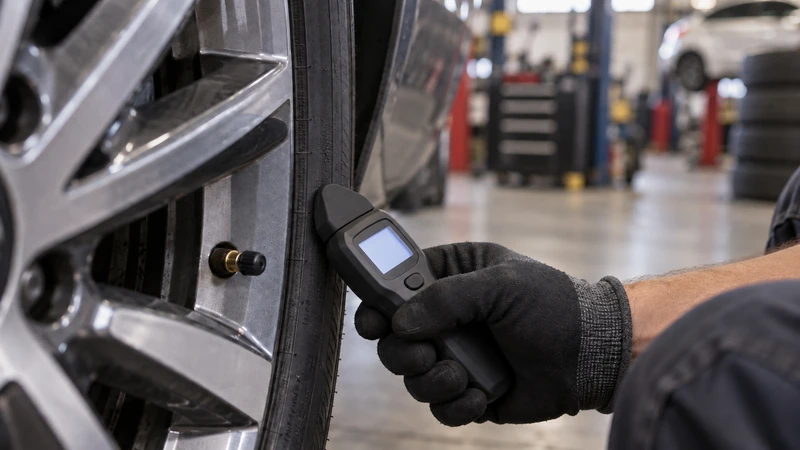
- Scan it. A TPMS diagnostic tool pings each sensor individually and tells you exactly which wheel is silent — most tire shops do this in minutes. No more guessing which of four sensors died.
- Replace the dead sensor(s). Batteries are sealed, so the whole unit gets swapped. Details and costs below.
When the Sensor Needs Replacing
A dead battery is a hardware replacement, not a repair — the battery can't be swapped, so the whole sensor goes. As a standalone job expect $240–$299 per wheel (RepairPal average); bundled into a tire change you're already paying for, it often drops to $60–$150 since the tire is already off the rim. The full cost breakdown, OEM vs aftermarket options, and relearn fees are in TPMS sensor replacement cost.
On a 5+ year old car, do the math on all four: the surviving sensors are the same age as the dead one, and each future failure means another visit, another labor charge, another relearn. One bigger bill now usually beats four smaller ones over the next year. Sensor hardware, battery life, and failure modes in depth: the TPMS sensor guide.
Driving With a Fault: What's Safe
The car itself is unaffected — brakes, steering, and tires all work the same whether or not the TPMS can see them. What changes is information: you've lost the early-warning layer, so a slow leak now announces itself as a flat on the highway instead of a light in the driveway.
Until it's fixed, fall back to the pre-TPMS routine: gauge-check monthly and before long trips (the 5-minute routine). Two more reasons not to postpone the repair indefinitely: some state safety inspections fail a vehicle with an active TPMS malfunction, and the fault light blocks your view of any new warning the system tries to show you.
Key takeaways
- ✓A sensor fault = the monitoring system failed, not your tires. Flashing-then-solid light, a 'fault' message, or dashes instead of PSI are its signatures.
- ✓Cause #1 is a dead sensor battery: sealed, 5–10 year lifespan, all four age together — one fault often becomes four within a year.
- ✓'Tire Pressure Sensor Fault' is Ford/Lincoln's wording; after Ford tire work, a skipped manual relearn is a common free-to-fix cause.
- ✓Fix ladder: gauge check → 20-minute drive → relearn → scan → replace. Only the last step costs money.
- ✓Replacement runs $240–$299 per wheel standalone (RepairPal), $60–$150 bundled with a tire change. On 5+ year old cars, replacing all four at once usually wins.
- ✓You can drive with a fault, but you're flying blind — monthly gauge checks until it's fixed, and some inspections will fail you.
Frequently Asked Questions
Can I drive with a tire pressure sensor fault?
Yes — the car drives normally, because a sensor fault means the monitoring system is broken, not the tires. But you're driving without your early-warning net: if a tire actually loses air, nobody will tell you. Check pressures manually with a gauge until it's fixed, and note that some state safety inspections fail a vehicle with an active TPMS malfunction.
Is a sensor fault the same as low tire pressure?
No. Low pressure = the system is working and reporting a real problem (solid light, maybe a PSI reading). Sensor fault = the system itself has failed and can't report anything (flashing-then-solid light, a 'fault' message, or dashes where PSI should be). Your tires may be perfectly inflated during a fault.
Why does my Ford say 'Tire Pressure Sensor Fault'?
That's Ford and Lincoln's exact wording for a TPMS malfunction — the same condition other brands show as a flashing light or 'TPMS malfunction.' It's most common on 5+ year old Explorers, F-150s, Focuses, and Escapes as the original sensor batteries reach end of life. The fix path is identical to any other brand: gauge check, relearn, then sensor replacement.
How much does it cost to fix a tire sensor fault?
Start free: a gauge check and a TPMS relearn cost nothing and fix glitches, un-relearned rotations, and cold-weather voltage dips. If a sensor battery is dead, the whole sensor gets replaced — $240–$299 per wheel as a standalone job (RepairPal average), but often $60–$150 when bundled into a tire change you're already doing.
Will a tire sensor fault clear itself?
Sometimes. Temporary causes — extreme cold dropping an old battery's voltage, radio interference, a software glitch — can clear on their own or after a drive cycle. A dead battery never clears itself: the light will flash at every startup until the sensor is replaced. If the fault persists past a few days of normal driving, it's hardware.
Should I replace all four TPMS sensors at once?
If the car is 5+ years old and one sensor battery has died, the other three are the same age and typically follow within months. Replacing all four in one visit costs more upfront but saves three separate labor charges and three separate relearn fees. On a newer car with a single physically damaged sensor, replacing just that one is fine.
References
- SimpleTire — Tire Pressure Sensor Fault: communication breakdown, flashing-then-solid light, 5–10 yr sealed batteries, galvanized stem corrosion
- Engineering Choice — Tire Pressure Sensor Fault causes: battery drain, stem corrosion, signal interference, temporary glitches
- Identifix — Ford Explorer TPMS faults: spare tires without sensors, sensor-to-module communication checks, 10–15 min drive to reset
- NHTSA — FMVSS No. 138 final rule (TPMS must include a malfunction telltale that warns when the system itself fails)