
TPMS Sensor: What It Is, How It Works, and When It Fails
Last updated: September 10, 2026 · Reading time: 9 min
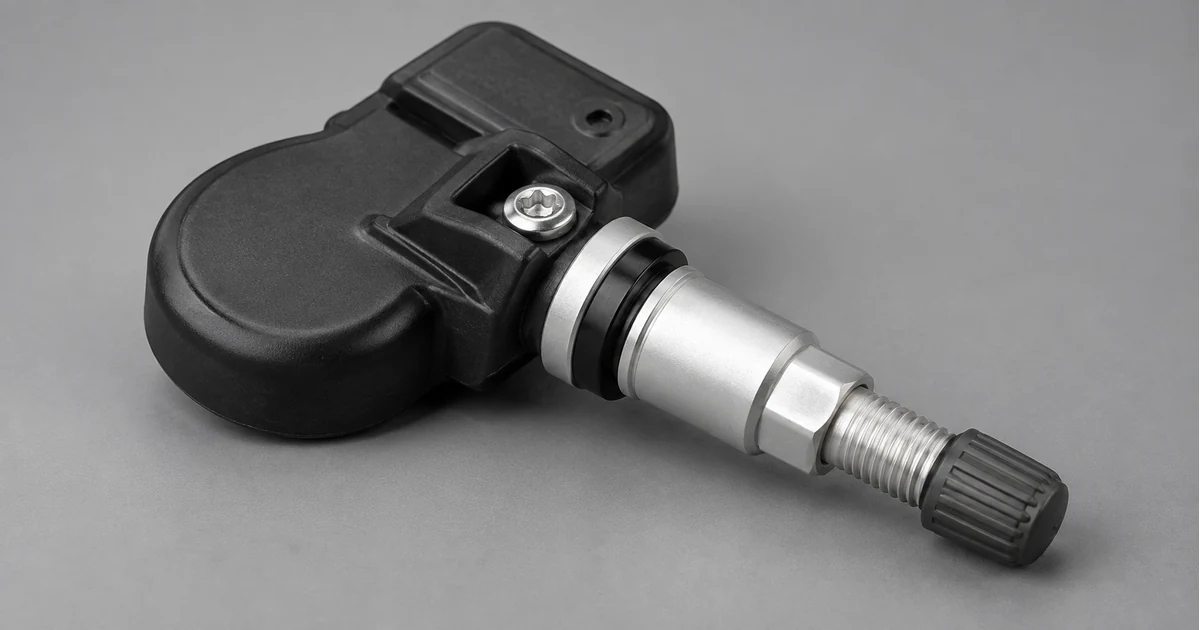
A TPMS sensor is a small battery-powered radio transmitter inside each wheel that measures tire pressure and reports it to your car. When pressure falls about 25% below spec, it triggers the dashboard warning light. Sensor batteries last 5–10 years and can't be replaced — a dead battery means a new sensor.
What Is a TPMS Sensor?
TPMS stands for Tire Pressure Monitoring System — and the “TPMS sensor” is the hardware that makes it work. Since September 2007, US federal law (FMVSS 138) has required TPMS on every new passenger vehicle under 10,000 lbs, so if your car is a 2008 model or newer, it has one.
The system has one job: warn you when a tire drops about 25% below the recommended cold pressure — the level at which underinflation starts meaningfully affecting safety, tire life, and fuel economy. When that happens, the amber horseshoe-shaped light on your dashboard turns on. What that light means in every state (steady, flashing, intermittent) is covered in our tire pressure warning light guide.
What most drivers don't realize: there are two completely different technologies called TPMS, and only one of them uses actual sensors. Which type your car has determines everything — accuracy, maintenance, and what can fail.
Direct vs Indirect TPMS: Two Different Systems
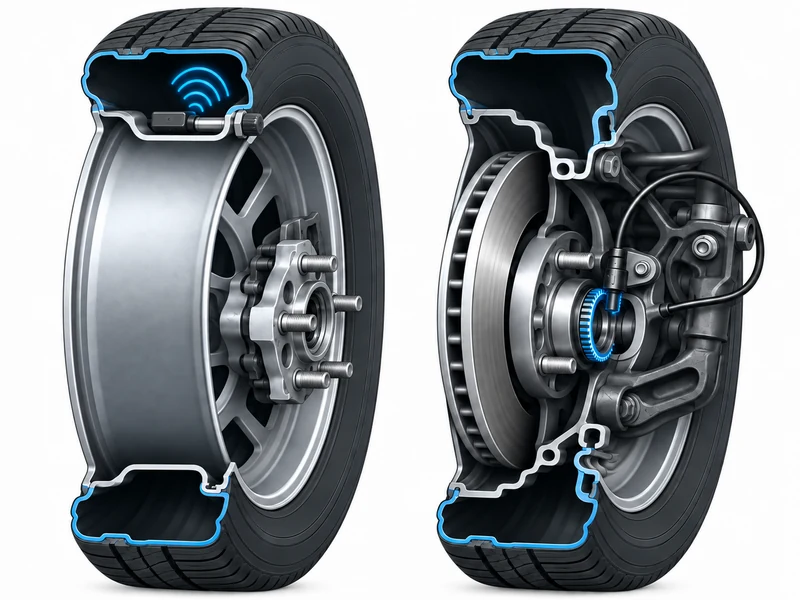
Direct TPMS puts a physical pressure sensor inside each wheel. It measures actual PSI and radio-transmits the reading to the car — which is why many vehicles can show you four individual tire pressures on the dashboard.
Indirect TPMS has no pressure sensors at all. It uses the ABS wheel-speed sensors to compare how fast each wheel rotates: an underinflated tire has a slightly smaller diameter, so it spins faster than the others. Clever and cheap — but it can only infer a problem, not measure it.
| Direct TPMS | Indirect TPMS | |
|---|---|---|
| How it measures | Physical pressure sensor inside each wheel | ABS wheel-speed sensors compare rotation rates |
| Shows per-tire PSI? | Yes (on most vehicles) | No — light only |
| Accuracy | Reads actual pressure, ±1 PSI | Infers underinflation; can't give numbers |
| Detects all 4 tires low? | Yes | Often no — equal loss looks 'normal' |
| Needs reset after rotation? | Sometimes (relearn procedure) | Yes — recalibration required |
| Battery to die? | Yes — 5–10 year sealed battery | No sensors, no batteries |
| Common on | Toyota, Ford, GM, BMW, most trucks | Honda, VW, Mazda, some Subaru |
The indirect system's blind spot matters: if all four tires lose pressure together — say, over a freezing month — the wheels still match each other and no warning appears. That's one reason a manual gauge check stays essential no matter which system you have.
What's Inside a Direct TPMS Sensor
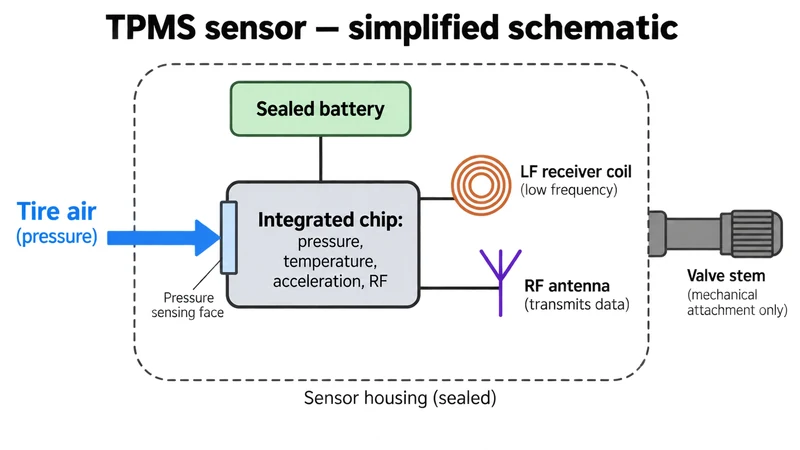
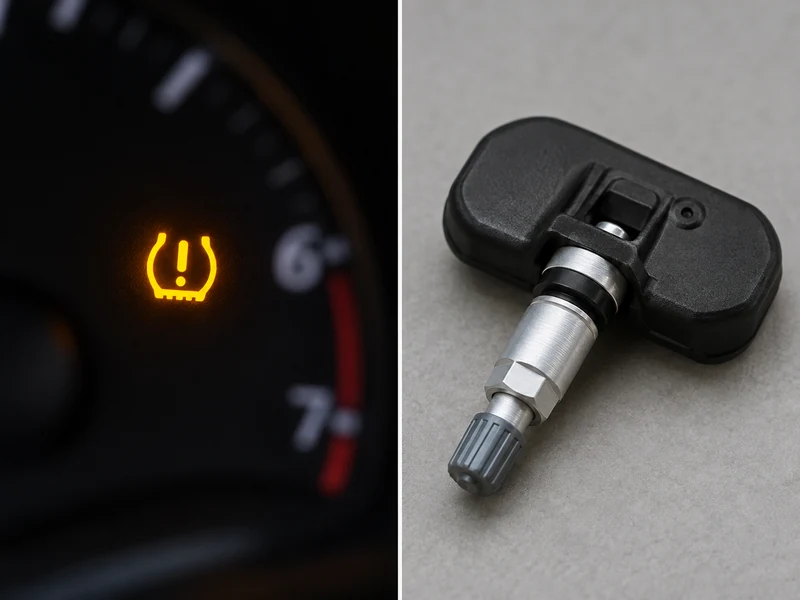
A direct sensor is a small sealed unit — roughly the size of a matchbox — mounted inside the wheel, usually attached to the valve stem. Inside the housing:
- A pressure sensor — measures the air pressure inside the tire, typically accurate to about ±1 PSI.
- A temperature sensor and accelerometer — the accelerometer tells the unit when the car is moving so it can broadcast more often and sleep when parked.
- A radio transmitter — broadcasts readings to the car's receiver at 315 or 433 MHz (depending on market).
- A lithium battery — powers everything for 5–10 years. Sealed in. Not replaceable. This is the part that eventually kills every sensor.
Each sensor also carries a unique ID, which is why a car can tell its four sensors apart — and why new sensors must be registered (“relearned”) to the car after replacement. Skip the relearn and the light stays on even with brand-new sensors.
How Long Do TPMS Sensors Last?
The industry rule of thumb is 5–10 years, and the limiting factor is almost always the battery — not the electronics. A sensor that broadcasts every minute while driving accumulates roughly 80,000–100,000 miles of transmissions before the lithium cell gives up.
| Factor | Detail |
|---|---|
| Typical battery life | 5–10 years (roughly 80,000–100,000 miles of broadcasting) |
| Shortens lifespan | Frequent driving (sensor transmits more), extreme heat or cold, corrosion on metal stems |
| Can't extend it | Battery is sealed — no charging, no replacement, no sleep mode worth chasing |
| End of life sign | Light flashes 60–90 sec at startup, then stays solid (system malfunction) |
Because all four sensors were activated at the same time, they tend to die within a year or two of each other. When the first one goes, the other three are usually not far behind — worth knowing before paying labor four separate times.
Signs a TPMS Sensor Is Failing
A dying sensor rarely announces itself directly. The usual tells:
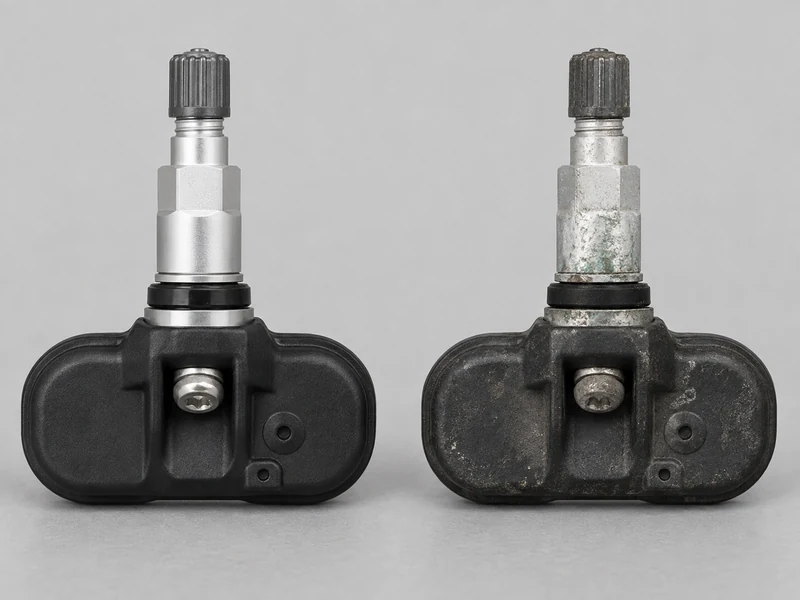
- Flashing-then-steady light. If the TPMS light flashes for 60–90 seconds every time you start the car, then stays solid, the system is reporting a malfunction — most often a dead sensor battery. (A light that simply turns on and stays on means low pressure, not a sensor fault.)
- One tire shows no reading. On cars with per-tire displays, a dead sensor's position goes blank or shows dashes while the other three read normally.
- The light persists after correct inflation. You've set all four tires to the door jamb number, cold, with a gauge — and the light won't go out. First try the reset procedure in our warning light guide; if it still won't clear, a sensor has failed.
- It started right after a tire service. Sensors get damaged by careless tire machines, or a reused old sensor simply chose that moment to die. Mention the timing to the shop — it changes who pays.
One important distinction: a flashing light means “the system is broken,” a steady light means “a tire is low.” Always check actual pressure with a gauge first — the first cold mornings of autumn trigger millions of false-alarm steady lights every year.
When and How to Replace TPMS Sensors
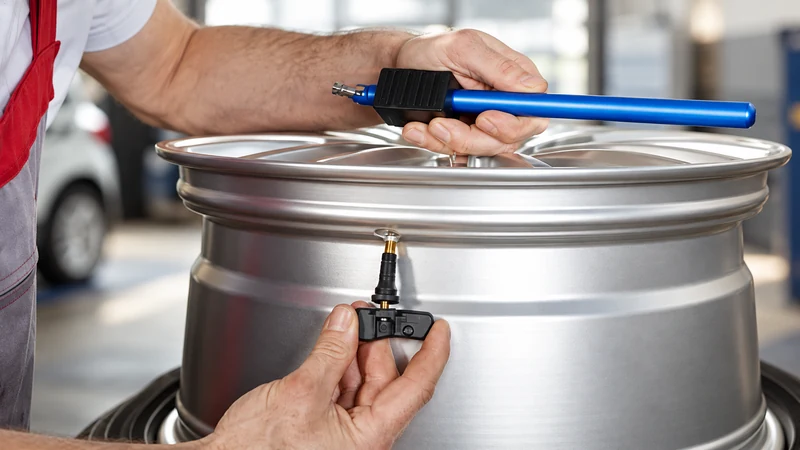
The trigger points are simple: the battery dies (flashing light), the sensor is physically damaged during tire service, or corrosion kills a metal valve stem. When any of these happen, the whole sensor gets replaced — there are no serviceable parts inside.
The cheapest moment to do it is during a tire change. The tire has to come off the wheel to reach the sensor, so replacing sensors mid-tire-swap costs the part alone; doing it as a standalone job means paying for dismounting and rebalancing on top. If your sensors are past 6–7 years old and you're buying tires, replace them in the same visit.
On parts: OEM sensors cost more but are guaranteed to speak your car's protocol. Aftermarket “programmable” sensors (from established suppliers) cost less and can be cloned to your original sensor IDs — a good shop handles either. Standalone replacement averages $240–$299 per wheel (RepairPal), dropping to $60–$150 when bundled with a tire change — the full numbers are in our TPMS sensor replacement cost guide.
After replacement comes the step people forget: relearn. The car must be told the new sensor IDs, via a dashboard procedure, a TPMS tool, or an automatic drive-cycle relearn depending on the brand. Honda and other indirect-TPMS cars need a simpler recalibration instead — no sensors exist to register.
The Sensor vs the Warning Light: Who Does What
Worth separating two things people conflate. The sensor is measuring hardware that sits in the wheel and eventually dies. The warning light is just the messenger — it turns on for low pressure (steady) or system faults (flashing), and most of the time it's reporting real, fixable pressure loss, not a broken sensor.
So the correct first response to a TPMS light is never “replace a sensor” — it's “check all four tires with a gauge, cold, and inflate to the door jamb number.” Our warning light guide walks through every light behavior and what to do, and why pressure keeps dropping covers the leak side.
Only when pressure is verified correct and the light refuses to clear — or flashes at startup — does the suspicion shift to the sensor itself. That ordering saves most people an unnecessary $100+ sensor bill.
Key takeaways
- ✓A TPMS sensor is a battery-powered radio unit inside each wheel; it's been mandatory on US cars since 2008.
- ✓Direct TPMS measures real PSI per tire; indirect TPMS only infers low pressure from wheel speed — and can miss all-four-low.
- ✓Sensor batteries last 5–10 years, are sealed in, and can't be replaced — a dead battery means a new sensor.
- ✓Flashing-then-steady light = system malfunction (usually a dead sensor); steady light = low pressure. Check pressure first.
- ✓The cheapest time to replace sensors is during a tire change — and new sensors must be relearned by the car.
Frequently Asked Questions
How do I know if my car has TPMS sensors?
If your car is a 2008 model year or newer sold in the US, it has TPMS — federal law (FMVSS 138) has required it on all vehicles under 10,000 lbs since September 2007. To tell which type: if your dashboard can display individual PSI numbers per tire, you have direct TPMS with physical sensors in each wheel. If the light simply comes on without per-tire readings, it's likely indirect (wheel-speed based) — most Honda, and many VW and Mazda models use indirect systems.
Can I drive with a bad TPMS sensor?
Yes — a failed sensor doesn't affect how the car drives; it only affects the warning system. But you'll be driving blind on tire pressure, so check your tires manually with a gauge every 2 weeks until the sensor is replaced. Note that a lit TPMS light will fail state inspections in some states, and you won't get early warning of a real pressure problem.
How much does it cost to replace a TPMS sensor?
Standalone replacement averages $240–$299 per wheel (RepairPal), but only $60–$150 per wheel when bundled with a tire change, since the tires are already dismounted. The sensor itself runs $20–$80 aftermarket or $40–$180 OEM, plus sometimes a relearn fee. Full breakdown — by vehicle type, OEM vs aftermarket, and ways to pay less — is in our TPMS sensor replacement cost guide on the blog.
Do TPMS sensors need to be replaced when I get new tires?
Not automatically — but it's often the smart time. Sensor batteries last 5–10 years and are sealed inside the unit, so if your sensors are over 6–7 years old, replacing them while the tires are already dismounted saves the entire labor cost of doing it later. The shop should at minimum replace the service kit (valve core, cap, nut, grommet) on each sensor during a tire change.
Can a TPMS sensor battery be replaced?
No — the battery is sealed inside the sensor housing and is not serviceable. When the battery dies (typically after 5–10 years), the whole sensor gets replaced. This is by design: the seal protects the electronics from the harsh environment inside a spinning wheel. Some shops advertise 'battery replacement,' but it involves cutting open the housing and voids any warranty — replace the sensor instead.
Why is my TPMS light flashing and then staying on?
A TPMS light that flashes for 60–90 seconds at startup and then stays solid means the system itself has a malfunction — usually a dead sensor battery, a failed sensor, or a sensor the car can't detect after a tire change. That's different from a light that simply turns on and stays on, which means low tire pressure. Flashing-then-steady calls for a sensor diagnosis, not an air pump.
References
- NHTSA — Tire Safety (check pressure monthly and when cold; TPMS required on US vehicles since 2008)
- USTMA — Tire Care & Safety (monthly pressure checks recommended even on TPMS-equipped vehicles)
- Discount Tire — Correct Tire Air Pressure (door jamb spec, not sidewall; ~1 PSI per 10°F; 1–2 PSI/month permeation)
Related Guides
- → TPMS Sensor Replacement Cost: What You'll Actually Pay
- → How to Reset Tire Pressure Light: Step-by-Step for All Cars
- → TPMS Light Flashing? What It Means & How to Fix It
- → Tire Pressure Warning Light: What It Means
- → Why Does My Tire Pressure Keep Dropping?
- → Valve Stem Guide: Types, Leaks, and Replacement Cost
- → How to Check Tire Pressure: The Complete Step-by-Step Guide
- → More guides on the Blog