Does Tire Pressure Drop in Cold Weather?
Last updated: September 2, 2026 · Reading time: 8 min
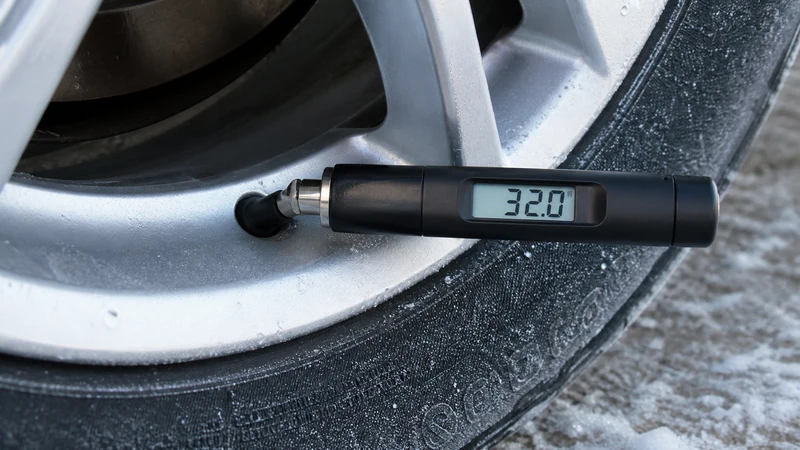
Yes. Tires lose about 1 PSI for every 10°F drop in temperature. No air has leaked out — the air inside simply contracts as it cools. A tire at 35 PSI on a mild afternoon can read 32 PSI after a cold night. Inflate to your door jamb number, even in winter.
Why Tire Pressure Drops in the Cold
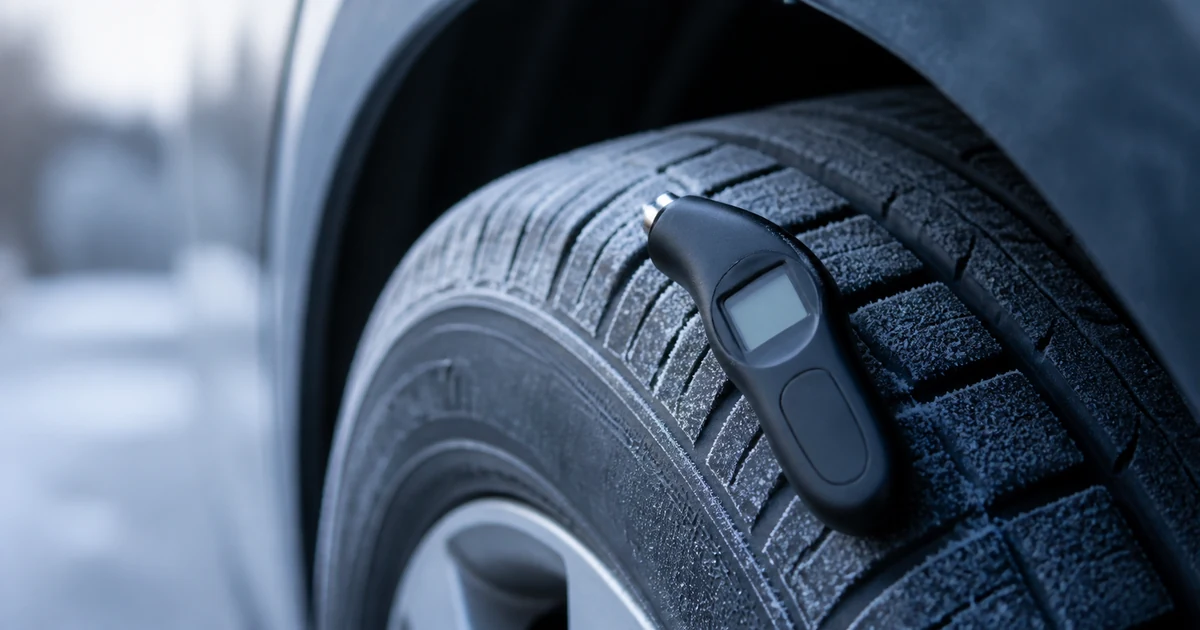
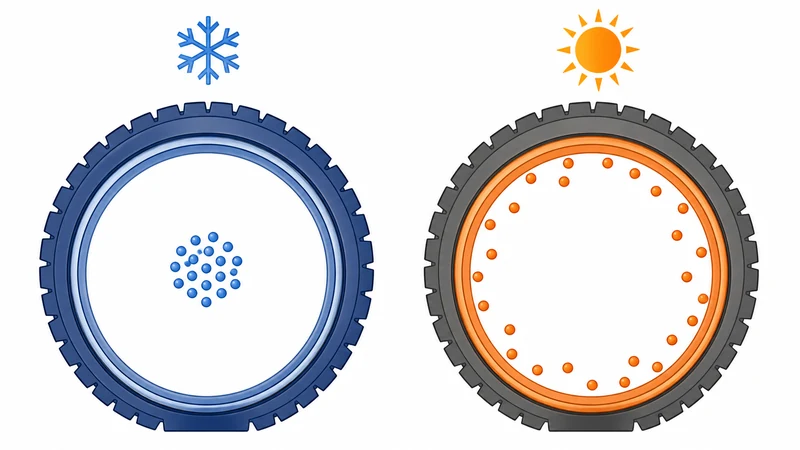
It comes down to a basic law of physics — the ideal gas law. The pressure of a gas is proportional to its temperature. When the air inside your tire cools down, its molecules move more slowly and press less hard against the tire walls, so your gauge reads a lower PSI — even though the exact same amount of air is still inside.
This is why the drop is temporary and reversible. When temperatures rise again, the air expands and pressure climbs back up. Nothing has leaked and nothing is broken — your tire is simply responding to the thermometer.
It's also why every manufacturer specifies a cold inflation pressure: they want all drivers measuring under the same conditions, before driving or after the car has sat for at least 3 hours. Measure hot and you'll get a falsely high reading that hides the real drop.
How Much Pressure Do Tires Lose in Cold Weather?
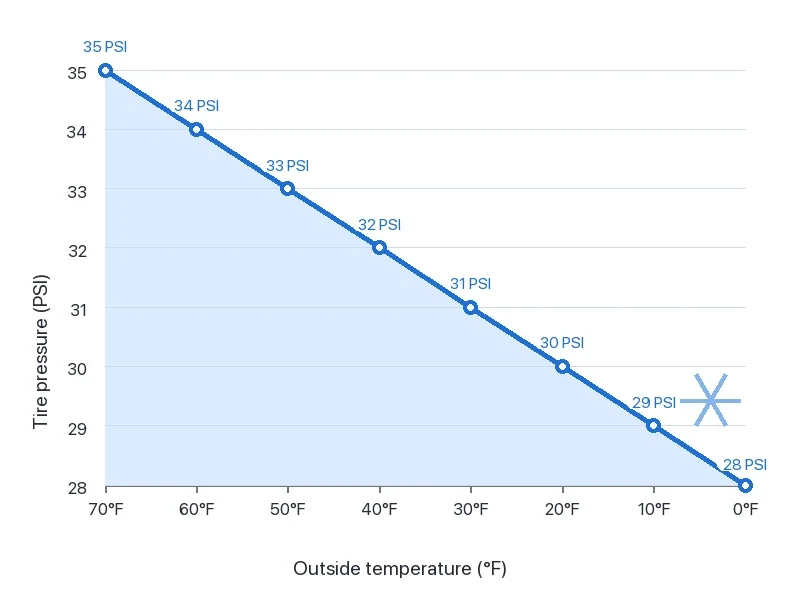
The rule of thumb is 1 PSI per 10°F. Here's what that looks like for a tire that started at 35 PSI on a 70°F day:
| Outside temperature | Approx. pressure | Change |
|---|---|---|
| 70°F (mild day) | 35 PSI | — |
| 50°F (cool evening) | 33 PSI | −2 PSI |
| 40°F (cold morning) | 32 PSI | −3 PSI |
| 20°F (freezing) | 30 PSI | −5 PSI |
| 0°F (hard freeze) | 28 PSI | −7 PSI |
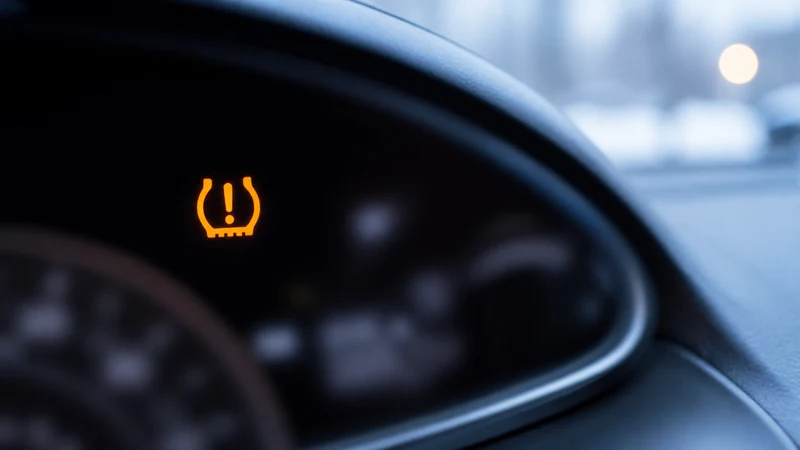
A single overnight cold front can pull 3–5 PSI out of every tire. If your tires were already a couple of PSI low, that drop can be enough to trigger your TPMS warning light — which is exactly why so many drivers see the light on the first cold morning of the season.
Why Your TPMS Light Flickers On and Off in Winter
A common winter puzzle: the TPMS light comes on during a cold morning commute, then turns off by lunchtime. Here's what's happening:
- The TPMS warning typically triggers when a tire falls about 25% below its recommended pressure.
- Overnight cold drops your pressure below that threshold — light on.
- As you drive, friction warms the tires and pressure rises a few PSI — the tire crosses back above the threshold and the light goes off.
Don't ignore a flickering light. It means you're hovering right at the edge of under-inflation. Add air to bring the cold reading back to the door jamb number and the light will stay off for good. If the light stays on even after you've inflated to spec, see our TPMS warning light guide.
The Heated Garage Trap
If you park in a heated garage, you can inflate to a perfect reading indoors and still be under-inflated on the road. A 70°F garage tire that reads 35 PSI will drop toward 32 PSI the moment you drive into 40°F air.
The fix: if you must inflate indoors, add roughly 1 PSI for every 10°F difference between your garage and the outside temperature. Better still, check and top up at an outdoor air pump so you're measuring at real driving temperature. Our gas station guide covers how to do that accurately.
What to Do About It
The fix is simple — but there's one common mistake to avoid.
1. Check pressure cold
Check first thing in the morning, before driving, or after the car has sat for 3+ hours. Tires warmed by driving or sunlight read artificially high. For a full walkthrough, see our step-by-step checking guide.
2. Inflate to the door jamb number
If the reading is below the recommended cold PSI on your driver-side door jamb sticker, add air. The door jamb number is the target in every season — don't aim lower just because it's cold out.
3. Don't overinflate to “get ahead” of the cold
It's tempting to add extra PSI in autumn so you won't have to top up later. Don't. Overinflated tires have a smaller contact patch and less grip — exactly what you don't want on cold or icy roads. Check more often instead.
Checking Tire Pressure in Winter: Practical Tips
Cold-weather checks come with their own small hassles. A few things that make them easier:
- Keep a gauge in the cabin, not the trunk — a cold-soaked gauge in a freezing trunk is harder to use with gloves on.
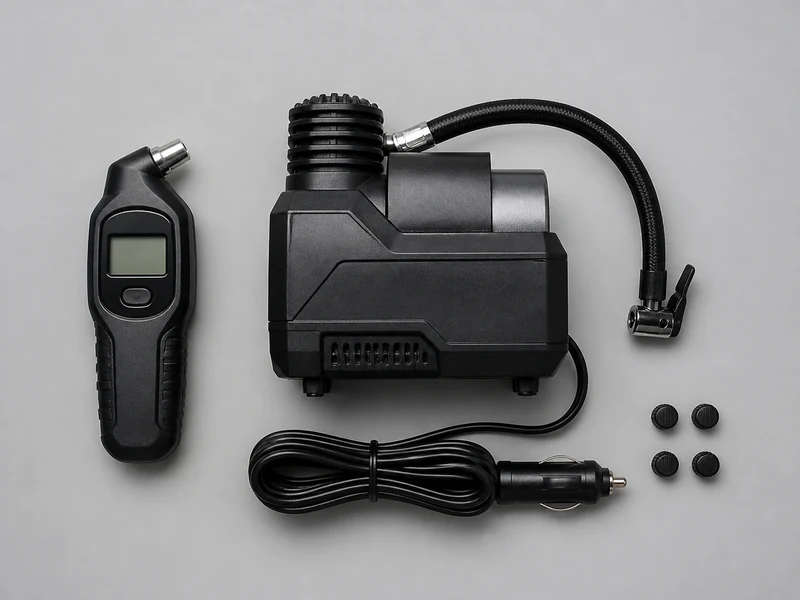
- Gas station hoses can freeze or be shut off in hard winters. Call ahead, or carry a portable 12V inflator as a backup.
- Check before the coldest part of the day — first thing in the morning gives the most honest cold reading.
- Don't skip the spare. A compact spare at 60 PSI loses pressure faster in the cold and is easy to forget until you need it.
Tire Pressure Through the Seasons
Cold weather is only half the story. Your tire pressure moves all year — here's the seasonal rhythm and what to do in each:
| Season | What happens | What to do |
|---|---|---|
| Autumn (first cold front) | Biggest single drop — 3–5 PSI overnight | Check and top up as soon as the first cold snap hits |
| Winter (sustained cold) | Pressure stays low; swings with each front | Check every 2 weeks if temps swing widely |
| Spring (warming up) | Pressure climbs back as days warm | Re-check; bleed off any winter overfill back to spec |
| Summer (heat) | Highest readings; pressure rises when hot | Check cold in the morning; don't bleed hot tires |
The pattern to remember: pressure follows temperature down in winter and back up in summer. Your job isn't to fight that — it's to keep the cold reading at the door jamb number all year. For the full checking schedule, see how often to check tire pressure.
Key takeaways
- ✓Tires lose about 1 PSI for every 10°F drop in temperature — it's physics, not a leak.
- ✓A single cold snap can pull 3–5 PSI from every tire overnight and trip your TPMS light.
- ✓Always inflate to the door jamb cold PSI, even in winter — never lower the target for the cold.
- ✓If you park in a heated garage, add ~1 PSI per 10°F difference to the outside temperature.
- ✓Don't overinflate to get ahead of the cold — it hurts grip on icy roads. Check more often instead.
Frequently Asked Questions
How much PSI do tires lose in cold weather?
About 1 PSI for every 10°F drop in temperature. A tire at 35 PSI on a 70°F afternoon can read 32 PSI after a 40°F cold snap overnight. The air inside the tire contracts as it cools — no air has leaked out, the same amount of air simply takes up less space and presses less hard on the tire walls.
Should I add air to my tires in cold weather?
Yes — if your tires read below the recommended cold PSI on your door jamb sticker, add air. The recommendation is a cold pressure, meaning it's measured before driving or after the car has sat for at least 3 hours. Do NOT lower the target because it's cold outside; inflate to the door jamb number even in winter.
Why does my TPMS light come on when it gets cold?
Because cold weather drops your tire pressure by several PSI at once. The TPMS light typically triggers when pressure falls about 25% below the recommended level. A sudden cold front can push a marginally-inflated tire below that threshold overnight — which is why TPMS lights cluster on the first cold mornings of autumn.
Is it normal for tire pressure to drop when it gets cold?
Yes, completely normal. It's basic physics (the ideal gas law): air pressure is proportional to temperature. Every tire on every car loses pressure in the cold and gains it back in the heat. It does not mean you have a leak — though a tire that loses far more than 1 PSI per 10°F may also have a slow leak worth checking.
Do tires lose pressure faster in winter or summer?
Tires don't permanently lose air faster in either season from temperature alone — they lose pressure when it gets colder and regain it when it warms up. What winter does is create large, frequent temperature swings, so your pressure fluctuates more. Separately, all tires lose 1–2 PSI per month year-round through natural permeation, regardless of season.
Should I overinflate my tires in winter to compensate?
No. Inflate to the cold PSI on your door jamb sticker, not above it. Overinflating reduces your tire's contact patch, which hurts grip — the last thing you want on cold, wet, or icy roads. Check more often in winter (every 2 weeks if your area has big temperature swings) instead of overinflating once.
References
- NHTSA — Tire Safety (check pressure monthly and when cold; TPMS required on US vehicles since 2008)
- Discount Tire — Correct Tire Air Pressure (door jamb spec, not sidewall; ~1 PSI per 10°F; 1–2 PSI/month permeation)
- AAA Exchange — Tire Safety & Maintenance (check monthly, before trips; warm tires read ~5 PSI high)
Related Guides
- → Winter Tire Pressure: What PSI Should You Run?
- → Cold vs Hot Tire Pressure: How Much Difference?
- → Summer Tire Pressure: Should You Let Air Out?
- → Do Tires Deflate in Cold Weather? (No — Here's Why)
- → How to Check Tire Pressure: The Complete Step-by-Step Guide
- → How Often Should You Check Tire Pressure?
- → Why Does My Tire Pressure Keep Dropping?
- → Tire Pressure Warning Light: What It Means
- → More guides on the Blog