Do Tires Deflate in Cold Weather? The Air Isn't Leaking
Last updated: September 8, 2026 · Reading time: 6 min
No — cold weather doesn't deflate tires. The air contracts as it cools (about 1 PSI per 10°F), so the pressure drops, but no air leaves the tire. If only one tire keeps reading low, though, that one has a real leak.
Deflating vs Contracting: What's Actually Happening
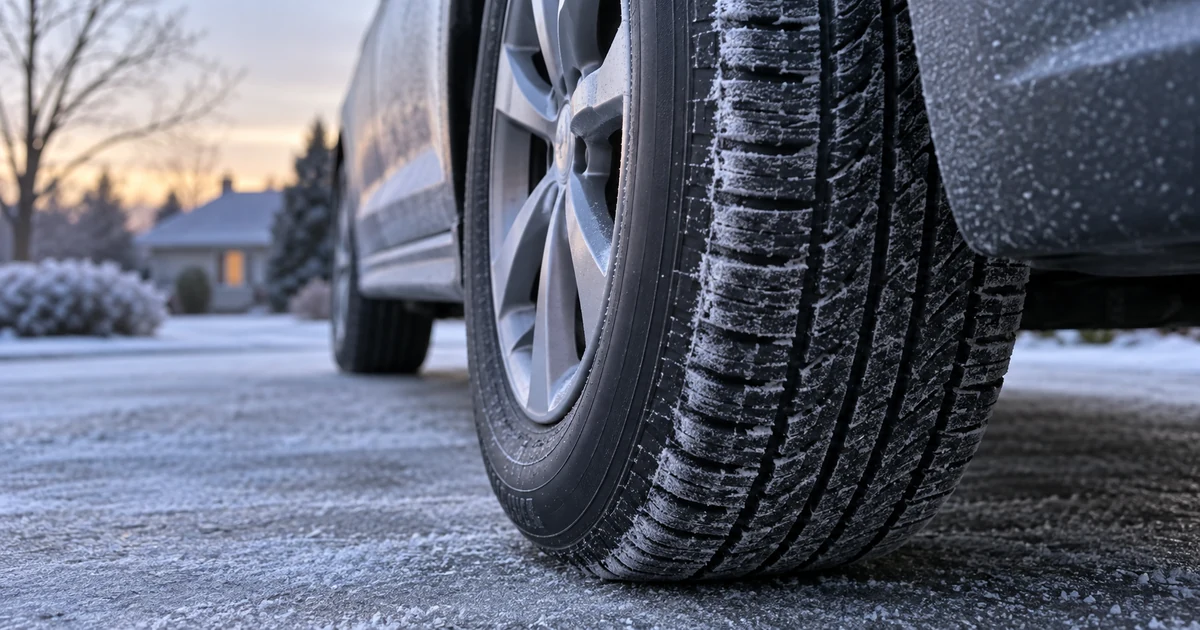
“Deflate” means air is leaving the tire — through a puncture, a valve, or a bad seal. That's not what cold weather does. What cold does is simpler and stranger: the same air takes up less space.
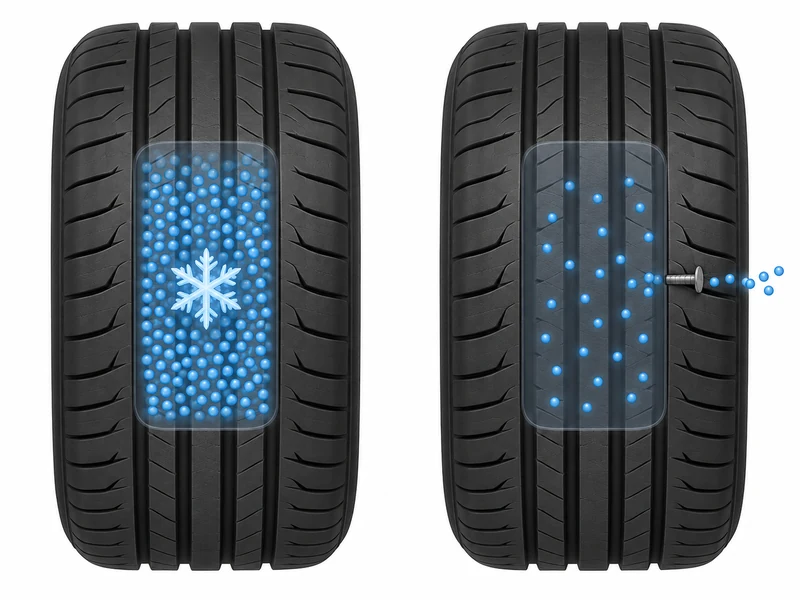
Air is a swarm of moving molecules. Heat makes them move faster and slam into the tire walls harder — that's what pressure measures. Cold slows them down, so they press less hard and your gauge reads lower. Count the molecules before and after a cold night: the number is identical. Nothing left the tire.
You can prove it yourself: a tire that reads 32 PSI after a freezing night will read 34–35 PSI again on a warm afternoon a few days later, with no air added. A truly deflating tire never recovers on its own.
Why the Pressure Still Drops (and Comes Back)
The rate is predictable: about 1 PSI for every 10°F of temperature change, in both directions. A 40°F overnight cold front pulls roughly 4 PSI from every tire on your car; a warm week in spring gives it back. The full numbers — including a temperature-to-PSI table — are in does tire pressure drop in cold weather, and the driving-heat side of the equation is in cold vs hot tire pressure.
Two things follow from this. First, the swing is symmetrical across all four tires — they share the same weather. Second, it's reversible — the pressure returns when the temperature does. Both facts become diagnostic tools in the next section.
How to Tell Cold Contraction from a Real Leak
Cold snaps are when slow leaks get discovered — a tire that was marginally low in October crosses the TPMS threshold in January. Here's how to tell which situation you're in:
| Sign | Cold contraction | Real leak |
|---|---|---|
| Which tires are low | All four, by a similar amount | One tire clearly lower than the others |
| How fast it drops | Tracks the temperature (~1 PSI per 10°F) | Keeps falling regardless of temperature |
| Does it come back? | Yes — pressure returns when it warms up | No — stays low or keeps dropping |
| What to do | Top up to the door jamb number | Find and fix the leak (see below) |
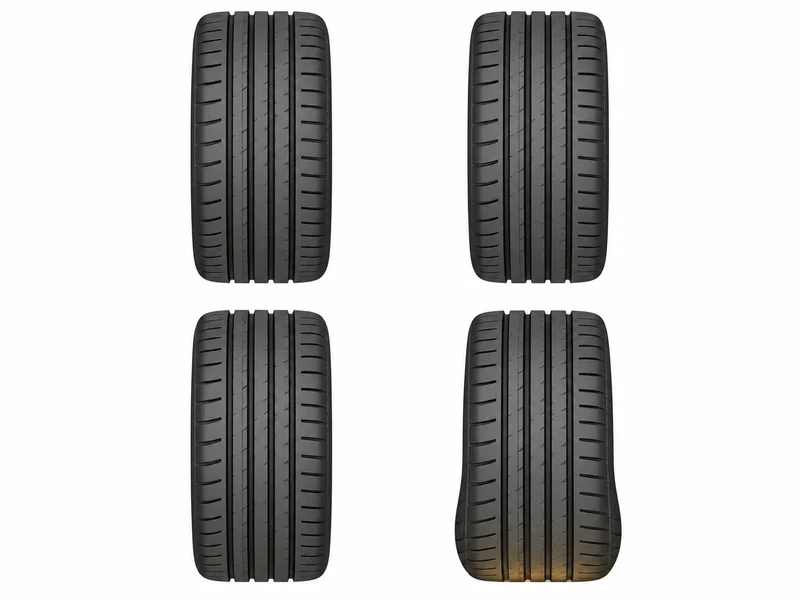
The classic giveaway is one tire clearly lower than the other three. Physics affects all four equally; leaks don't. If three tires read 32 PSI and one reads 26, the 26 has a puncture, a leaking valve stem, or a bad bead seal.
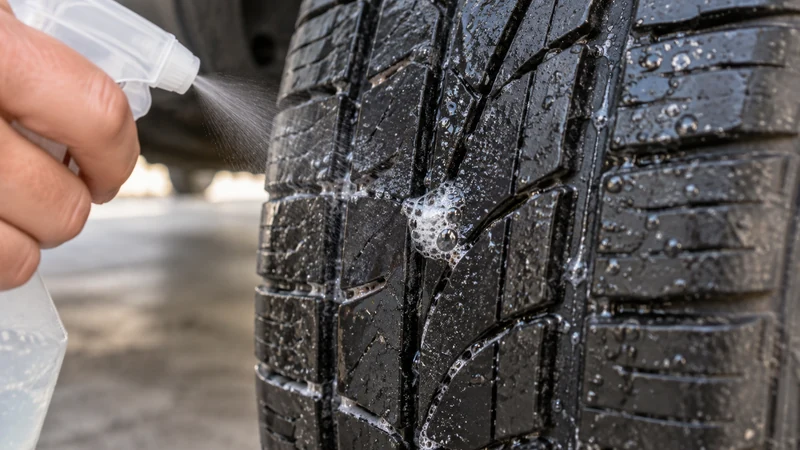
To find the leak, mix a little dish soap with water, spray or sponge it over the tread, sidewall, and valve stem of the suspect tire, and watch for growing bubbles — that's your leak point. A nail in the tread is often repairable; sidewall damage usually means replacement. The full troubleshooting path is in why does my tire pressure keep dropping.
The Slow Leak Every Tire Has (in Every Season)
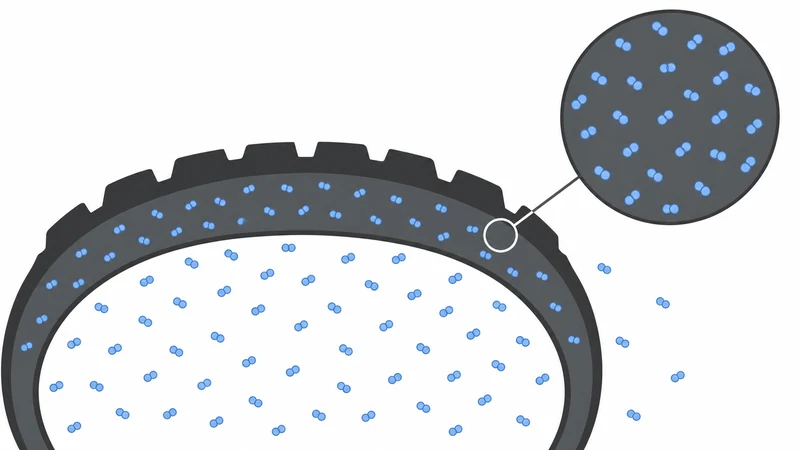
There is one way all tires genuinely deflate, and it has nothing to do with cold: permeation. Air molecules are small enough to slowly work their way through the rubber itself — about 1–2 PSI per month for a healthy tire, at roughly the same rate in January and July.
This is why “the pressure was fine in September” isn't a winter strategy. By December you've lost 3–6 PSI to seepage alone — plus whatever the temperature swing takes. The two effects stack, which is exactly why TPMS lights cluster on the first cold mornings of the season.
The fix is boring and effective: a regular checking schedule catches seepage long before it becomes a low-tire problem.
What to Do About It
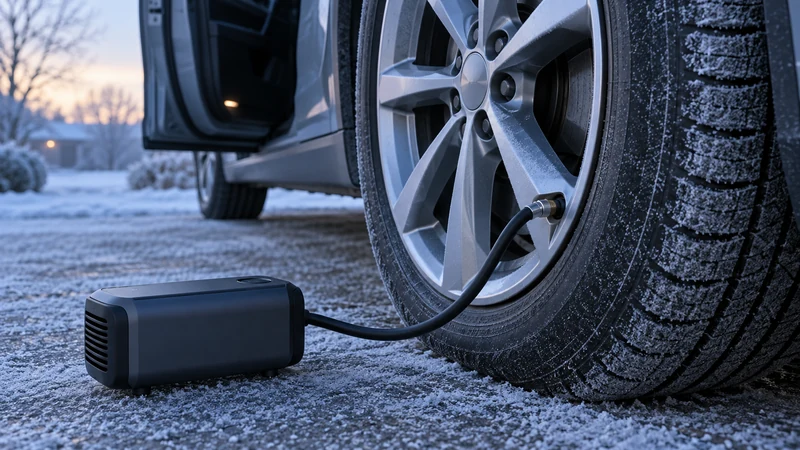
1. Top up to the door jamb number — even though it's “just the cold”
Contraction is normal, but driving around 4 PSI low all winter is not. The door jamb cold PSI is the target in every season. Not sure of your spec? Check the vehicle tire pressure database. Full winter strategy: winter tire pressure.
2. Investigate any tire that's lower than its twins
One low tire means a real leak — do the soapy-water test, check the valve stem, and look for nails in the tread. Don't just keep topping it up.
3. Keep the valve caps on
Caps keep moisture and grit out of the valve. In freezing weather, moisture at the valve core can freeze and let air seep past — a slow leak with a one-dollar prevention.
4. Check monthly, cold, first thing in the morning
Cold readings are the only honest ones. Our step-by-step checking guide covers the two-minute routine.
Key takeaways
- ✓Cold doesn't deflate tires — air contracts (~1 PSI per 10°F) but never leaves the tire.
- ✓The proof: pressure comes back on its own when temperatures rise. A leaking tire never recovers.
- ✓All four tires drop equally in the cold — one tire clearly lower than the others means a real leak.
- ✓Every tire also seeps 1–2 PSI per month through the rubber, in every season — seepage plus cold snaps is what trips TPMS lights.
- ✓Top up to the door jamb number regardless; investigate any single tire that keeps reading low.
Frequently Asked Questions
Do tires lose air in cold weather?
No — the air stays inside. Cold temperatures make the air molecules slow down and take up less space, so pressure drops about 1 PSI per 10°F, but no air escapes. The proof: when temperatures rise again, the pressure comes back up on its own. Tires also seep 1–2 PSI per month through the rubber itself, but that happens at the same rate in every season.
Why is only one of my tires low in the cold?
Because that one almost certainly has a real leak. Cold contraction hits all four tires equally — they all started at roughly the same pressure and they all experience the same temperature. If three read 32 PSI and one reads 26, the odd one out has a puncture, a leaking valve stem, or a bad bead seal. Cold weather didn't cause the leak; it just made it visible.
Can cold weather cause a flat tire?
Indirectly, yes. Cold itself doesn't puncture tires, but it can unmask existing problems: a marginal bead seal or a brittle old valve stem can start leaking in the cold, and a tire already low on air can lose enough pressure overnight to look flat by morning. Moisture inside the tire can also freeze at the valve core and let air seep past. Keep valve caps on — they keep moisture and dirt out.
Should I add air if the pressure comes back when it warms up?
Yes. The rebound doesn't mean everything is fine — it means the physics are working. If your cold reading is below the door jamb number, top up now. A tire that's 4 PSI low on a cold morning is underinflated every cold morning for months, wearing its shoulders and hurting fuel economy, even if it reads 'normal' again in the afternoon.
Does cold weather damage valve stems?
Cold doesn't damage a healthy valve stem, but years of temperature cycling harden rubber valve stems and their seals — and a hardened seal can start leaking precisely when the cold arrives. Snap-in rubber stems typically last as long as the tires they're mounted with; if your stems are older than your current tires, have them inspected at the next tire service.
Is it okay to drive on a tire that's low from the cold?
A few PSI low is fine for a gentle drive straight to an air pump — the tire warms up as you drive and the reading rises. But don't drive weeks on a low tire waiting for spring: underinflation causes shoulder wear, heat buildup, and worse wet and icy braking. Five minutes at an air pump fixes it; the door jamb number is the target in every season.
References
- Discount Tire — Correct Tire Air Pressure (door jamb spec, not sidewall; ~1 PSI per 10°F; 1–2 PSI/month permeation)
- Michelin — How to Check Tire Pressure (monthly incl. spare; cold tires, 3+ hours parked; door sticker, not sidewall)
- NHTSA — Tire Safety (check pressure monthly and when cold; TPMS required on US vehicles since 2008)