Winter Tire Pressure: What It Should Be and How to Set It
Last updated: September 5, 2026 · Reading time: 7 min
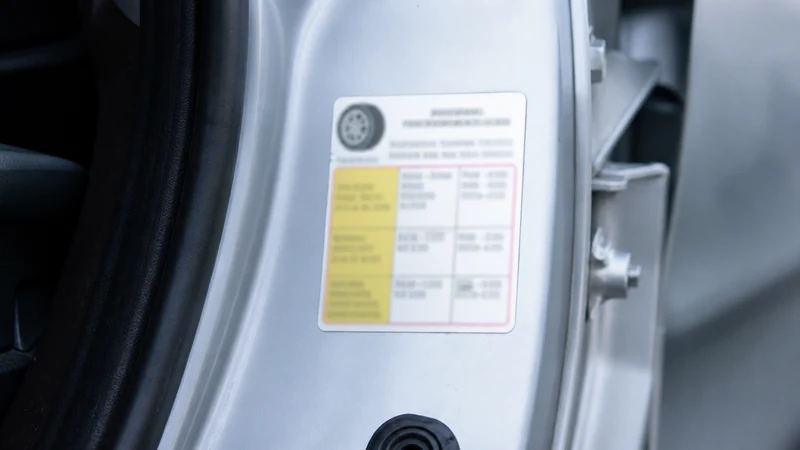
Your winter tire pressure is the same as any other season: the cold PSI on your driver-side door jamb sticker — usually 32–36 PSI. What changes in winter is that cold air drags readings down about 1 PSI per 10°F, so you'll need to top up more often to stay at that number.
What Should Your Tire Pressure Be in Winter?
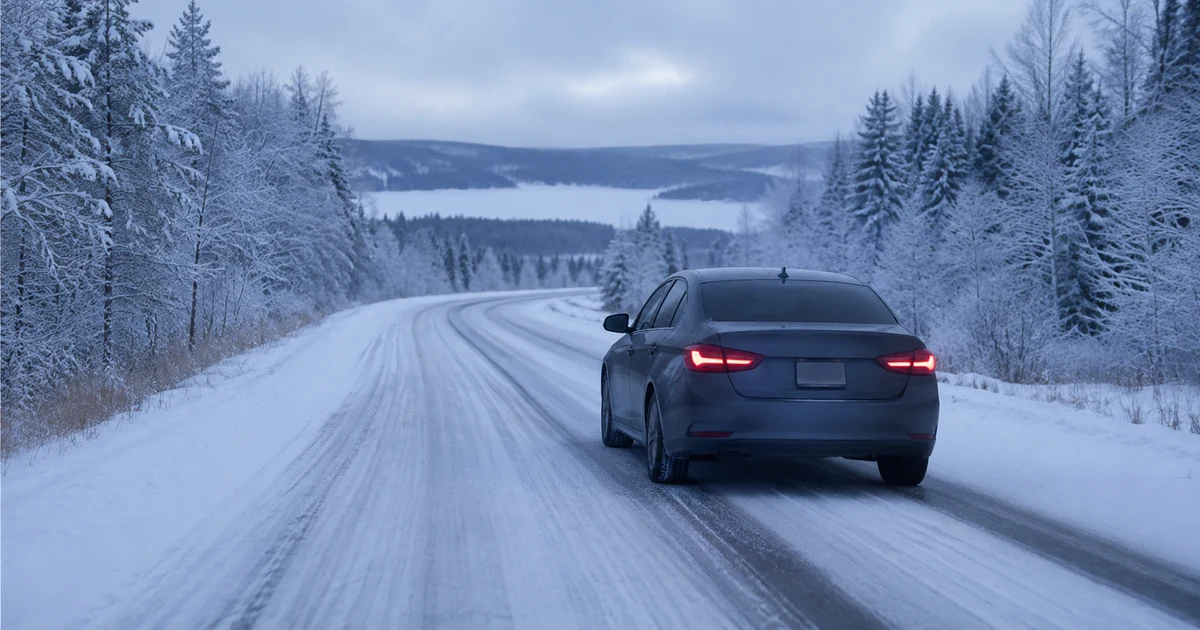
Exactly the same as in July: the cold inflation pressure on your driver-side door jamb sticker. Vehicle manufacturers don't publish a separate winter spec — the recommendation is already a cold pressure, designed to be correct at freezing temperatures as long as you measure before driving.
What winter changes is your readings, not the target. Air contracts as it cools — roughly 1 PSI for every 10°F drop — so a tire set perfectly in September will read several PSI low by January. Your job is to keep topping back up to the door jamb number, measured cold.
Typical factory specs by vehicle type:
| Vehicle type | Typical cold PSI | Note |
|---|---|---|
| Compact & midsize sedans | 32–35 PSI | Most common range |
| SUVs & crossovers | 33–36 PSI | Slightly higher for weight |
| Pickups & body-on-frame | 35–40 PSI | Rear may be higher when loaded |
| EVs (Tesla, etc.) | 38–45 PSI | Heavier battery pack, higher spec |
| Compact spare (donut) | 60 PSI | Loses pressure faster in the cold |
These are typical ranges, not your answer — the sticker in your door jamb is. For the exact spec on your vehicle, check our vehicle tire pressure database, and never inflate to the “max press” number molded into the tire sidewall — that's the tire's limit, not your car's recommendation.
Should You Lower Tire Pressure for Snow and Ice?
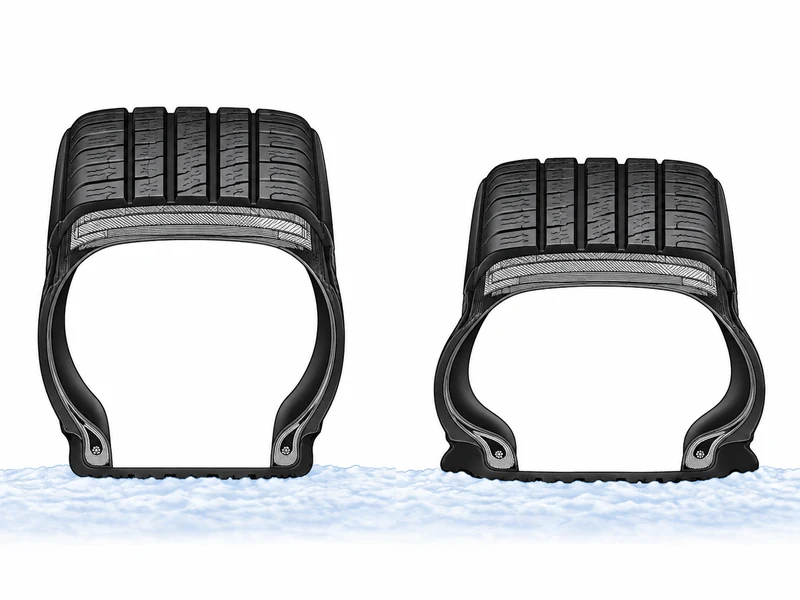
No. This is one of the most persistent winter driving myths, and it made more sense in the bias-ply tire era than it does with modern radial tires. The theory — that a softer tire spreads out and grips snow better — doesn't hold up at normal road speeds on plowed or packed winter roads.
What underinflation actually does on winter roads:
- Slower, vaguer steering response — the sidewalls flex more, so the car reacts later to your inputs. On ice, that delay matters.
- More shoulder wear and heat buildup — an underinflated tire runs hot even in cold air, which degrades the rubber over weeks.
- Worse fuel economy — rolling resistance climbs as pressure drops.
- Higher blowout risk — chronic underinflation is a leading cause of tire failure.
The honest exception: airing down is a real technique for deep, loose snow or sand off-road at crawling speeds, where a bigger contact patch helps flotation. If you ever do it, re-inflate before driving at road speed — and it has no place in normal winter commuting. For everyday snow and ice, grip comes from winter tires, tread depth, and speed — not soft tires.
How to Adjust Your Tire Pressure for Winter
The adjustment isn't a new target number — it's topping up more often, measured correctly. Four habits cover it:
1. Always measure cold
Check first thing in the morning, before driving, or after the car has sat 3+ hours. Driving even a mile warms the tires and inflates the reading. Our step-by-step checking guide walks through it.
2. Inflate at outdoor temperature
Fill up at an outdoor air pump so the reading reflects real driving conditions — the gas station guide covers how. If you must inflate in a heated garage, add ~1 PSI for every 10°F difference between the garage and outside.
3. Re-check after every cold snap
A single overnight front can pull 3–5 PSI from every tire. Make a habit of checking the morning after the temperature drops sharply — that's when TPMS lights cluster.
4. Don't overinflate to “get ahead”
Adding extra PSI in autumn so you won't have to top up later backfires: overinflation shrinks the contact patch and reduces grip on cold, wet, and icy pavement. Check more often instead of overfilling once.
Do Winter Tires Need a Different Pressure?
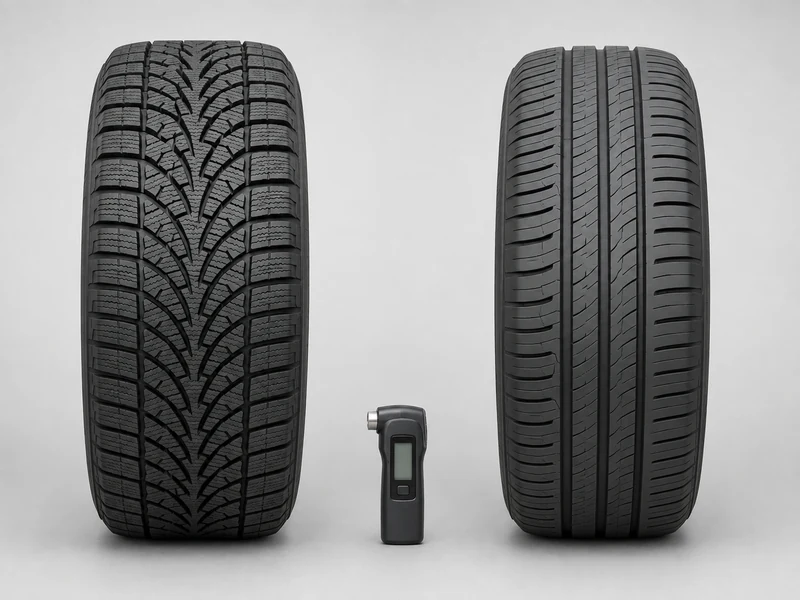
No. Winter (snow) tires use a softer rubber compound and a tread designed to bite into snow, but they follow the exact same door jamb pressure spec as the all-season or summer tires they replaced. The recommendation comes from the vehicle, not the tire.
Two practical notes if you swap tires seasonally:
- Check the pressure yourself after the swap. Tire shops sometimes inflate to a generic shop standard, or fill warm tires fresh off the mounting machine, which reads artificially high. Verify the next morning when cold.
- Mark your calendar for a re-check. Winter tires are usually mounted right as temperatures plunge — the same week your pressure drops fastest. Check a week after the swap and every 2 weeks after that.
Why the TPMS Light Comes On More in Winter
The TPMS warning typically triggers when a tire falls about 25% below its recommended pressure. Winter creates the perfect setup: pressure drifts down gradually through natural permeation (~1–2 PSI per month), then a cold front knocks off several more PSI overnight — and a tire that was “close enough” in October crosses the threshold in December.
That's also why the light often flickers: on during the cold morning commute, off by lunch as driving friction warms the tires and pressure climbs back above the threshold. Don't dismiss it — a flickering light means you're hovering at the edge of under-inflation. Add air to the door jamb number when cold and it will stay off.
If the light stays on after you've inflated to spec, something else is going on — see the full TPMS warning light guide, and if one tire keeps losing more than the others, read why tire pressure keeps dropping.
How Often to Check Tire Pressure in Winter
Winter is when your checking schedule matters most, because temperature swings do the most damage. A simple winter routine:
- Every 2 weeks if your area has big temperature swings; monthly at minimum, year-round.
- The morning after every cold snap — that's when the pressure drops are largest and TPMS lights cluster.
- First thing in the morning, before driving — cold readings are the only honest ones.
- Don't skip the spare. A compact spare at 60 PSI loses pressure faster in the cold and is easy to forget until you need it on the side of a frozen road.
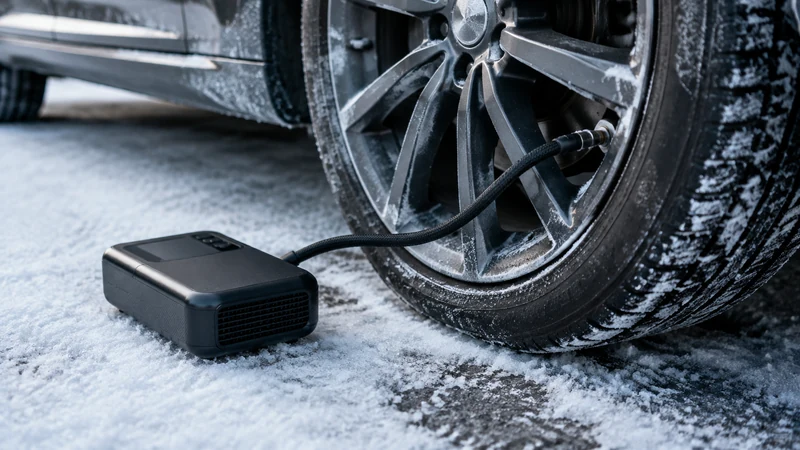
- Carry a backup inflator. Gas station hoses can freeze or be shut off in hard winters — a 12V portable inflator in the trunk covers you.
Five minutes every couple of weeks keeps you at the door jamb number all winter — better grip, better mileage, even wear, and no TPMS surprises on the coldest morning of the year.
Key takeaways
- ✓Winter tire pressure = the same door jamb cold PSI as any season — there's no separate winter spec.
- ✓Cold air drags readings down ~1 PSI per 10°F, so you'll top up more often to stay at the target.
- ✓Don't lower pressure for snow or ice — it hurts steering and wear without adding real-world grip.
- ✓Winter tires use the same door jamb number as all-seasons; verify pressure yourself after a swap.
- ✓Check every 2 weeks and after every cold snap, always cold — and don't forget the spare.
Frequently Asked Questions
Is 28 PSI too low for winter driving?
For most cars, yes. If your door jamb sticker calls for 32–35 PSI, a cold reading of 28 PSI means you're 4–7 PSI under spec — enough to hurt handling, increase shoulder wear, and possibly trigger the TPMS light. Add air to reach the door jamb number. The exception: if your vehicle's recommended cold pressure is actually 28 PSI (check the sticker), then it's fine.
What tire pressure is best for snow and ice?
The same number as always: the cold PSI on your driver-side door jamb sticker. Despite the persistent myth, lowering pressure does not meaningfully improve grip on packed snow or ice at normal road speeds — it degrades steering response and stability instead. Grip in winter comes from winter tires, tread depth, and driving speed, not from running soft tires.
Does snow itself lower tire pressure?
No — it's the temperature, not the snow. Tire pressure drops about 1 PSI for every 10°F fall in air temperature, whether or not a single snowflake falls. Snow usually accompanies cold air, so the two arrive together, but a dry 20°F day drops your pressure just as much as a snowy one.
Do winter tires lose pressure faster than all-season tires?
No. All tires respond to temperature the same way — about 1 PSI per 10°F — and all lose roughly 1–2 PSI per month through natural permeation regardless of type. Winter tires follow the exact same door jamb pressure spec as the all-seasons they replaced. If one tire loses noticeably more than the others, that's a leak or a valve issue, not the tire compound.
Can I just wait until spring for the pressure to come back up?
Not a good idea. Yes, pressure rises again when temperatures warm — but that could be months of driving underinflated: worse fuel economy, faster shoulder wear, longer braking distances, and extra heat buildup in the tire. Topping up takes five minutes at a gas station. Check every 2 weeks in winter and after every cold snap instead of waiting it out.
Why did the tire shop set my new winter tires to a different PSI?
Shops sometimes inflate to the tire's sidewall max or a generic shop standard instead of your vehicle's door jamb spec — or they filled warm tires right after mounting, which reads higher. Check the pressure yourself the next morning when the tires are cold, and adjust to the door jamb number. The vehicle manufacturer's spec always wins over the sidewall number.
References
- Discount Tire — Correct Tire Air Pressure (door jamb spec, not sidewall; ~1 PSI per 10°F; 1–2 PSI/month permeation)
- NHTSA — Tire Safety (check pressure monthly and when cold; TPMS required on US vehicles since 2008)
- Michelin — How to Check Tire Pressure (monthly incl. spare; cold tires, 3+ hours parked; door sticker, not sidewall)
Related Guides
- → Does Tire Pressure Drop in Cold Weather? (How Much)
- → Cold vs Hot Tire Pressure: How Much Difference?
- → Summer Tire Pressure: Should You Let Air Out?
- → Do Tires Deflate in Cold Weather? (No — Here's Why)
- → How to Check Tire Pressure: The Complete Step-by-Step Guide
- → How Often Should You Check Tire Pressure?
- → Tire Pressure Warning Light: What It Means
- → More guides on the Blog