
When Should You Replace Your Tires? A 5-Trigger Checklist
Last updated: September 29, 2026 · Reading time: 7 min
Replace tires when the first of 5 triggers hits: tread down to 4/32 inch, age past 6 years (10 max), any bulge or sidewall damage, one zone wearing out early, or an AWD mismatch. Don't wait for the 2/32-inch legal minimum — wet braking is already 43% worse at 4/32.
The 5 Replacement Triggers (Quick Answer)
Most guides answer "when to replace tires" with a single tread number. Real life isn't that tidy — tires die five different ways, and whichever trigger arrives first ends the tire. Here's the whole decision on one screen:
| Trigger | Threshold | How to check | What to do |
|---|---|---|---|
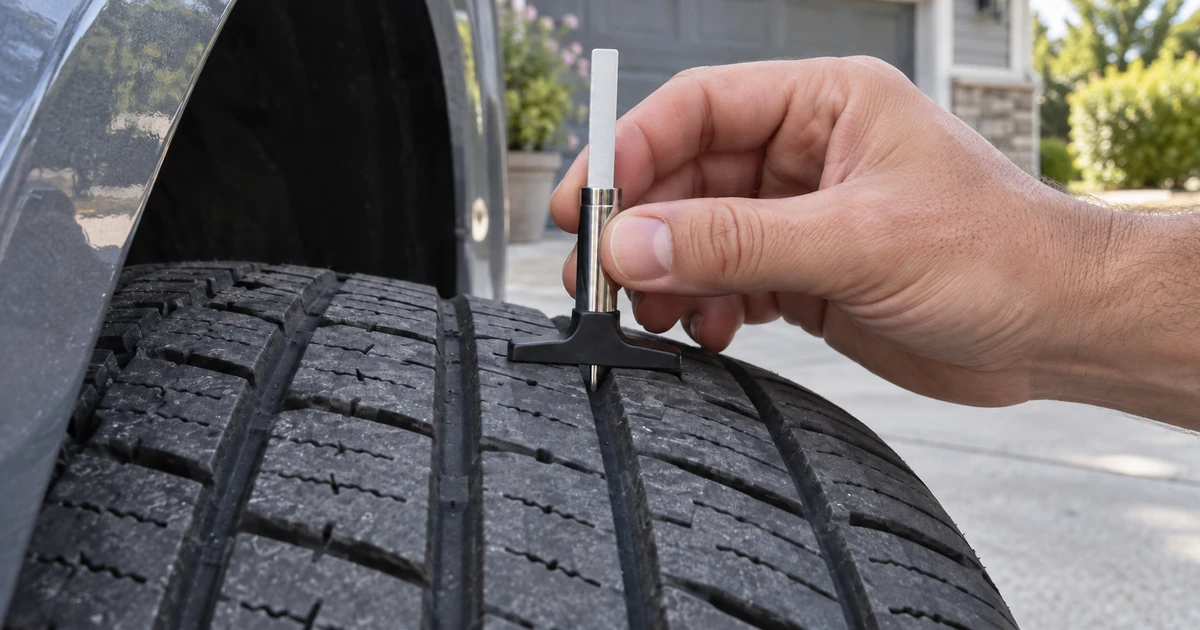
| 1. Tread depth | 4/32" (safe) / 2/32" (legal max) | Quarter test or gauge | Plan replacement at 4/32" |
| 2. Age | 6 years (inspect yearly) / 10 years (hard max) | DOT date code on sidewall | Replace regardless of tread |
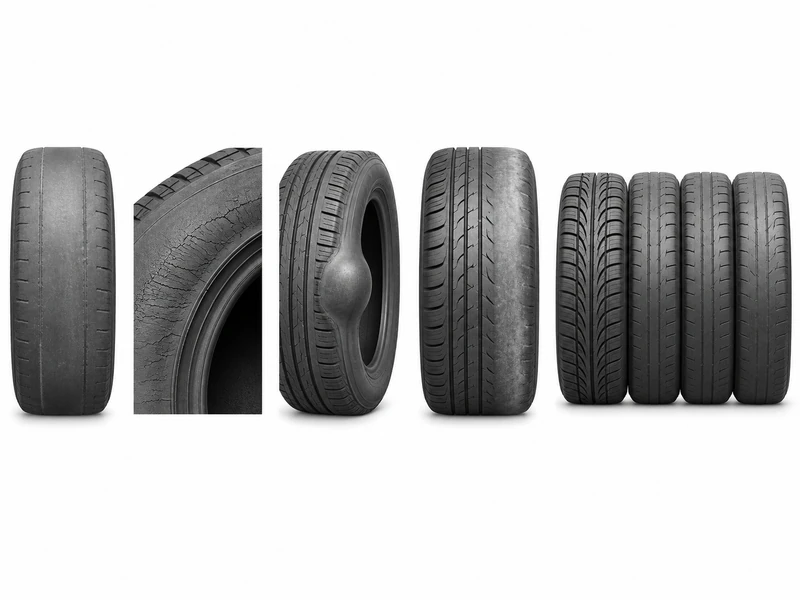
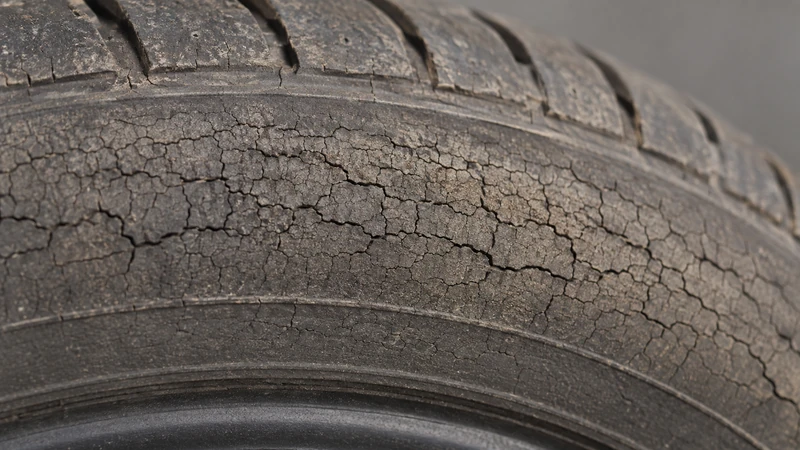
| 3. Damage | Any bulge, sidewall crack, or exposed cord | Visual sweep, monthly | Replace immediately |
| 4. Uneven wear | One zone at 2/32" while others have tread | Measure 3 zones per tire | Replace + fix the cause |
| 5. AWD mismatch | Tread difference beyond manual's limit | Owner's manual spec | Replace in pairs or all four |
Trigger 1: Tread Depth — Plan at 4/32", Never Past 2/32"
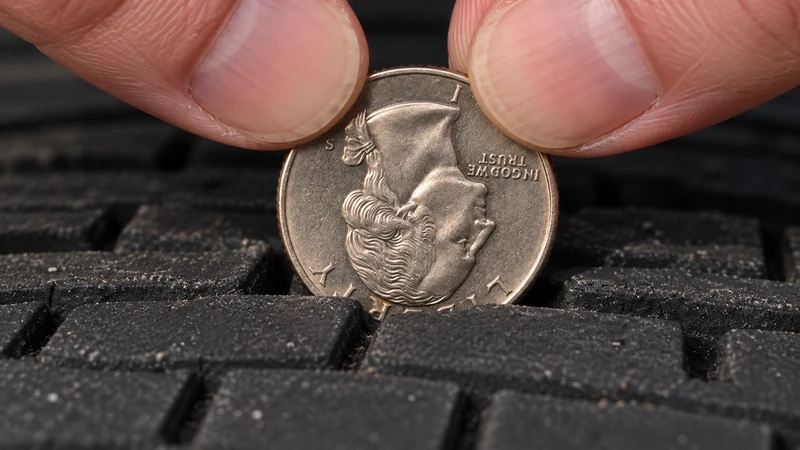
The legal minimum in most states is 2/32 inch — that's where the wear bars sit and where the penny test fails. But legal isn't safe: AAA's testing showed tires at 4/32 inch already needed 43% more distance to stop on wet pavement than new tires. So the practical rule: start shopping at 4/32" (the quarter test line), and treat 2/32" as overdue, not due. Every depth and what it means: the tread depth chart.
Trigger 2: Age — Rubber Expires Even When Tread Looks Fine
Rubber degrades with time, not just miles. The industry rule of thumb: professional inspection every year after year 5, most automakers say replace at 6, and 10 years is the hard ceiling — no matter how much tread remains. This is the trigger that catches low-mileage cars and spare tires (which age in the trunk, forgotten). The manufacture date is in the DOT code on the sidewall — the last four digits are the week and year. Full decode: how to read the tire date code.
Trigger 3: Damage — These Mean "Replace Now," Not "Watch It"
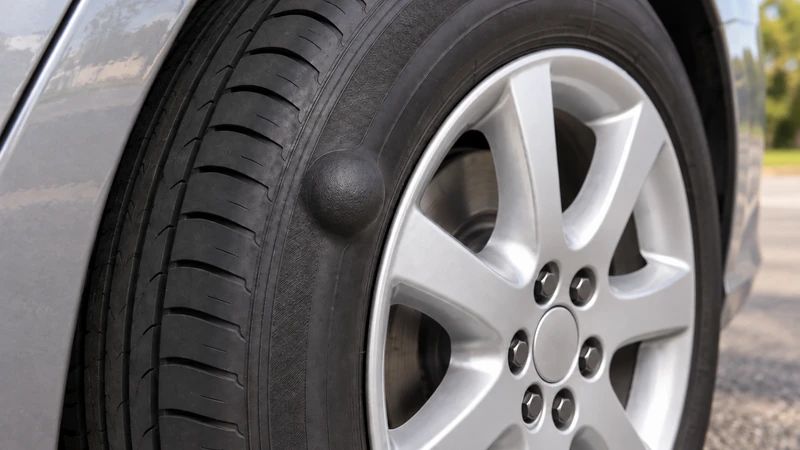
Sidewall bulge or bubble
Internal cords are broken and air is pushing the rubber outward. This is a blowout waiting for highway speed. Replace before the next drive, not after.
Sidewall puncture or gash
Repairs are only considered safe in the central tread area. The sidewall flexes constantly, so patches don't hold there — a sidewall puncture means a new tire.
Exposed cords or belts
If you can see fabric or steel through the rubber, the tire has zero structural margin left. Straight to the tire shop.
Tread-area puncture (the repairable one)
A nail in the central tread is the one damage that usually doesn't mean replacement — a proper patch-plug repair at a shop is a legitimate fix. Location decides everything.
Trigger 4: Uneven Wear — Replace the Tire AND Its Cause
A tire doesn't have to be worn everywhere to be worn out. If the inner shoulder is at the wear bars while the center still has 5/32 inch, the tire is done — the worst point decides. But replacing without fixing the cause just burns the next set the same way: shoulder wear is usually tire pressure, one-sided wear is alignment, and patchy cupping is suspension or balance. Full pattern-by-pattern diagnosis: uneven wear patterns.
Trigger 5: Replacing One, Two, or Four (the AWD Trap)
How many tires to buy is part of the "when" decision, because on some cars the answer changes what "needs replacing" means:
- FWD/RWD, others nearly new: one matching tire (same brand, model, size) is acceptable.
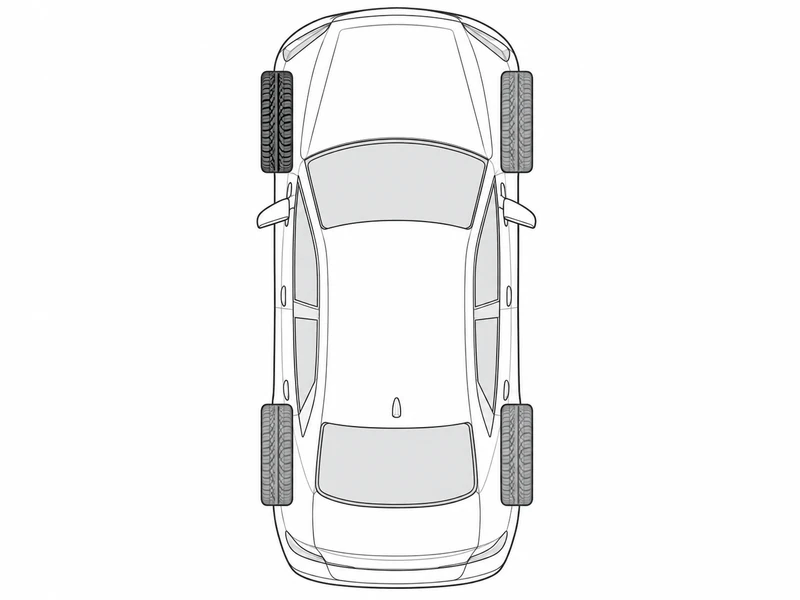
- Any car, others half-worn: replace at least the axle pair — and put the new pair on the rear, whatever the drive wheels. Rear grip is what stops spin-outs.
- AWD/4WD: the trap. A tire with meaningfully different circumference makes the center differential work constantly. Many AWD manuals specify a maximum tread-depth difference between tires — exceed it and the honest answer is often four. The owner's manual outranks any general rule, including this one.
Key takeaways
- ✓5 triggers, first one wins: tread 4/32", age 6–10 years, damage, uneven wear, AWD mismatch
- ✓4/32" is the real replacement line — AAA measured +43% wet stopping there; 2/32" is just the legal floor
- ✓Rubber ages off the road too: yearly inspection after year 5, hard ceiling at 10 — spares included
- ✓Sidewall bulge, sidewall puncture, or visible cords = replace before the next drive
- ✓On AWD, one mismatched tire can force a four-tire replacement — check the owner's manual first
Frequently Asked Questions
When should I replace my tires?
Replace tires when any of five triggers hits, whichever comes first: tread worn to 4/32 inch (or the 2/32 inch legal minimum at the latest), the tire is more than 6 years old (10 at the absolute maximum), there's visible damage like a sidewall bulge or crack, one area is wearing much faster than the rest, or you're on an AWD vehicle where a single new tire would mismatch the others.
How often should you replace tires?
There's no fixed interval — tires die by tread, age, or damage, not by calendar. Most all-season tires carry treadwear warranties in the 40,000–80,000 mile range, so a typical driver (12,000–15,000 miles a year) lands somewhere around 3–6 years. But age alone can end a tire's life at 6–10 years even with tread left, which is why low-mileage cars still need replacements.
How do I know if I need new tires?
Do three two-minute checks: the quarter test (Washington's head fully visible = under 4/32 inch, start shopping), the DOT date code on the sidewall (last four digits are the week and year — over 6 years old means inspection time), and a visual sweep for bulges, cracks, or cords showing. Any one failure means yes.
Can I replace just one tire?
On a front- or rear-wheel-drive car, usually yes — if the other tires are nearly new and the new tire matches brand, model, and size. On an AWD or 4WD vehicle, be careful: a circumference mismatch between tires forces the drivetrain to compensate constantly, and many manufacturers specify a maximum tread-depth difference between tires. Check your owner's manual — AWD often means replacing two or all four.
Should I replace tires at 4/32 or wait for 2/32?
4/32 inch is the smarter line. 2/32 is merely the legal minimum in most states — the point where a tire is already compromised. AAA's instrumented testing found tires at 4/32 inch needed 43% longer to stop on wet pavement than new tires. Unless you drive exclusively in dry conditions, plan the replacement at 4/32, not at the wear bars.
Do I need to replace all four tires at once?
Not necessarily. Two at a time is fine on most cars — put the new pair on the rear axle regardless of drive wheels (rear grip is what prevents spin-outs). The exception is AWD/4WD, where mismatched rolling circumferences can strain the center differential; many AWD manuals effectively require four matched tires. When in doubt, the owner's manual wins.
References
- AAA Newsroom — Tread Lightly: Worn Tires Put Drivers at Risk (at 4/32", wet stopping distances are already +43% vs new tires)
- Discount Tire — How to Check Tire Tread Depth (new tires start at 10/32–11/32"; measure multiple grooves and use the lowest reading)