Tire Wear Bars: How to Find Them and What They're Telling You
Last updated: September 27, 2026 · Reading time: 6 min
Tire wear bars are rubber bridges molded into the tread grooves at exactly 2/32 inch — the legal minimum tread depth in most US states. When the tread around them wears down flush with the bars, the tire is worn out. Find them fast via the small triangle or "TWI" mark on the sidewall.
What Wear Bars Are (and Why They Exist)
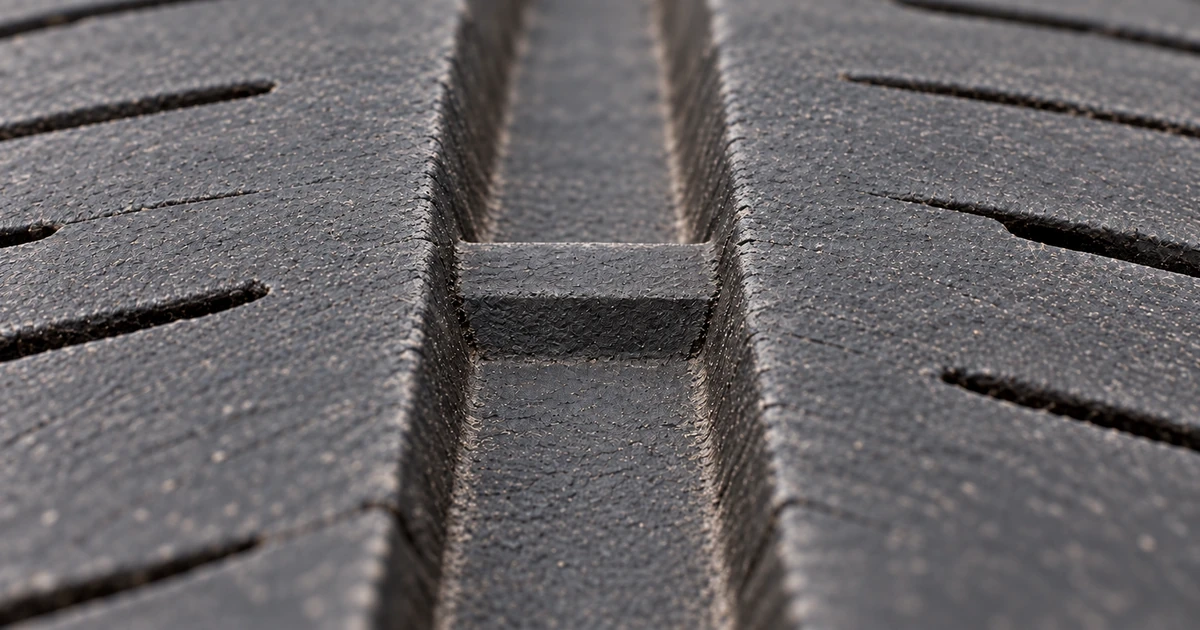
Wear bars — officially called tread wear indicators, or TWIs — are small raised segments of rubber molded into the bottom of your tire's main grooves during manufacturing. They run perpendicular to the tread pattern, bridging the groove, and they stand exactly 2/32 inch (1.6 mm) tall. Virtually every street-legal tire sold in the US has them.
Their job is to remove all guesswork from one question: is this tire worn out? Tread wears down toward the bars over tens of thousands of miles. The moment the tread surface sits level with them, you know — without a gauge, without a coin — that the tire has hit the legal minimum and needs replacing. For context on the full depth scale, see the tire tread depth chart.
How to Find Them: Start at the Sidewall
Most people hunt for wear bars by randomly peering into grooves. There's a faster way — the tire tells you where they are:
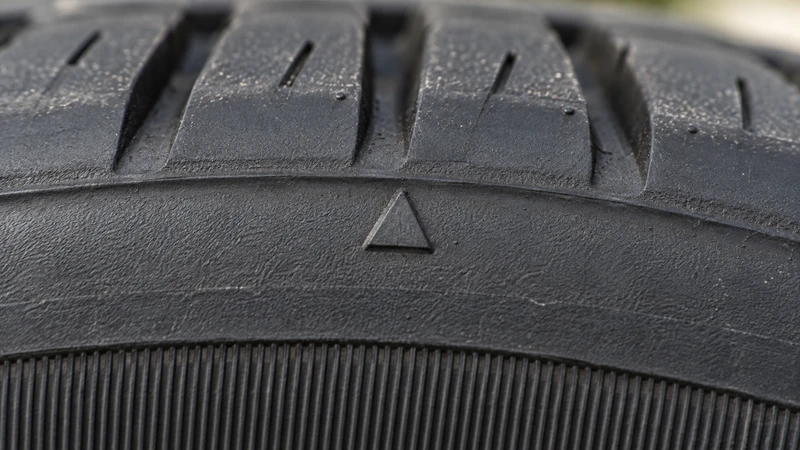
- Scan the sidewall for a small triangle or the letters "TWI." These markers are molded into the sidewall at the exact spots where wear bars sit in the tread. (More sidewall decoding: how to read a tire sidewall.)
- Follow the marker up to the tread and look into the nearest main groove — the bar is the raised bridge crossing it.
- Use a flashlight, especially for inner grooves that face the car and sit in shadow.
- Check at least three spots around the tire, inner and outer grooves — wear is rarely even, and one good-looking groove proves nothing.
How to Read Them: Three Possible Answers
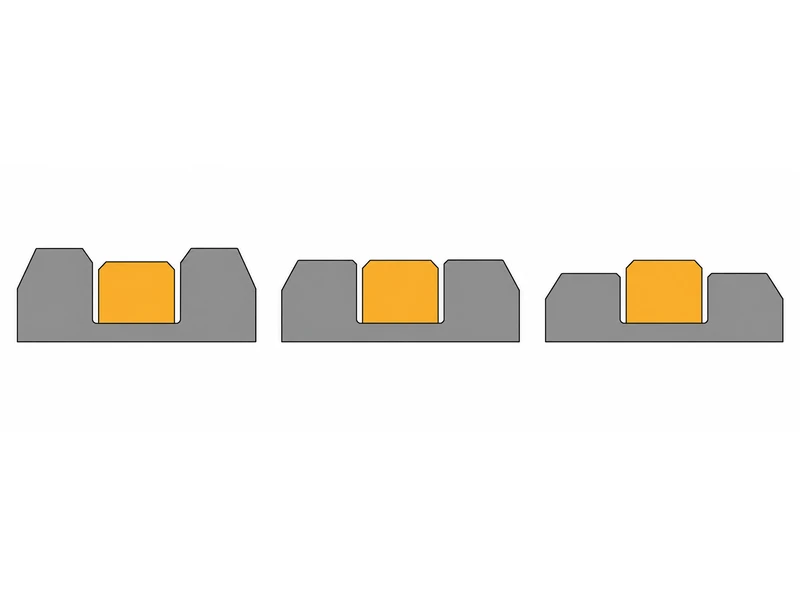
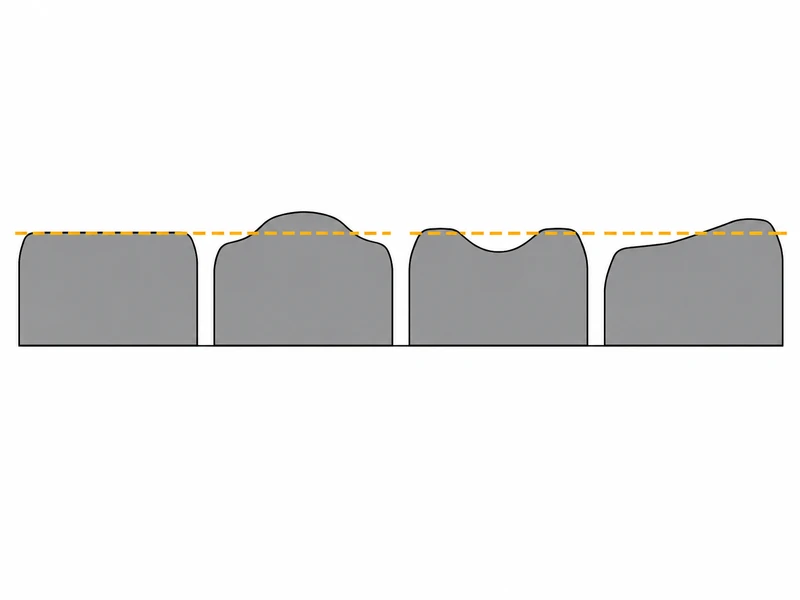
Tread clearly above the bars → tread remains
You can see the groove floor dip below the bar tops. The tire still has usable depth — how much is what a gauge or coin tells you.
Tread flush with the bars → 2/32", replace now
The tread surface runs level into the bar with no step down. You're at the legal minimum. This is the wear bars' whole purpose — when you see this, the answer is "new tires," not "check again later."
Bars standing proud of the tread → overdue
The bars poke up above the surrounding rubber. The tire is below the legal minimum and may already fail a state inspection. Drive on it only to the tire shop.
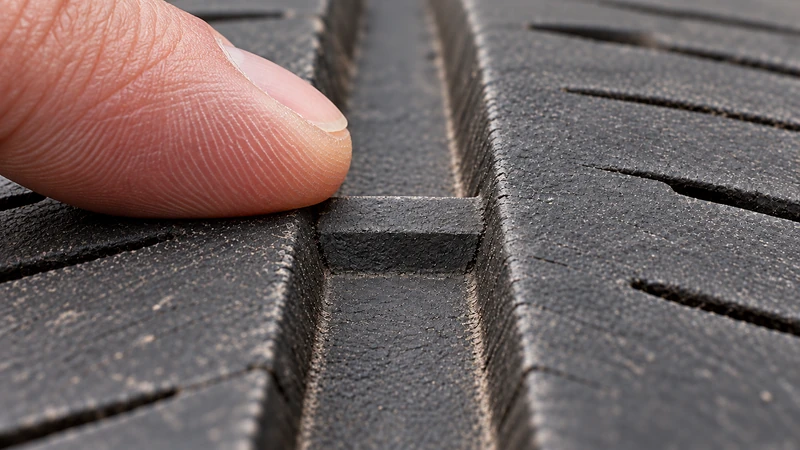
Eyes can deceive in bad light, so confirm with the touch test: run a fingertip across the tread and over the bar. If you feel a step down into the groove, tread remains. If your finger glides across flat, they're flush.
Wear Bars as a Diagnostic Tool (Not Just a Replacement Signal)
Here's what most guides miss: where the tread goes flush with the bars matters as much as that it does. Even wear across the full width is a tire that lived a normal life. Localized wear is your car filing a complaint:
Flush on both shoulders, tread left in center → under-inflation
A soft tire rides on its edges. Fix the pressure habit — a monthly tire pressure check — or the next set wears the same way.
Flush in the center only → over-inflation
An over-inflated tire bulges and rides on its middle. Inflate to the door-jamb sticker, not the sidewall maximum.
Flush on one shoulder only → alignment
One-sided wear is the classic camber or toe problem. Replacing tires without an alignment just feeds the new set to the same issue.
Patchy flush spots around the tire → suspension or balance
Scalloped, cupped wear points at worn shocks, struts, or a wheel balance problem.
More on reading these patterns: uneven wear diagnosis in the main tread guide.
2/32" Is the Legal Floor — Not the Safe One
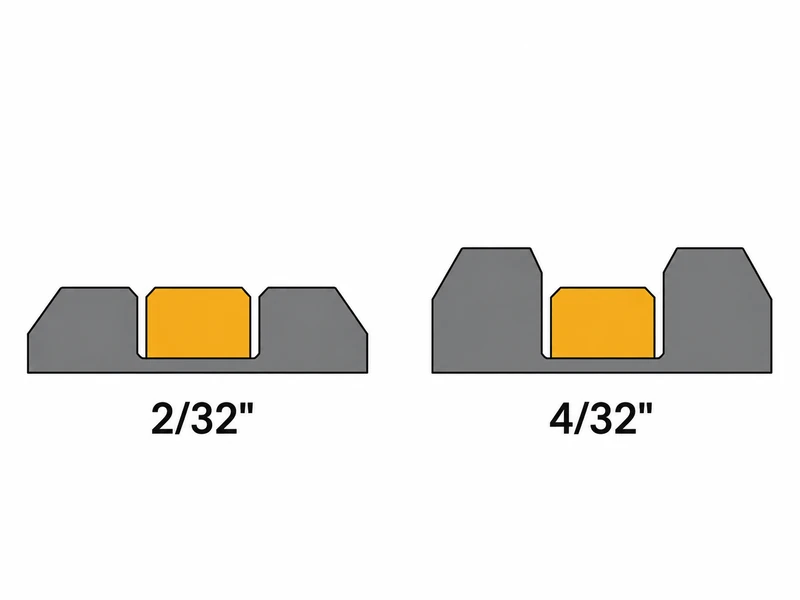
Wear bars mark 2/32 inch because that's the legal minimum in most states — not because that's where wet-weather grip ends. It ends earlier. In AAA's instrumented testing, tires worn to 4/32 inch — still twice the depth of the wear bars — already needed 43% more distance to stop on wet pavement and lost a third of their handling ability compared to new tires.
So treat the bars correctly: they don't say "time to think about new tires." They say "you should have done this already." The smarter checkpoint is 4/32 inch — that's what the quarter test measures (Washington's head, same idea as the penny). If you drive in rain or snow regularly, plan replacements around the quarter, not the bars.
Key takeaways
- ✓Wear bars are molded rubber bridges at exactly 2/32 inch — tread flush with them means the tire is legally worn out
- ✓Find them via the triangle or 'TWI' mark on the sidewall, then check 3+ spots around the tire with a flashlight
- ✓Confirm by touch: step down = tread remains, flat glide = flush
- ✓Where they're flush is diagnostic: shoulders = under-inflation, center = over-inflation, one side = alignment, patches = suspension
- ✓2/32" is the legal floor, not the safe line — AAA measured +43% wet stopping already at 4/32", so plan around the quarter test
Frequently Asked Questions
What are tire wear bars?
Tire wear bars — also called tread wear indicators or TWIs — are small raised rubber bridges molded into the bottom of a tire's main tread grooves at exactly 2/32 inch of height, which is the legal minimum tread depth in most US states. They exist so you can tell a worn-out tire from a usable one with zero tools: when the surrounding tread wears down flush with the bars, the tire is done.
Where are tire wear bars located?
Inside the main circumferential grooves of the tread, spaced at several points around the tire. The fastest way to find them: look at the sidewall for a small triangle or the letters "TWI" — those markers point directly at the groove locations where bars sit. A flashlight helps, especially on the inner grooves.
What does it mean when tread is flush with the wear bars?
It means the tire has exactly 2/32 inch of tread left — the legal minimum — and must be replaced. If the bars are flush across the full width of the tire, it's simply worn out. If they're flush only on one shoulder or only in the center, the tire is telling you something else is wrong: alignment, inflation, or suspension.
How many wear bars does a tire have?
Most passenger tires have wear bars at several positions around the circumference of each main groove — you don't need to count them, you need to check them in more than one spot. Read the bars at three or more points around the tire, and on both inner and outer grooves, because wear is rarely perfectly even.
Are wear bars the same thing as the penny test?
They measure the same threshold. A penny inserted head-down into a groove shows the top of Lincoln's head at exactly 2/32 inch — the same depth the wear bars mark. The bars are always with the tire (no coin needed); the penny lets you check any groove you choose. If the penny test says fail and the nearest bar is flush, you have a cross-confirmed answer.
Can I keep driving when my tread reaches the wear bars?
Legally, in most states, 2/32 inch is the line — at the bars you're at it, not below it. Practically, you should have replaced the tire earlier. AAA testing found that tires worn to 4/32 inch already needed 43% longer to stop on wet pavement than new tires. At the bars, wet grip is far worse. Treat the bars as 'overdue', not 'due'.
References
- Discount Tire — How to Check Tire Tread Depth (wear bars sit at 2/32"; new tires start at 10/32–11/32")
- AAA Newsroom — Tread Lightly: Worn Tires Put Drivers at Risk (at 4/32", wet stopping distances are already +43% vs new tires)