
Tire Date Code: The 4 Digits That Tell You When to Replace
Last updated: September 22, 2026 · Reading time: 8 min
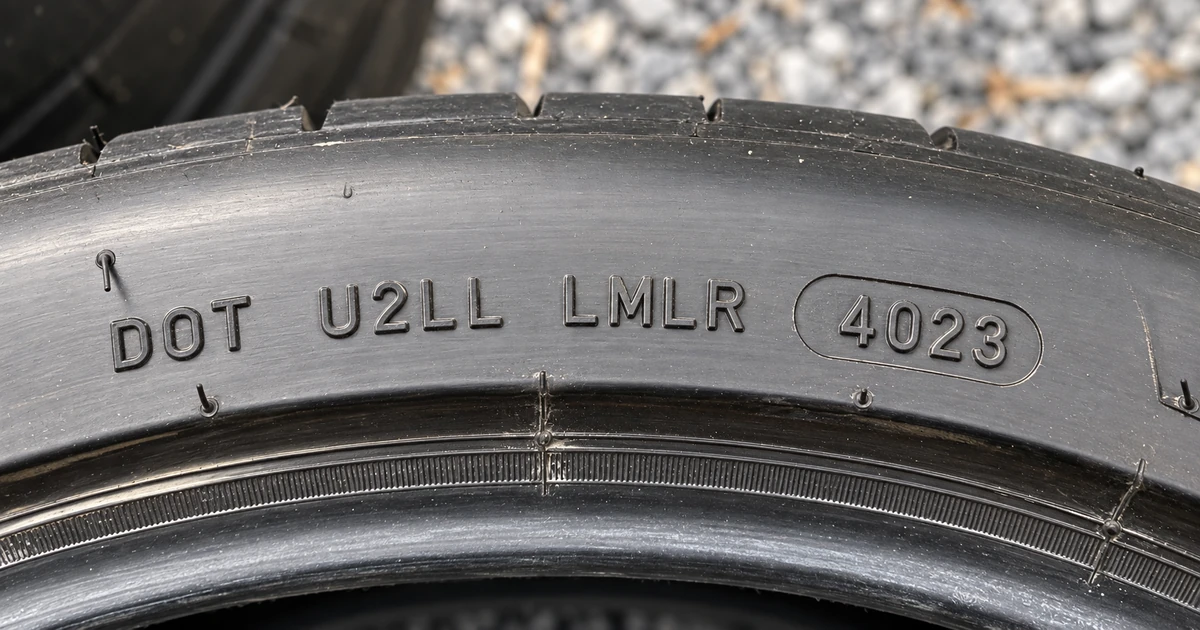
The tire date code is the last 4 digits of the DOT code on the sidewall: the first two digits are the production week, the last two are the year — "4023" means the 40th week of 2023. Tires need inspection after 5 years and replacement by 10, regardless of tread.
Where to Find the Date Code
Look for the letters "DOT" on the sidewall, followed by a string of 8–13 characters — the Tire Identification Number (TIN). Everything after "DOT" identifies the plant, the size, and the manufacturer's own codes; only the last 4 digits are the date, and they're the only part most drivers ever need.
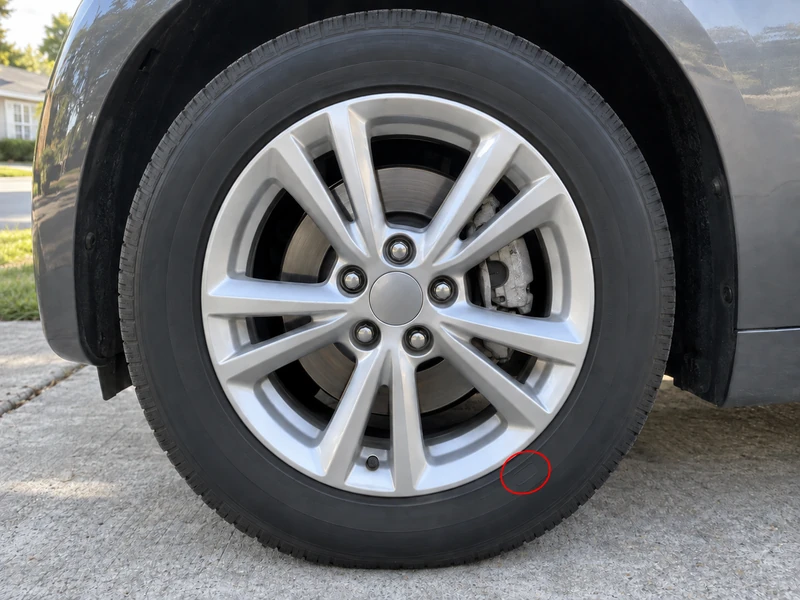
The part that trips people up: the full code is often molded on only one sidewall. If the outer wall shows "DOT" with a short string and no 4-digit ending, the date lives on the inner wall. Turn the steering to full lock to peek behind the front tires, or slide a phone flashlight under the rear — no jacking needed for most cars.
How to Read the 4 Digits
On any tire made since 2000, the last 4 digits are week + year: the first two digits are the production week (01–53), the last two are the year. So a sidewall ending in 4023 rolled off the line in the 40th week of 2023 — early October. 1219 = 12th week of 2019. 5107 = 51st week of 2007.
One red flag to know: tires made before 2000 use only 3 digits (two for the week, one for the year). If you ever find a 3-digit code in the wild — a barn-find car, an ancient trailer — that tire is 25+ years old and gets replaced before the car moves, no inspection needed.

Why Tire Age Matters (Even With Good Tread)
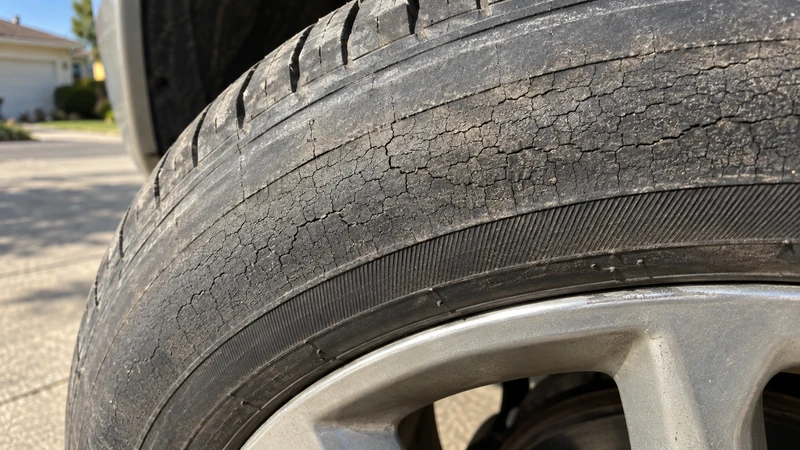
Tires don't only die by wearing down — they die by drying out. Rubber compounds degrade from heat, UV light, and ozone exposure, and the degradation happens inside the structure where you can't see it. A tire can have legal tread and a compromised carcass at the same time: the visible warning signs are fine cracks in the sidewall and between tread blocks ("dry rot"), but the dangerous failures — belt separation, sudden pressure loss — often arrive without visible warning.
Two amplifiers worth knowing: heat (tires age measurably faster in hot climates and in cars parked outside) and disuse (a tire that never rolls still ages — which is why the clock starts at manufacture, not at purchase or installation).
How Old Is Too Old: The 5/6/10 Rules
The industry doesn't speak with one voice on tire age — but the disagreement is narrow, and the practical framework is simple:
| Tire age | Status | What to do |
|---|---|---|
| 0–5 years | Normal service | Nothing age-related; maintain pressure and rotation |
| 5 years | Inspection milestone | Annual professional inspection from here on (Michelin) |
| 6 years | Conservative replacement point | Many automakers say replace now, regardless of tread |
| 6–10 years | Gray zone | Inspection decides; heat/sun exposure tips the scale toward replace |
| 10 years | Hard maximum | Replace no matter what — including the spare |
The honest version of the disagreement: many automakers (Ford, Nissan, Mercedes-Benz among them) print 6 years in their owner's manuals as a replace-by date. Michelin and other tire makers call that overly conservative — their line is annual professional inspection after 5 years, hard replacement at 10. Neither side disputes the 10-year ceiling. Where you land between 6 and 10 should depend on exposure: a garaged car in Seattle earns the benefit of the doubt; an outdoor-parked car in Arizona doesn't. And tread depth is a separate axis — a 4-year-old tire can be worn out while a 9-year-old tire has tread to spare; age and wear each get their own vote (the wear side: how to check tire tread).
Check the Date Before You Pay
"New" describes condition, not age. Tires sit in warehouses, and a tire sold as new can already be a year or two into its 10-year clock. Before paying for a set — especially online or at a discount outlet — read the DOT codes on the actual tires you're buying.
What's acceptable: under a year old is ideal, 1–2 years is normal retail reality and still leaves most of the tire's service life. Past 2 years, ask the shop for fresher stock — high-volume stores turn inventory fast and can usually oblige. A "new" tire already 5+ years old isn't a deal at any price: you're buying half a tire's life. The same check applies double when buying a used car — the date codes tell you whether the seller's "almost new tires" claim is true.

Spares, Trailers & Garage Queens
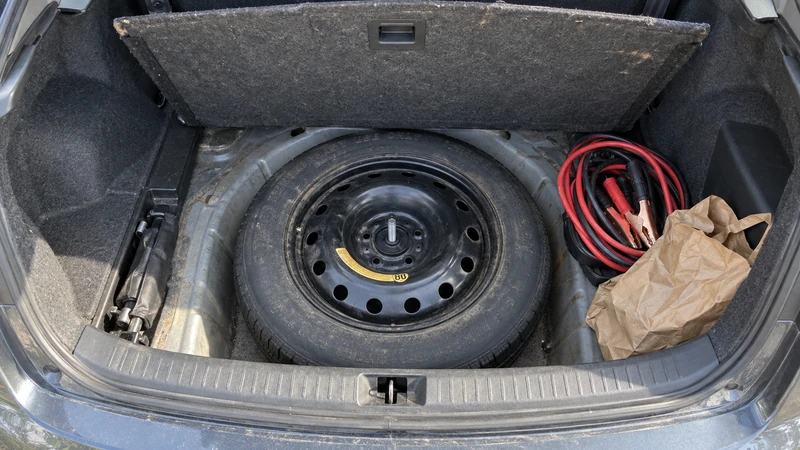
Three vehicles-people-forget all age on the same clock. The spare: it ages whether it's used or not, and the 10-year rule explicitly includes it — a spare older than the car's tires can fail the first time you need it. Check its code and its pressure when you check the other four (the monthly routine). Trailers and RVs: they roll so few miles that tread almost never wears out — they die of age instead, which is why trailer tire blowouts are so common on 8-year-old tires with "perfect tread." Weekend and classic cars: same story — low miles preserve tread, not rubber.
The pattern in all three: the lower the annual mileage, the more the date code — not the tread — decides replacement timing.
How to Slow the Aging Down
You can't stop rubber chemistry, but you can stop feeding it. Keep pressure at spec — chronic underinflation overheats the structure and accelerates internal degradation (the same flexing that kills fuel economy cooks the tire). Park out of the sun where you can; UV and heat are the two biggest accelerants. Drive the car — regular use flexes the compounds and disperses the protective waxes through the rubber, which is why driven tires often outlast stored ones. And skip the shiny dressings with petroleum solvents on aging sidewalls — they can strip the very protectants the tire puts there itself.
Key takeaways
- ✓The date code is the last 4 digits of the DOT code: week (01–53) + year. '4023' = 40th week of 2023.
- ✓The full DOT code is often on only one sidewall — if you can't find 4 digits, check the inner wall.
- ✓A 3-digit code means pre-2000: that tire is 25+ years old and gets replaced immediately.
- ✓The age rules: professional inspection yearly after 5, many automakers say replace at 6, everyone agrees on a hard 10-year maximum — tread is irrelevant at that point.
- ✓Check date codes before paying for 'new' tires: under a year ideal, 1–2 years normal, 5+ years walk away.
- ✓Spares, trailers, and low-mileage cars die of age, not wear — the date code decides, not the tread.
Frequently Asked Questions
Where is the date code on a tire?
On the sidewall, as the last 4 digits of the DOT code — look for the letters 'DOT' followed by a string of characters. The catch: the full code (with the date portion) is often molded on only one sidewall. If you only see 'DOT' plus a few characters and no 4-digit ending, the date code is on the inner sidewall — check from behind the front wheels with the steering turned, or slide under the rear with a flashlight.
What does a code like 4023 mean on a tire?
The first two digits are the production week, the last two are the year: 4023 = the 40th week of 2023, roughly early October 2023. So 1219 = 12th week of 2019 (late March), and 5107 = 51st week of 2007. The week runs 01–53.
Are 7-year-old tires still safe to drive on?
It's the gray zone. Many automakers (Ford, Nissan, Mercedes-Benz among them) tell owners to replace tires at 6 years regardless of tread. Michelin's guidance is annual professional inspection after 5 years and hard replacement at 10. So at 7 years: have them inspected by a tire professional, watch for sidewall cracking, and start budgeting for a set — especially if the car lives outdoors in a hot climate.
Do tires expire if they're never used?
Yes. Rubber degrades from heat, UV light, and ozone whether the tire rolls or sits — a mounted spare ages on the same timeline as the four doing the work, and an unused tire in a hot garage can be in worse shape than a driven tire in a mild climate. This is why age limits are counted from the manufacture date, not the purchase or installation date.
Is it OK to buy 'new' tires that were made 2 years ago?
It's common retail reality — tires sit in warehouses — and a 1–2 year old tire still has most of its service life ahead. But you can do better: check the DOT codes before paying and ask for a fresher set if you see dates 2+ years back, especially from a high-volume shop that turns stock fast. Never accept 'new' tires that are already 5+ years old.
Should I replace 10-year-old tires that still have good tread?
Yes — this is the one point where everyone agrees. Michelin, other manufacturers, and safety researchers all treat 10 years as the absolute maximum regardless of remaining tread, because the rubber compounds degrade internally in ways you can't see. Good tread on a 10-year-old tire is like good paint on a rusted frame.
References
- Michelin — Tire markings explained (DOT date code: first two digits = week, last two = year, e.g. 4714 = 47th week of 2014)
- TireGrades — Tire date code / DOT TIN (full code often on only one sidewall; pre-2000 tires use a 3-digit code)
- Michelin — When to replace tires (professional inspection yearly after 5 years; replace at 10 years regardless of tread — spare tires included)