
Trailer TPMS: The Complete Guide to Monitoring Trailer Tires
Last updated: September 13, 2026 · Reading time: 8 min
Trailers have no factory TPMS — the federal mandate covers passenger vehicles, not trailers — so monitoring means an aftermarket system: cap or flow-through sensors on each valve stem plus a display in the cab. Expect $150–$400 for a kit, and a signal repeater for trailers over ~25 feet.
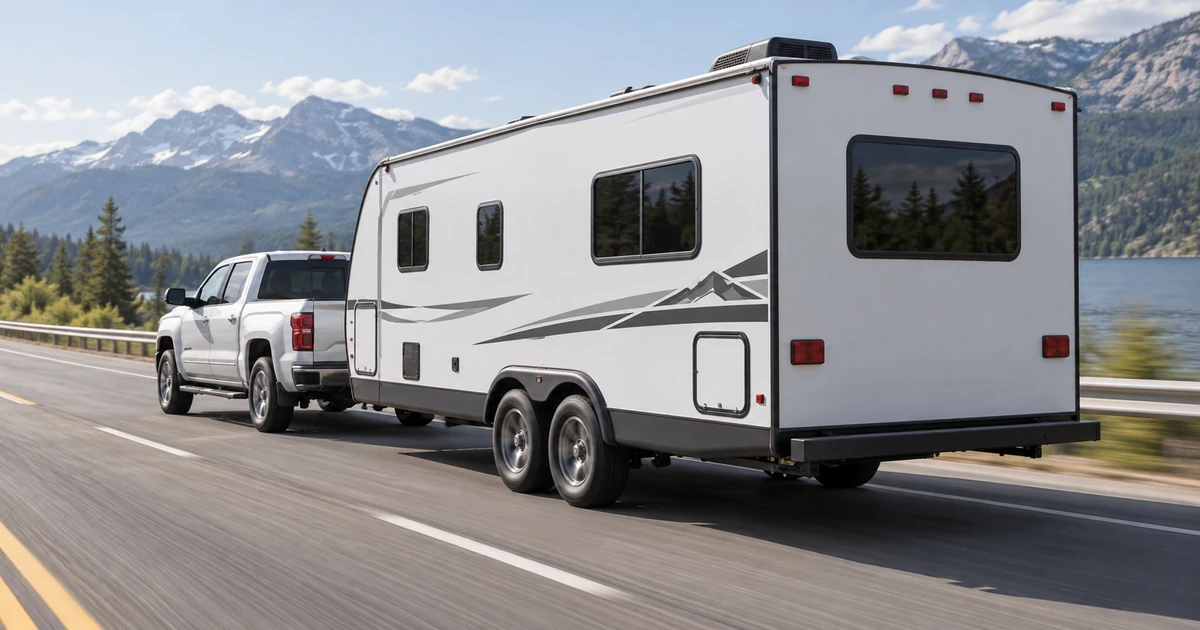
Why Trailer Tires Need Monitoring More Than Car Tires
Three factors make trailer tires the highest-risk rubber you own. First, you can't feel them fail — a trailer tire going soft doesn't pull the steering wheel or change the ride in the cab, so the first sign is often the blowout itself, and a trailer blowout at 65 mph commonly takes the fender and wiring with it. Second, underinflation is the leading cause of trailer-tire failure: a soft sidewall flexes more, heat builds, and the rubber bonds degrade until the tread lets go. Third, trailer tires sit in storage for months between trips — quietly losing 1–2 PSI per month to permeation — then get asked to carry maximum load on day one of vacation.
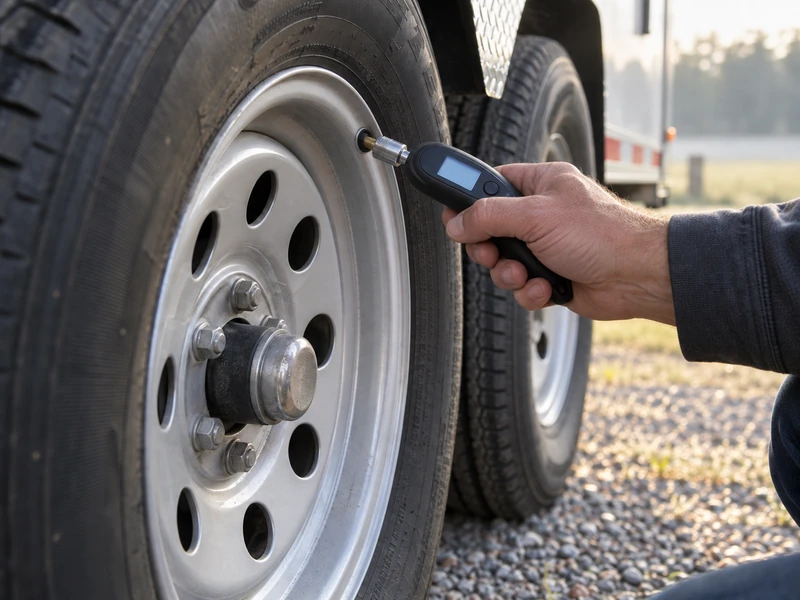
A gauge check before departure (here's the two-minute procedure) handles the storage problem. But only a TPMS watches the tires while you tow — which is when heat and slow leaks actually become blowouts.
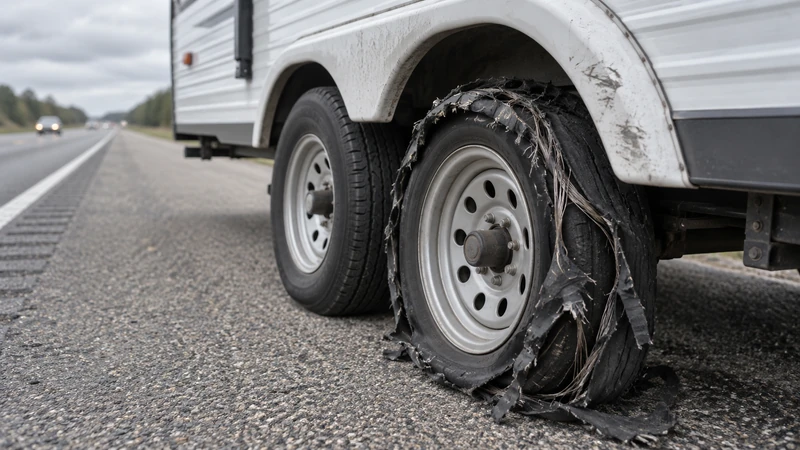
Why Trailers Have No Built-In TPMS
Every US passenger car and light truck since 2008 carries TPMS by federal law (FMVSS 138) — the system behind your dashboard's tire pressure warning light. Trailers are simply not covered by that mandate, so trailer builders ship nothing. Your truck's system can't help either: it's registered to its own sensor IDs and ignores any others. (A few newer heavy-duty trucks offer optional trailer tire-monitoring packages that integrate into the dash — check your option sheet — but that's the exception, not the rule.)
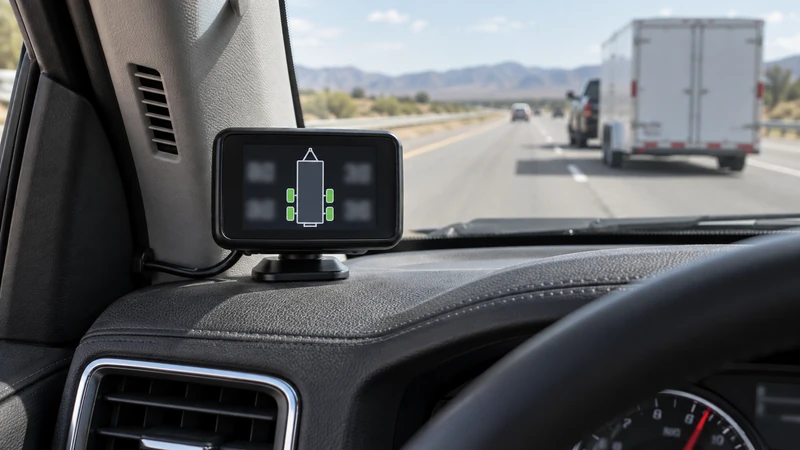
The gap is filled by aftermarket trailer TPMS: sensors that screw onto or into the trailer's valve stems, paired with a small display that plugs into your cab's 12V outlet. The rest of this guide is how to pick and set one up.
What PSI Trailer Tires Actually Need (It's Not the Car Rule)
Here's the mindset flip that surprises car owners: on your car, the door jamb number sits below the tire's sidewall maximum, and you never inflate to the sidewall. On a trailer with ST (Special Trailer) tires, the sidewall maximum IS the target — commonly 50–80 PSI cold depending on load range.
The reasons are structural. An ST tire's load capacity is pressure-dependent: a Load Range D tire rated for its full capacity at 65 PSI is meaningfully overloaded at 50. Full pressure also keeps sidewalls stiff, which cuts the heat buildup that kills trailer tires and reduces trailer sway. Tire engineers already built the ride-quality question into the design — don't “soften the ride” by dropping PSI.
Two qualifications: the trailer's VIN/tire placard wins if it states a pressure (it reflects the axle ratings), and if the tires were swapped to a different load range than stock, follow the sidewall of the tires actually on the trailer. Either way: check cold, before the day's towing, and never bleed a hot reading back down — a 4–6 PSI rise on the road is normal physics (explained in cold vs hot tire pressure).
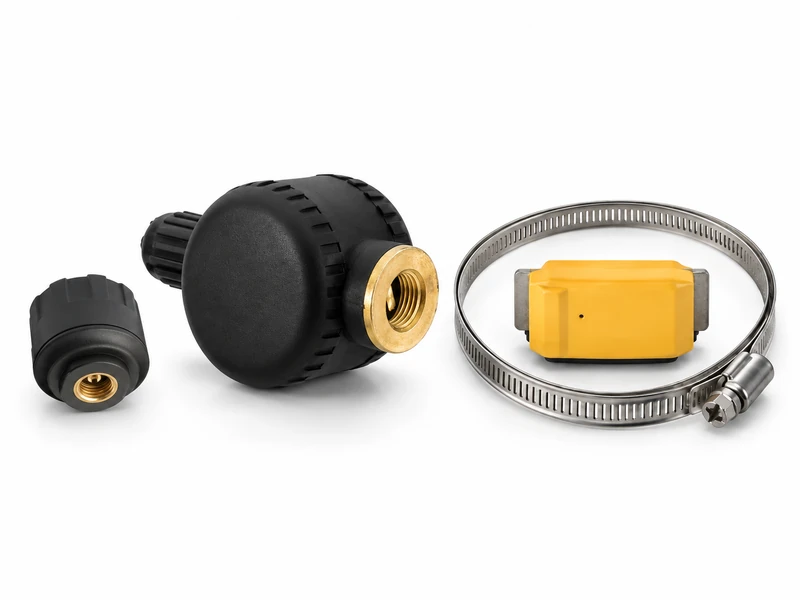
The Three Sensor Types: Cap vs Flow-Through vs Internal
| Type | Install | Battery | Watch out for |
|---|---|---|---|
| Cap (screw-on) | Screws onto valve stem, no tools | Coin cell, 1–2 yrs, user-replaceable | Must come off to add air; can vibrate loose — check torque monthly |
| Flow-through | Screws on, lets air pass through | Coin cell, 1–2 yrs, user-replaceable | Heavier — metal valve stems strongly recommended |
| Internal (band-mounted) | Tire must be dismounted by a shop | Sealed, 5–7 yrs, whole unit replaced | Protected from theft/weather; reads temperature best |
For most trailer owners the answer is cap sensors: five-minute install, cheap coin-cell batteries you can swap yourself, and easy to move between trailers. Flow-through earns its weight if you check or top up air frequently — but only on metal valve stems. Internal sensors are the fit-and-forget option for full-timers, traded against shop installation and whole-sensor replacement when the sealed battery dies (the same trade-off car sensors make — see how TPMS sensors work).
Signal Range and the Repeater Question
The trailer-specific problem no car ever faces: distance. TPMS sensors are low-power radio transmitters with a typical open-air range around 23–36 feet. Measure from your cab to the rear axle of a 30-foot trailer and you're already at the edge — before accounting for the trailer's metal skin, frame, and cargo, all of which eat radio signal.
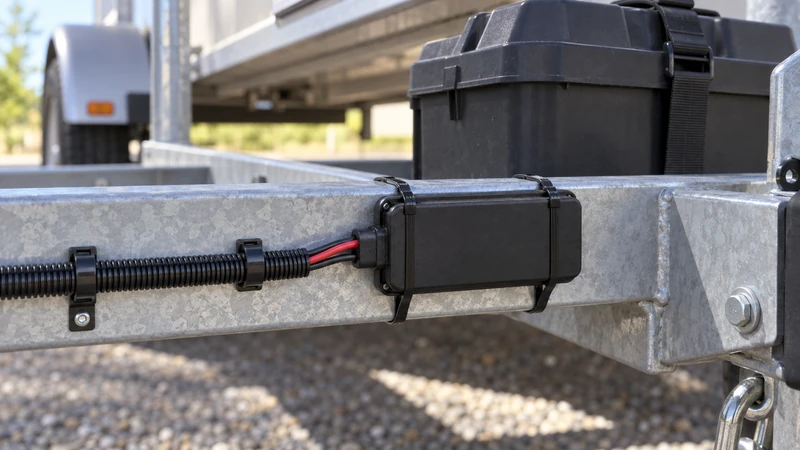
The fix is a repeater: a small 12V-powered relay that mounts on the trailer (usually near the front crossmember), hears every sensor clearly at short range, and re-broadcasts a strong signal to the cab display. Most quality kits include one; if yours sells it separately and your trailer is over ~25 feet, budget for it. On setup day, verify every sensor position shows a reading on the display before the first trip — a sensor that reads in the driveway but drops out at highway speed is exactly the failure a repeater prevents.
How to Choose a System: The 5-Point Checklist
1. Count every tire you want monitored
Trailer axles plus tow vehicle if you want one display for everything. Kits are sold by sensor count — buy for your worst case (dual-axle trailer = 4 sensors; add a spare if monitored).
2. Check the max PSI rating
ST trailer tires commonly run 50–80 PSI cold. The sensors must be rated above your inflation pressure — many cheap cap sensors top out at 50–87 PSI; heavy trailers need 100+ PSI-rated units.
3. Confirm a repeater is included
For trailers over ~25 feet or with metal skins, a 12V signal repeater is effectively mandatory. Many kits bundle one; budget kits sell it separately.
4. Prefer replaceable batteries and a real display
Coin-cell sensors you can service yourself beat sealed units for seasonal use, and a dedicated dash display beats a phone-only app — your phone should be free for navigation.
5. Match sensor type to your valve stems
Cap sensors work on rubber stems; flow-through sensors belong on metal stems. Check what your trailer has before choosing.
Setup: 20 Minutes, Done Right
Order matters — sensors are paired to positions, so set the baseline first:
- 1. Inflate every trailer tire to spec, cold — sidewall max for ST tires (or the placard number), before any sensors go on.
- 2. Pair each sensor to its position at the display before screwing it on — then install it on that exact wheel. Left-front sensor on the left-front wheel.
- 3. Mount the repeater on the trailer frame near the front, wired to 12V (many tap the trailer's running-light circuit so it powers up with the tow vehicle).
- 4. Set alert thresholds — most displays default to a percentage drop from the baseline you just set; that's what you want.
- 5. Road-test close to home. Watch the display for the first 15 minutes: every position should report, and readings climbing 4–6 PSI as tires warm is normal — not a leak.
Seasonal habit: at the start of each towing season, fresh coin cells in every cap/flow-through sensor and a gauge-verified pressure check beats discovering a dead sensor at a rest stop.
What a Trailer TPMS Costs
Expect $150–$400 for a complete kit — display, 4 sensors, and (in most) a repeater — with the spread driven by sensor count, max-PSI rating, and display quality. Replacement coin cells are a few dollars a year. Against the alternative it's lopsided math: a single highway blowout typically costs a tire plus fender, wiring, or fiberglass repairs that start where the TPMS budget ends — to say nothing of the roadside afternoon.
One legitimate way to spend less: if your trailer is short (single axle, under ~20 feet) and open-framed, you may safely skip the repeater — test range at home before deciding. Everything else on the checklist is worth paying for.
Key takeaways
- ✓Trailers have no factory TPMS — the federal mandate covers passenger vehicles only. Monitoring means an aftermarket system: sensors on each valve stem + a cab display.
- ✓Trailer tire rule ≠ car rule: ST tires run at the sidewall MAXIMUM cold PSI (commonly 50–80). Underinflation is the leading cause of trailer-tire failure.
- ✓Cap sensors suit most trailers (rubber stems OK, coin-cell batteries you replace); flow-through needs metal valve stems; internal is fit-and-forget for full-timers.
- ✓Past ~25 feet of trailer — or behind any metal skin — you need a signal repeater. Verify every sensor reads on the display before the first trip.
- ✓Budget $150–$400 for a full kit. One blowout costs more than the system.
Frequently Asked Questions
Is TPMS required on trailers?
No. The federal TPMS mandate (FMVSS 138) applies to passenger cars and light trucks sold in the US since 2008 — trailers are not covered. That's why even a brand-new travel trailer rolls off the lot with no tire monitoring: your trailer's tires are only watched if you add an aftermarket system yourself.
Can my truck's built-in TPMS monitor my trailer tires?
Generally no — your truck's system is registered to its own four or five sensor IDs and can't hear the trailer's sensors. A few newer heavy-duty trucks offer optional trailer tire-pressure packages that integrate into the dashboard, so check your truck's option list. Everyone else needs an aftermarket trailer TPMS with its own display.
What PSI should my trailer tires be?
Opposite of the car rule: ST (Special Trailer) tires are engineered to run at the maximum cold PSI embossed on the sidewall — commonly 50–80 PSI depending on load range — because their load capacity is pressure-dependent and stiff sidewalls reduce heat and sway. The trailer's VIN/tire placard takes priority if it states a number; if the tires were replaced with a different load range, follow the sidewall of the tires actually on the trailer. Always check cold.
Do I need a signal repeater for my trailer TPMS?
Probably, yes. Sensor range is typically 23–36 feet in open air, and the rear axle of a long trailer — especially behind a metal-skinned RV or cargo trailer that blocks radio signals — can exceed that. Most quality kits include a 12V repeater; mount it near the front of the trailer and verify every sensor reads before your first trip.
How long do trailer TPMS sensor batteries last?
Cap and flow-through sensors run on user-replaceable coin cells (CR1632/CR2032) that last roughly 1–2 years — keep spares in the glove box and swap them at the start of each season. Internal band-mounted sensors use sealed batteries lasting 5–7 years, but the whole sensor must be replaced when they die. For most trailer owners, replaceable-battery cap sensors are the practical choice.
Will screw-on sensors damage my trailer's valve stems?
Lightweight cap sensors are fine on standard rubber valve stems. Heavier flow-through sensors add weight and leverage at highway speed and heat — most manufacturers and guides recommend them only on metal bolt-in valve stems. If your trailer has rubber stems and you want flow-through convenience, have metal stems installed at the next tire service (a few dollars each).