
LT vs P Tires: What LT Means and Which One You Need
Last updated: November 18, 2026 · Reading time: 9 min
LT means Light Truck; P means Passenger. LT tires use different load/inflation standards and generally heavier-duty construction. P tires often favor daily comfort and efficiency. Neither is universally better—match the vehicle specification, and never assume equal size means a direct swap or the same PSI.
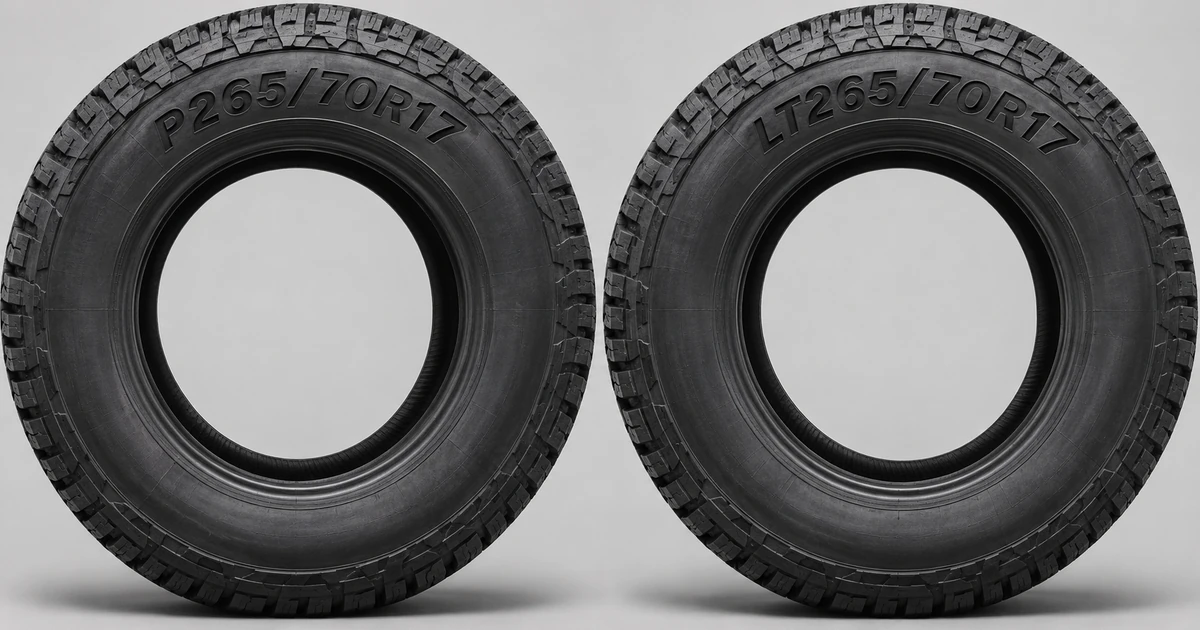
LT vs P Tires: Side-by-Side Comparison
P and LT identify different tire sizing and load standards, not two trim levels of the same product. The table describes typical tendencies; the individual tire model and vehicle specification still control the decision.
| Feature | P-metric | LT-metric |
|---|---|---|
| Prefix | P in P265/70R17 | LT in LT265/70R17 |
| Primary design focus | Passenger and on-road use, including properly specified SUVs and pickups | Light-truck service, heavier loads and more demanding conditions |
| Typical construction | Generally lighter and less heavily built | Generally heavier-duty plies, beads, sidewalls and tread packages |
| Load and inflation | P-metric standards; light-truck service may require a capacity adjustment | LT-metric load/inflation standards; load range and single/dual use matter |
| Ride, noise and MPG | Often favored for comfort, lower noise and efficiency | Can feel firmer and add weight or rolling resistance; results vary by model |
| Best starting point | Match factory P-metric specification for normal driving within vehicle limits | Match factory LT specification or a properly verified heavy-duty application |
P265/70R17 vs LT265/70R17: Same Numbers, Different Standards
Both codes describe approximately the same width, aspect ratio and wheel diameter. The prefix changes the tire's load and inflation framework. An LT tire with familiar dimensions does not automatically carry the same load as its P-metric counterpart at the same pressure.
For applicable US van, pickup and SUV service, industry replacement guidance reduces a P-metric or Euro-metric tire's passenger-car capacity to 91%—equivalent to dividing by 1.10. This is a load-standard adjustment, not a reason to choose a tire from a generic formula. Exact capacity still comes from the tire's specifications and load/inflation table.
Also, no prefix usually means Euro-metric, not P-metric. Do not group all three systems together. For the numbers and letters after the prefix, see how to read tire size and the tire load index chart.
Daily Driving: Ride, Noise, Weight and Gas Mileage
If the vehicle came with P-metric tires and you mostly commute or drive on pavement within its load limits, a matching P-metric replacement is often the sensible baseline. These tires generally prioritize on-road comfort, lower noise and efficiency.
LT tires can add weight and use stiffer construction, which may produce a firmer ride or change fuel consumption. But the prefix alone cannot predict MPG, noise or tread life. Tread pattern, compound, size, pressure and the specific model all influence the result.
Do not buy LT tires solely because they sound more durable. A highway P-metric model can be the better match for a lightly loaded daily driver, while a suitable LT model may make sense when the vehicle and usage call for its construction and load/pressure options.
Towing, Hauling and Off-Road Use
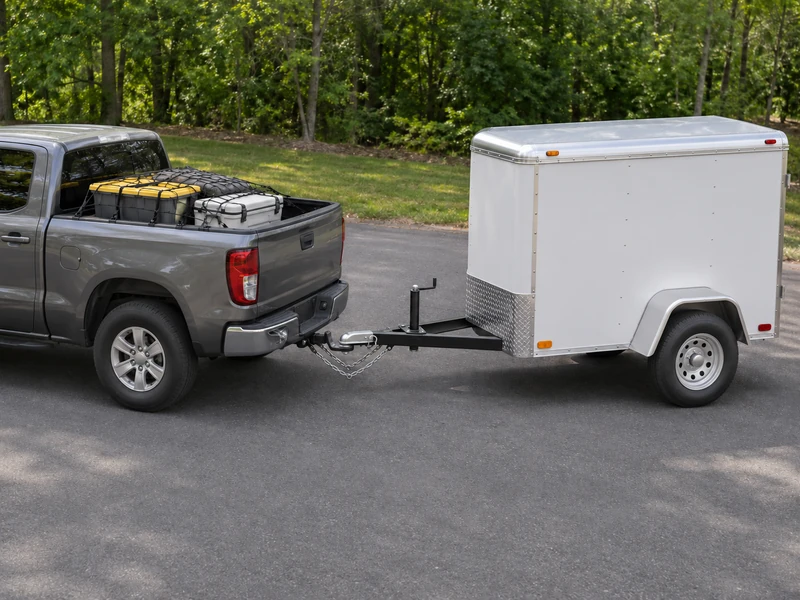
Frequent heavy towing or hauling: LT tires are often appropriate, especially when they are the vehicle's original specification. Check the exact load index, load range and inflation requirements. The tires do not raise GVWR, GAWR, payload or tow ratings.
Occasional light towing: A factory-specified P-metric tire can be suitable when the complete vehicle and tire setup remains within manufacturer limits. Account for passengers, cargo and trailer tongue weight rather than assuming the trailer is carried only on its own axles.
Rough terrain: LT construction can offer added durability, but not every LT tire is designed for the same off-road conditions, and no tire is puncture-proof. Compare the model's intended terrain and construction. Winter capability is also separate: look for the appropriate 3PMSF specification rather than using P or LT as a winter-performance proxy.
Can You Replace P Tires With LT Tires—or Reverse the Swap?
Original P-metric → replacement LT
This can be appropriate for some heavier-duty or off-road applications, but it requires a complete fitment and load/pressure review. Confirm the replacement size, wheel compatibility and rating, vehicle clearance, load range, and the inflation needed to provide at least the required capacity. Do not mix P and LT types across the vehicle.
Original LT → replacement P-metric
The safe default is replace LT with LT. Industry guidance permits some on-road P-metric substitutions only when sufficient capacity is specifically established, including the applicable light-truck adjustment. Do not downgrade based on matching dimensions or a similar load-index number alone.
In either direction, USTMA and Michelin say replacements must meet the vehicle manufacturer's size and load requirements. A qualified tire professional should verify a type change. Replacing one type with another is not just a sidewall-prefix decision.
Do LT Tires Need More PSI Than P Tires?
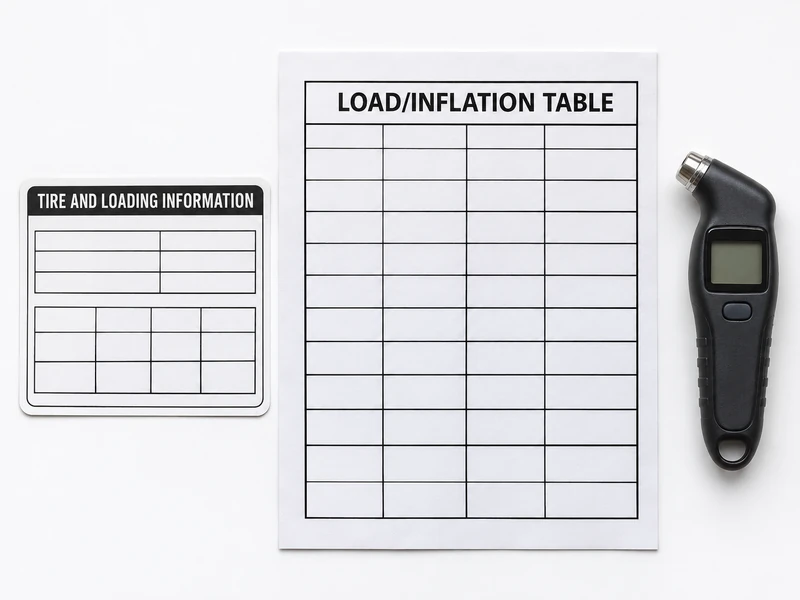
LT tires often use higher inflation pressures to achieve a given load capacity, but there is no universal LT pressure. Load range, exact size, single/dual configuration and the applicable load/inflation table all matter.
Changing P to LT changes the pressure question. Do not automatically keep the original P-metric placard PSI, and do not simply inflate the LT tire to its sidewall maximum. Determine the required capacity, then use the replacement tire's manufacturer load/inflation data and professional fitment guidance.
When the factory tire type and specification remain unchanged, use the door-placard cold PSI. For heavy-duty load-specific applications, see truck tire pressure by vehicle class. For the normal checking routine, use how to check tire pressure.
Which Type Should You Choose?
| Your situation | Best starting point |
|---|---|
| Factory P-metric; commuting and light loads | Matching P-metric specification |
| Factory LT; heavy-duty pickup or SUV | Matching LT specification |
| Frequent heavy towing or hauling | Verify an appropriate LT specification, load range and pressure |
| Rough-terrain durability is a priority | Compare suitable LT models and complete fitment, not just the prefix |
| Occasional light towing with factory P tires | Stay within all manufacturer vehicle, axle and tire limits |
Do not choose by model name alone—two versions of the same truck can have different factory tire specifications. Check the placard and owner's manual. ST means Special Trailer and is a separate trailer tire category; P or LT capacity alone does not make a tire suitable for a trailer. Trailer monitoring is covered in the trailer TPMS guide.
Key takeaways
- ✓LT = Light Truck; P = Passenger. They identify different sizing and load/inflation systems, not universal quality levels.
- ✓P265/70R17 and LT265/70R17 have similar size numbers but are not automatically interchangeable or equivalent at the same PSI.
- ✓P-metric tires often suit factory-specified daily driving; LT tires often suit heavier loads and demanding use, but model-specific results vary.
- ✓Replace original LT with LT by default. Any P↔LT change requires complete fitment, capacity and load/inflation verification.
- ✓Do not keep the old placard PSI automatically after a tire-type change or inflate to sidewall MAX; use exact manufacturer load/inflation data.
- ✓LT tires do not increase GVWR, GAWR, payload or tow ratings. ST is a separate Special Trailer category.
Frequently Asked Questions
What does LT mean on a tire?
LT means Light Truck. An LT prefix in LT265/70R17 identifies an LT-metric tire designed for light-truck service, with load and inflation standards that differ from P-metric passenger tires. It does not mean every LT tire is better for every truck, SUV or Jeep.
What does P mean on a tire?
P means Passenger. In P265/70R17, the P prefix identifies a P-metric tire. These tires are used on passenger cars as well as appropriately specified SUVs, crossovers and lighter pickups. No prefix usually indicates Euro-metric, which should not automatically be treated as identical to P-metric.
Are LT tires stronger than P tires?
LT tires generally use heavier-duty construction and different load/inflation standards, but strength and durability vary by model. LT does not guarantee puncture-proof performance, longer tread life or better braking. Choose construction and performance for the actual use rather than treating LT as a universal upgrade.
Can I replace P-metric tires with LT tires?
Sometimes, but it is not a direct like-for-like swap. Confirm size, wheel and vehicle fitment, load capacity, load range and the pressure required by the replacement LT tire's load/inflation table. Do not automatically keep the original P-metric placard pressure or inflate to the LT sidewall maximum.
Can I replace LT tires with P-metric tires?
The default is to replace original LT tires with LT tires. A P-metric substitution should not be made unless the vehicle and tire manufacturers or a qualified tire professional confirm that the complete specification and capacity are sufficient for the application. Never choose a lower-capacity replacement based on matching size alone.
Do LT tires need more PSI than P tires?
LT tires often use higher pressures to achieve a given load capacity, but there is no universal LT PSI. When the tire type changes, the original door-placard pressure may no longer provide the required capacity. Use the exact tire's load/inflation data and professional fitment guidance; for unchanged factory-spec tires, use the door-placard cold PSI.
Are LT tires better for towing?
LT tires are often appropriate for frequent or heavy towing because of their construction and load/pressure options. But the vehicle manufacturer's original specification, actual axle loads, load range, wheel ratings, GVWR/GAWR and trailer loading still decide what is suitable. LT tires do not increase the vehicle's towing or payload rating.
Do LT tires last longer than P tires?
Not automatically. Tread life depends on the specific tire, compound, tread design, load, alignment, inflation, rotation and driving conditions. A heavier-duty LT tire used on a daily driver is not guaranteed to outlast a suitable P-metric touring or highway tire.
References
- Work Truck — LT- vs. P-Metric Replacement Tires for Trucks, SUVs (construction, use cases, replacement and load-capacity adjustments)
- Les Schwab — Tire Size Explained (P-metric, Euro-metric and LT-metric definitions and intended applications)
- Michelin — Changing Tire Size or Specifications (manufacturer specifications, equivalent load capacity and consistent tire type)
- U.S. Tire Manufacturers Association — Replacing Tires (replacement size, load index, speed rating and load-capacity requirements)