
How Much Tread Does a New Tire Have?
Last updated: September 23, 2026 · Reading time: 6 min
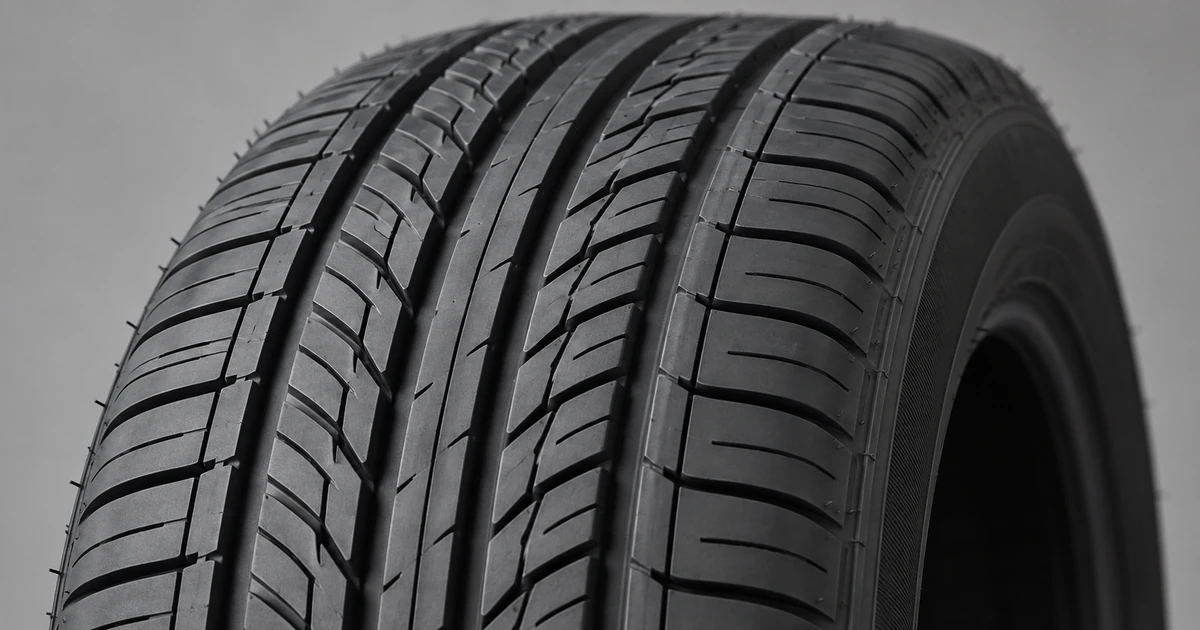
Most new all-season tires start at 10/32–11/32 inch of tread depth. Winter and all-terrain tires start deeper (often 12/32 inch or more); performance summer tires start shallower (8/32–10/32 inch) by design. Below that range on a "new" tire? Ask questions before it goes on your car.
New Tire Tread Depth by Type
There is no single "new tire" number — the right starting depth depends on what the tire was built to do. Here are the typical factory starting points:
| Tire type | Typical new depth | In mm | Why |
|---|---|---|---|
| All-season (most passenger cars) | 10/32"–11/32" | 7.9–8.7 mm | The benchmark most people should expect |
| Winter / snow | Typically 12/32"+ | 9.5 mm+ | Deep grooves pack and bite snow |
| All-terrain / light truck | Often 12/32"–16/32" | 9.5–12.7 mm | Built for mud, gravel, and payload |
| High-performance / summer | Often 8/32"–10/32" | 6.4–7.9 mm | Shallower by design — grip over longevity |
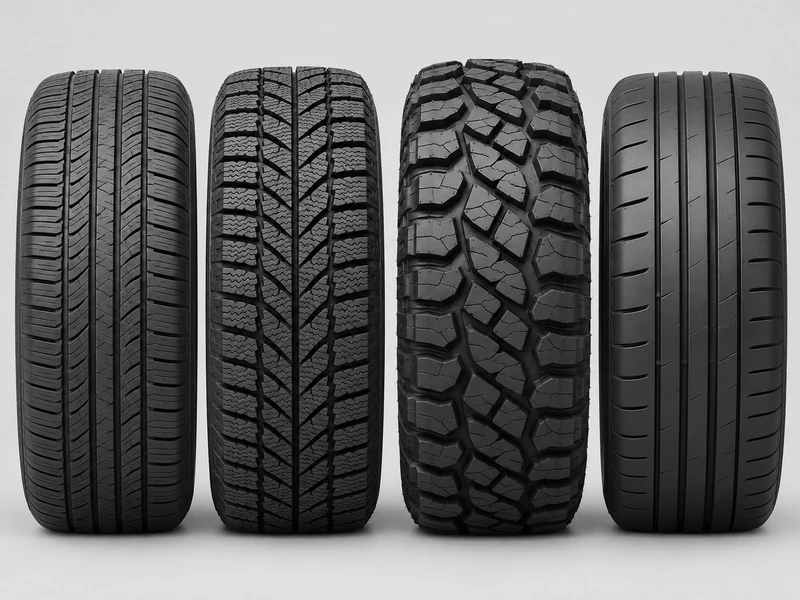
Why Starting Depth Varies (and Why Shallower Isn't Always Worse)
Tread depth is a design trade-off. Deep grooves move water and bite into snow, but tall tread blocks squirm under cornering loads — which is why performance tires sacrifice depth for a stiffer, shallower tread that grips dry pavement better. Winter and all-terrain tires go the other way: maximum depth because their whole job is digging through loose surfaces.
Some manufacturers have also started designing tires that begin shallower but keep their wet grip longer, using grooves that widen as the tire wears. The practical takeaway: judge a new tire against its own type's normal range, not against a universal number. A 9/32 reading is a red flag on an all-terrain tire and completely normal on a summer performance tire.
Verify a New Tire in 2 Minutes (Before It Goes on Your Car)
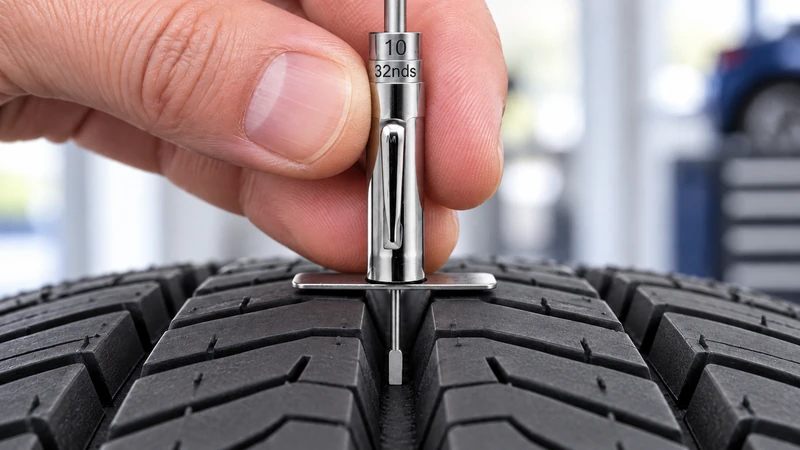
Returns get dramatically harder once a tire is mounted and driven. Two minutes with a gauge — or even a penny — before installation is the cheapest insurance you'll ever buy:
- Measure the depth in a main groove, at least three spots around the tire. Compare against the table above for that tire type.
- Check evenness. Inner, center, and outer readings should be identical. Any variation means the tire has been driven or stored wrong — a new tire should measure dead even.
- Check all four. One low tire in a set is the classic sign of a take-off (pulled from another vehicle) mixed into your order.
- Read the DOT date code. The last four digits on the sidewall are the week and year of manufacture. Full tread on a three-year-old tire is still old rubber — see how to read the tire date code.

When a "New" Tire Isn't: 4 Red Flags
Depth below its type's normal range
An all-season measuring 8/32 inch out of the wrapper isn't new in any meaningful sense — it may be a take-off, a demo, or a tire that's been driven. Ask for the spec sheet or a replacement.
Uneven readings across the tread
Unused tires are perfectly even. Inner-shoulder wear on a "new" tire means it has seen a road — and probably a misaligned one.
DOT date more than 1–2 years old
Legal to sell, and often discounted — but you should know you're buying a head start on aging. Fine at a fair discount; not fine at full price without disclosure.
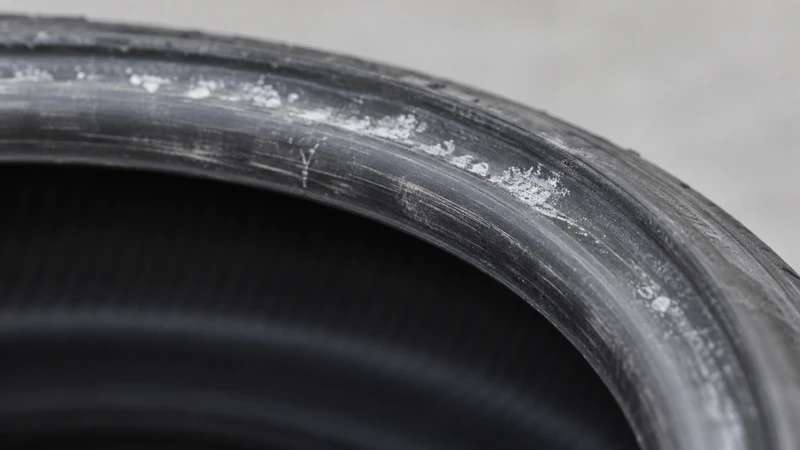
Mounting marks or grime in the bead area
A truly unused tire has clean beads and often still has molding nibs ("rubber hairs") on the tread. Lube residue around the bead means it has been mounted before.
How Much Usable Tread You Actually Get
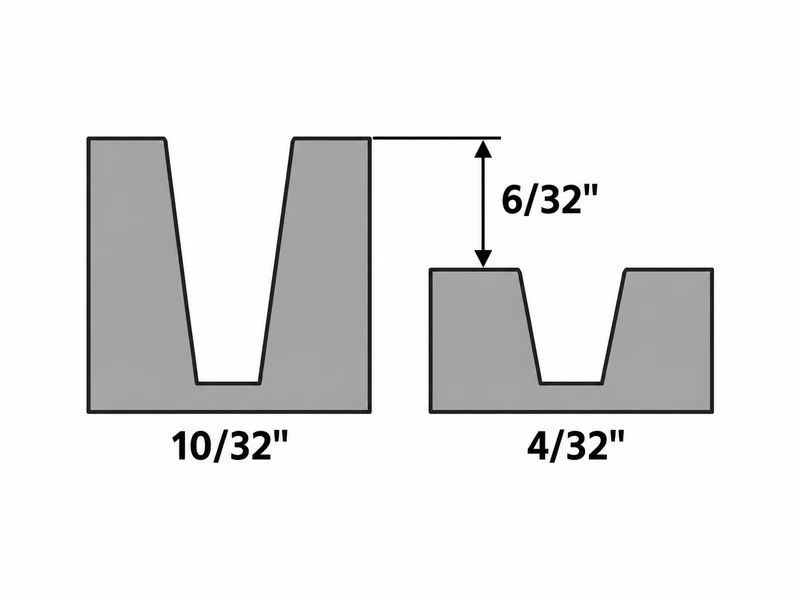
A new all-season starts at about 10/32–11/32 inch and reaches the recommended replacement point at 4/32 inch — so the tread you actually get to use is roughly 6/32 to 7/32 inch, not the full 10. If you run tires down to the 2/32 inch legal minimum you squeeze out more, but you're buying those extra miles with wet-weather braking: AAA measured 43% longer wet stopping distances already at 4/32 inch.
How fast you burn through that 6/32 depends less on the tire and more on maintenance: correct tire pressure, rotations every 5,000–7,500 miles, and alignment that's actually in spec. For the full depth-by-depth picture of where your tires are now, see the tire tread depth chart.
Key takeaways
- ✓New all-season tires start at 10/32–11/32 inch; winter and all-terrain deeper, performance tires shallower — judge against the type, not a universal number
- ✓Verify before mounting: measure three grooves, check all four tires are identical, read the DOT date code
- ✓Red flags: depth below the type's range, uneven readings, DOT date over 1–2 years old, mounting lube on the bead
- ✓Usable tread is roughly 6/32–7/32 inch (10.5 down to the 4/32 replacement line), not the full depth
- ✓Pressure, rotation, and alignment decide how fast you use it up
Frequently Asked Questions
How much tread is on a new tire?
Most new all-season passenger tires start at 10/32 to 11/32 inch of tread depth. Winter tires and all-terrain truck tires typically start deeper — often 12/32 inch or more — because they need deep grooves for snow and mud. High-performance summer tires often start shallower, around 8/32 to 10/32 inch, trading tread life for dry grip.
Is 9/32 tread depth on a new tire normal?
It can be. If you bought a performance or summer tire, 8/32 to 10/32 inch is a normal factory starting point — those tires are designed shallower on purpose. If you bought a standard all-season and it measures 9/32 inch everywhere, that's slightly below the typical 10/32–11/32 range but not alarming on its own; check the DOT date code and ask the seller whether it's a take-off or older stock.
What if my new tire measures less tread than expected?
First, measure correctly: a main groove, three zones per tire, all four tires. If the depth is uniformly a bit low but even, it's likely just that model's design — check the manufacturer's spec for that exact tire. If one tire reads lower than the others, or one shoulder is lower than the center, refuse the installation or ask for a replacement: a new tire should wear zero miles and measure dead even.
How long does new tire tread last?
A typical all-season tire carries a treadwear warranty somewhere in the 40,000–80,000 mile range, and real-world life depends on driving style, alignment, rotation, and — most controllably — inflation. Under-inflated tires wear the shoulders fast; over-inflated tires wear the center. Monthly pressure checks and rotations every 5,000–7,500 miles are what actually get you to the warranty number.
Does age matter on a tire that's never been used?
Yes. Rubber ages on the shelf, not just on the road. A tire that sat in a warehouse for three years has full tread but older rubber. Check the DOT date code on the sidewall — the last four digits are the week and year of manufacture — and be suspicious of any tire sold as new that's already more than a year or two old. Most manufacturers recommend replacing tires at six to ten years regardless of tread.
Can I return a new tire if the tread depth seems low?
Before installation, usually yes — most retailers will exchange an unused, unmounted tire. After it's been mounted and driven, it depends on the seller's policy, and your leverage drops fast. That's exactly why the two-minute check matters: measure the tread and read the DOT date code before the tires go on the car, while a return is still free.
References
- Discount Tire — How to Check Tire Tread Depth (new tires start at 10/32–11/32"; measure multiple grooves and use the lowest reading)
- AAA Newsroom — Tread Lightly: Worn Tires Put Drivers at Risk (4/32" is the recommended replacement point; wet stopping +43% vs new)